


If you’re considering a running technique analysis but aren’t sure what to expect, you’re not alone — it’s a service that generates a lot of practical questions, from what to wear to whether it actually hurts to how quickly you’ll see results. This guide answers the questions we hear most often from runners at RESPORT Chicago, organized by where they tend to come up: before your visit, during the assessment, and after you’ve got your results.
Before Your Assessment
Do I need a referral to get a running technique analysis? This varies by provider. At RESPORT, you’re welcome to schedule a running assessment directly, without needing a referral from another physician first.
What should I wear to a running technique analysis? Wear your regular running shoes and the clothing you’d normally train in — form-fitting enough that your provider can clearly observe your leg and hip movement during the video capture portion of the assessment. Baggy shorts or sweatpants can make it harder to accurately observe knee and hip alignment during running.
Should I bring more than one pair of running shoes? If you regularly train in more than one type of shoe — for example, a daily trainer and a separate pair for speed work — it can be useful to mention this during your intake, since different shoes can meaningfully affect certain aspects of your mechanics, particularly foot strike pattern and cushioning-related impact absorption.
Do I need to do anything to prepare beforehand? Generally no special preparation is needed. It’s helpful to avoid a particularly hard workout the day of your assessment, since significant fatigue can temporarily alter your running mechanics in ways that may not reflect your typical pattern.
Can I get a running technique analysis if I’m currently injured? Yes, and this is actually one of the most common and valuable reasons to get one. Your provider will factor your current injury into the assessment and may modify certain portions of the evaluation depending on what you can comfortably tolerate.
Is a running technique analysis appropriate for beginners, or only experienced runners? It’s appropriate for runners at any experience level. Newer runners in particular can benefit from establishing good mechanical habits early, before less efficient patterns become deeply ingrained through months or years of training.
Can teenagers or younger athletes get a running assessment? Yes, running assessments can be appropriate for young athletes, particularly those training seriously for school sports or club running programs, though the evaluation approach may be adapted somewhat for younger, still-developing runners compared to adults.
During the Assessment
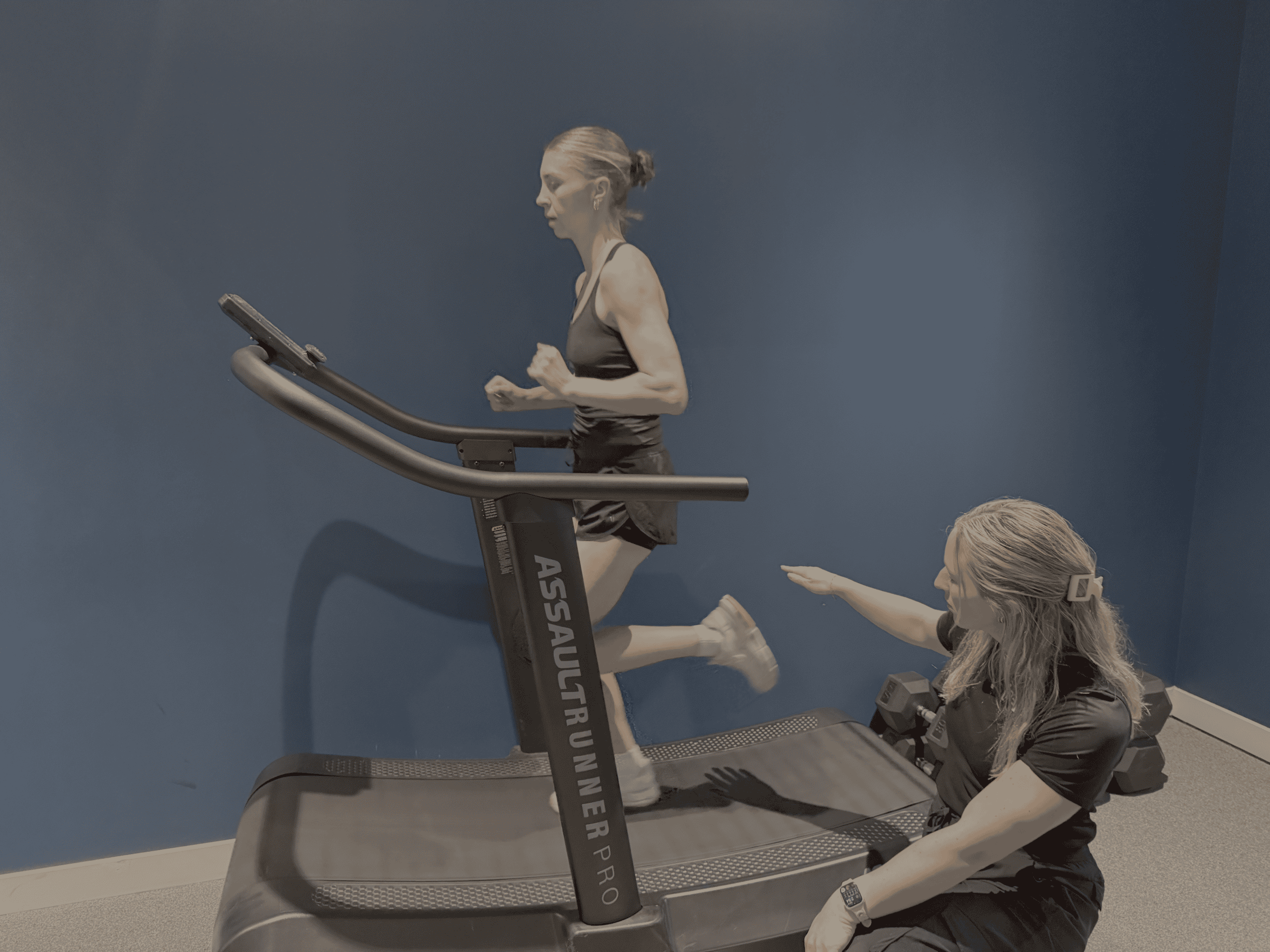
Does a running technique analysis hurt? No. The assessment itself is non-invasive — it involves a physical strength and mobility evaluation (similar to a standard physical therapy assessment) and video capture while you run, typically on a treadmill. Neither portion should cause pain, though your provider may ask you to perform specific movements that could be mildly uncomfortable if you have an existing injury.
How long does a running technique analysis take? This varies by provider, but a thorough assessment — including intake, a physical strength and mobility evaluation, video capture, and review — typically takes a meaningful portion of an hour to complete properly. Assessments that only involve a brief treadmill observation without a physical evaluation component tend to be considerably shorter, but also considerably less thorough.
Will I run on a treadmill or outside? Most running technique analyses are performed on a treadmill, since this allows for controlled, consistent video capture from multiple angles that would be difficult to achieve accurately with outdoor running. Treadmill running mechanics are generally similar enough to outdoor running mechanics to provide meaningful, applicable information, though there can be some minor differences runners should be aware of.
Will the treadmill pace be the same as my normal training pace? Generally yes — your provider will typically have you run at a pace that reflects your normal easy or moderate training effort, since running significantly faster or slower than your typical pace can alter your natural mechanics in ways that wouldn’t reflect your usual pattern.
What if I feel awkward or self-conscious running while being recorded? This is a common and understandable feeling, but most runners settle into their natural mechanics within a few minutes of running, even with the awareness of being recorded. Providers typically capture enough footage to look past any initial, temporary self-consciousness and observe your genuine, consistent running pattern.
Will you check my strength and flexibility too, or just watch me run? A thorough assessment should include both. Video capture alone, without an accompanying physical evaluation of strength and mobility, misses important context — for example, observing hip drop during running is useful, but understanding whether it’s driven by hip abductor weakness (identified through physical testing) is what actually informs an effective treatment plan.
Results and Next Steps
How soon will I get my results? This varies by provider, but many running assessments include an in-visit review of key findings, sometimes supplemented with a more detailed written report or video review provided afterward.
Will I get to see the video of my own running? Many providers, including RESPORT, review relevant footage directly with you during your visit, which is often one of the most useful parts of the assessment — seeing your own mechanical patterns, sometimes in slow motion, tends to make written or verbal explanations considerably more concrete and understandable.
What happens after the assessment — do I just get a list of things to fix? Ideally, no. A thorough assessment should translate into a specific, prioritized plan — typically including targeted strength exercises addressing identified weaknesses, and, where appropriate, specific technique cues introduced gradually — rather than an overwhelming list of every minor inefficiency observed.
How quickly can I start making changes to my running form? Any recommended technique adjustments should generally be introduced gradually, over weeks, rather than all at once — attempting to change multiple aspects of your running form simultaneously carries its own injury risk, since it asks your body to adapt faster than tissue typically tolerates well.
Do I need to follow up after my initial assessment? This depends on your specific situation. Runners with an identified strength deficit driving their mechanics often benefit from periodic follow-up to assess progress, particularly if the assessment was tied to treating a current injury.
Will a running technique analysis tell me exactly what shoes to wear? Some assessments include general footwear guidance based on observed mechanics, though shoe selection is a more individual and preference-driven decision than a single “correct” recommendation for any given running pattern — most runners have more flexibility in footwear choice than commonly assumed, provided the shoe is in good condition and reasonably appropriate for their foot type and running volume.
Does a running technique analysis replace working with a running coach? No, and it’s not meant to. A technique analysis provides objective information about your mechanics, strength, and mobility, which can complement a coach’s guidance on training structure, pacing, and race strategy. Many runners benefit from both working together rather than choosing one over the other.
How accurate is a running technique analysis, really? Video-based analysis combined with a physical evaluation provides genuinely useful, objective insight into the mechanical factors most closely linked to injury risk and efficiency for the vast majority of runners. It’s worth understanding that this differs from highly specialized biomechanics laboratory testing used in some research or elite sport settings, though that level of technology isn’t necessary to provide meaningful, actionable information for the mechanical factors most runners need addressed.
Practical Questions
How much does a running technique analysis cost? Pricing varies by provider and by what’s included in the assessment. Your provider should walk you through cost clearly before your visit or at the start of your appointment, so there are no surprises.
Is a running technique analysis covered by insurance? Coverage varies significantly by provider and insurance plan, and running assessments are frequently offered as a self-pay service given inconsistent insurance coverage for this type of evaluation. Our team can help you understand your specific options.
Can I get a running technique analysis if I don’t have a current injury? Yes, absolutely. Many runners get assessed proactively — before increasing training volume, training for a first race, or simply to better understand their own mechanics — without any current injury driving the visit.
How often should I get reassessed? There’s no universal schedule, but it’s particularly worth considering after a significant injury, a substantial training volume increase, or an extended break from running, rather than on a routine, fixed recurring basis for most recreational runners.
Can I get a running technique analysis before a specific race, like a marathon? Yes, though timing matters — getting assessed with enough lead time before your race allows time to actually address any findings (strength work, gradual technique adjustments) rather than getting evaluated so close to race day that there’s no runway to implement recommendations safely.
Will the assessment include recommendations for cross-training or other activities? Many assessments include broader guidance beyond running-specific cues, particularly strength training recommendations, since addressing underlying strength deficits is often central to translating assessment findings into actual improvement.
What if my running technique analysis doesn’t find anything wrong? This is a genuinely useful outcome, not a wasted visit — confirming that your current mechanics aren’t a significant contributing factor to injury risk is valuable information, particularly if you were assessed due to a specific concern, and it may point toward other factors (training load, recovery, an unrelated acute injury) as more relevant to address instead.
Get Your Questions Answered at RESPORT Chicago
Every runner’s situation is a little different, and if you have a specific question not covered here, we’re happy to answer it directly before you book, so you know exactly what to expect.
RESPORT Chicago’s Old Town clinic offers running technique analysis for North Side runners at every experience level, combined with chiropractic care, physical therapy, and injury treatment when needed.
Ready to find out more, or book your assessment? Contact RESPORT Chicago today.
This article was medically reviewed by the RESPORT Chicago clinical team.