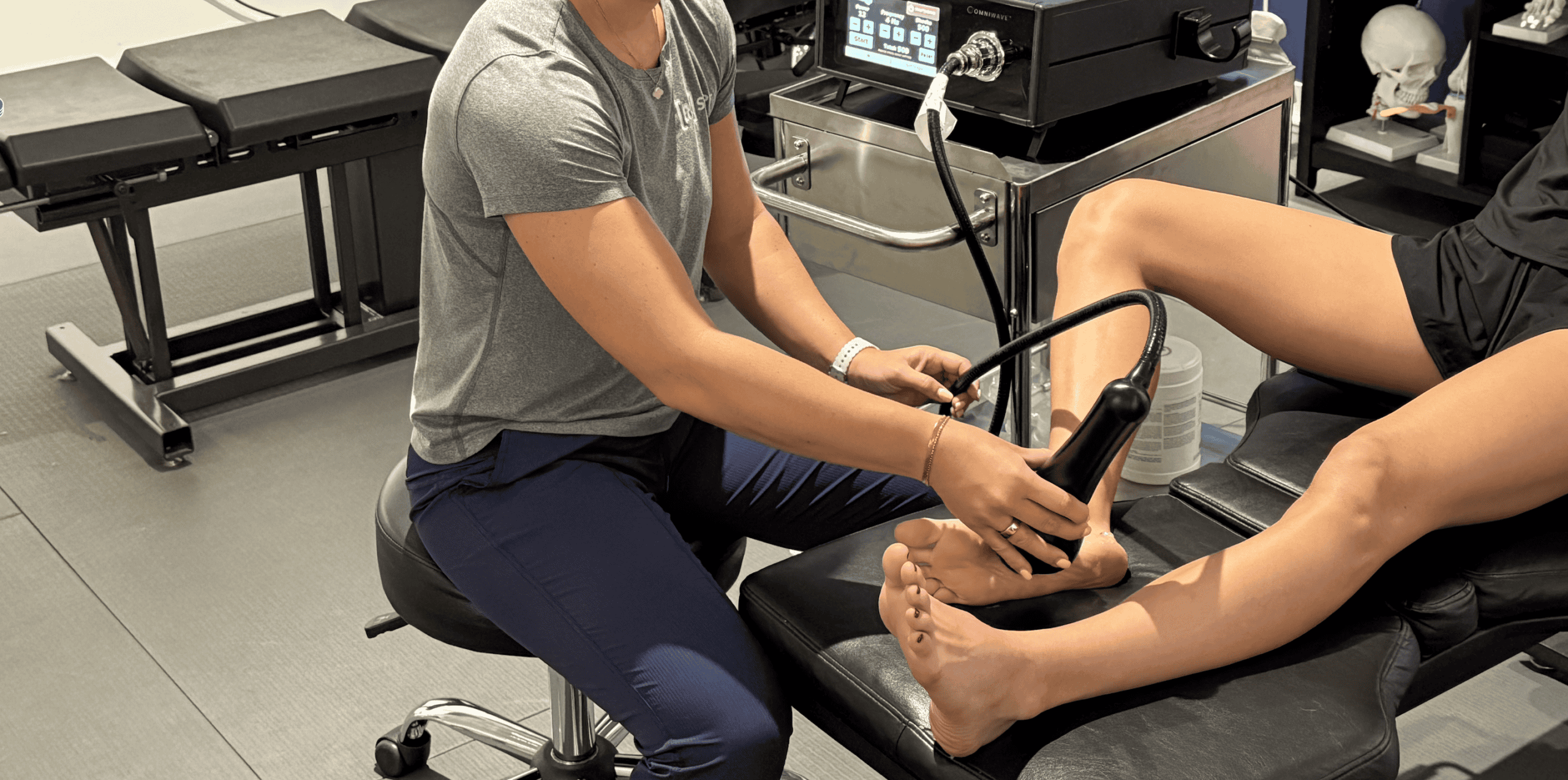


When dealing with chronic pain or a stubborn injury, many people are hesitant to try a new treatment without understanding whether it actually works.
You may have heard about shockwave therapy as a state-of-the-art treatment option for tendon injuries, plantar fasciitis, and chronic musculoskeletal pain. But the most common question patients ask is:
“Does shockwave therapy really work?”
The short answer: Research shows that shockwave therapy can be an effective treatment option for many chronic tendon and soft tissue conditions, especially when combined with proper rehabilitation.
Shockwave therapy, also known as extracorporeal shockwave therapy (ESWT), has been studied for decades and is supported by research showing improvements in pain, function, and quality of life for several common orthopedic conditions.
Shockwave therapy works by stimulating biological processes within injured tissues. It is designed to help the body improve the healing environment, increase tissue quality, and restore function.
Research has delivered promising results for conditions including:
- Plantar fasciitis
- Achilles tendinopathy
- Tennis elbow
- Patellar tendinopathy
- Rotator cuff tendinopathy
- Gluteal tendinopathy
- Chronic tendon pain
At RESPORT Chiropractic and Physical Therapy in Chicago, shockwave therapy is used as part of a comprehensive treatment plan that combines evidence-based technology with movement assessment, rehabilitation, and individualized care.
What Does the Research Say About Shockwave Therapy?
Shockwave therapy has been extensively studied in sports medicine, orthopedics, and rehabilitation. Research has shown that ESWT can provide meaningful improvements for many chronic tendon conditions, particularly when other conservative treatments have failed.
Clinical studies have found that shockwave therapy may help improve:
- Pain levels
- Function
- Range of motion
- Activity tolerance
- Return to sport
- Quality of life
One of the reasons shockwave therapy has gained popularity is that it addresses a common challenge with tendon injuries: the tissue often does not heal properly on its own.
Chronic tendon injuries frequently involve:
- Poor collagen organization
- Reduced blood flow
- Decreased tissue capacity
- Altered pain sensitivity
Shockwave therapy helps stimulate the processes involved in tendon remodeling and recovery.
How Does Shockwave Therapy Work According to Research?
To understand why shockwave therapy works, it is important to understand how chronic injuries develop. When a tendon experiences repeated stress without enough recovery, the tissue can become overloaded. Instead of progressing through a normal healing process, the tendon may develop degenerative changes. This may lead to:
- Persistent pain
- Reduced strength
- Limited activity tolerance
- Difficulty returning to exercise
Shockwave therapy creates controlled mechanical stimulation that encourages the body to restart the healing process. Research suggests several mechanisms may contribute to its effectiveness.
1. Shockwave Therapy Stimulates Blood Flow
Healthy blood flow plays an important role in tissue repair. Tendons naturally have a lower blood supply compared to muscles, which can contribute to prolonged healing. Studies suggest shockwave therapy can increase:
- Local circulation
- Formation of new blood vessels
- Cellular activity
This improved biological environment may help support tendon recovery.
2. Shockwave Therapy Promotes Collagen Remodeling
Collagen is the primary structural protein found in tendons and connective tissue. With chronic tendinopathy, collagen fibers may become disorganized and less effective. Research suggests shockwave therapy stimulates collagen production and remodeling, helping improve:
- Tendon structure
- Tissue strength
- Load tolerance
This is important because successful recovery requires more than simply reducing pain—the tendon must become capable of handling stress again.
3. Shockwave Therapy Helps Reduce Pain
Research has shown that shockwave therapy may influence pain pathways within the nervous system. Potential effects include:
- Reducing pain receptor sensitivity
- Altering pain signaling
- Improving tolerance to movement
This can allow patients to participate more effectively in rehabilitation. Exercise is a critical part of tendon recovery, and reducing pain often helps patients perform the strengthening necessary for long-term improvement.
4. Shockwave Therapy Supports Tissue Healing
One of the biggest benefits of shockwave therapy is that it encourages the body’s natural repair response. Research suggests ESWT may stimulate:
- Growth factors
- Cellular repair processes
- Tissue regeneration pathways
This makes it particularly useful for chronic injuries when healing has plateaued.
Does Shockwave Therapy Work for Plantar Fasciitis?
Plantar fasciitis is one of the most researched applications of shockwave therapy. Studies have shown that ESWT can improve:
- Heel pain
- Walking ability
- Morning stiffness
- Functional limitations
Plantar fasciitis often becomes chronic because the plantar fascia experiences repeated stress without adequate recovery. Shockwave therapy may help stimulate tissue repair while allowing patients to follow a structured rehabilitation program.
Research suggests shockwave therapy can be especially beneficial for:
- Chronic plantar fasciitis lasting several months
- Patients who have failed stretching programs
- Individuals looking to avoid injections or surgery
Does Shockwave Therapy Work for Achilles Tendinopathy?
The Achilles tendon experiences some of the highest forces in the human body. Athletes and active individuals commonly develop Achilles tendinopathy due to:
- Running volume increases
- Jumping activities
- Sports participation
- Strength training demands
Research on shockwave therapy for Achilles tendinopathy has shown improvements in:
- Pain reduction
- Function
- Exercise tolerance
The best outcomes often occur when shockwave therapy is combined with progressive loading exercises designed to strengthen the tendon.
Does Shockwave Therapy Work for Tennis Elbow?
Tennis elbow, also called lateral epicondylitis or lateral elbow tendinopathy, is another condition where shockwave therapy has demonstrated positive results. Research suggests ESWT may help improve:
- Grip strength
- Pain levels
- Elbow function
- Ability to complete daily activities
This can be helpful for individuals whose elbow pain has persisted despite:
- Rest
- Bracing
- Stretching
- Medication
Does Shockwave Therapy Work for Patellar Tendinopathy?
Patellar tendinopathy, commonly known as jumper’s knee, affects athletes who perform repeated jumping and explosive movements. Research has shown shockwave therapy may help improve:
- Knee pain
- Athletic function
- Tendon health
- Ability to return to sport
Common populations who may benefit include:
- Basketball players
- Volleyball players
- Runners
- Weightlifters
- CrossFit athletes
Does Shockwave Therapy Work for Shoulder and Rotator Cuff Pain?
Research has also explored shockwave therapy for shoulder conditions, including rotator cuff tendinopathy and calcific tendinitis. Studies have shown improvements in:
- Shoulder pain
- Range of motion
- Function
- Activity tolerance
For shoulder conditions, shockwave therapy is often combined with strengthening exercises to improve shoulder mechanics and prevent recurrence.
Does Shockwave Therapy Work Better Than Traditional Treatment?
Shockwave therapy is not intended to replace rehabilitation—it works best as part of a complete treatment approach.
Traditional treatments consist of:
- Physical therapy
- Strength training
- Mobility exercises
- Activity modification
Research suggests the best results occur when shockwave therapy is combined with progressive loading. Why? Because pain relief alone does not restore tissue capacity. A successful treatment plan should help patients:
- Reduce pain
- Improve strength
- Restore movement
- Return to activity
- Prevent future injury
How Successful Is Shockwave Therapy?
One of the biggest questions patients have is:
“What are the chances that shockwave therapy will work for me?”
The answer depends on several factors, including:
- The type of injury being treated
- How long symptoms have been present
- Severity of tissue damage
- Activity level
- Whether rehabilitation is included
- How well the patient follows the treatment plan
Research shows that shockwave therapy is most successful for chronic tendon conditions, particularly when symptoms have lasted several months and have not improved with traditional approaches.
Many clinical studies report clear improvements in pain and function following a course of shockwave therapy, especially for conditions such as:
- Plantar fasciitis
- Achilles tendinopathy
- Tennis elbow
- Patellar tendinopathy
- Rotator cuff tendinopathy
- Gluteal tendinopathy
However, shockwave therapy is not a “quick fix” or a guaranteed cure. Like any medical treatment, results vary between individuals. The best outcomes typically occur when shockwave therapy is combined with:
- Progressive strengthening
- Proper movement mechanics
- Load management
- Addressing contributing factors
How Long Does It Take for Shockwave Therapy to Work?
Unlike treatments that temporarily numb pain, shockwave therapy works by stimulating biological changes within the tissue. Because of this, results are usually gradual. Many patients begin noticing improvements after:
- 2–4 treatment sessions
- Several weeks after beginning treatment
However, the body may continue remodeling tissue for weeks or even months after treatment is completed. A typical healing timeline may look like this:
First Few Treatments
Patients may notice:
- Reduced pain sensitivity
- Improved comfort during daily activities
- Better movement tolerance
Several Weeks After Treatment
The body continues the healing process, leading to:
- Improved tissue strength
- Better exercise tolerance
- Increased function
Several Months After Treatment
Long-term improvements may include:
- Return to sports
- Improved performance
- Reduced likelihood of recurring symptoms
Because tendon remodeling takes time, patients should not expect instant structural changes after one session.
Why Doesn’t Shockwave Therapy Work for Everyone?
While research supports shockwave therapy as an effective treatment option, it is not successful for every patient. A number of factors may affect outcomes.
The Wrong Diagnosis
Not all pain comes from the same tissue. For example, someone experiencing hip pain may have symptoms caused by:
- Gluteal tendinopathy
- Hip joint irritation
- Low back referral
- Nerve involvement
Shockwave therapy works best when the correct structure is identified. A thorough evaluation is essential before beginning treatment.
The Injury Is Too Severe
Shockwave therapy is commonly used for chronic tendon problems. However, some conditions may require different approaches, including:
- Large tendon tears
- Significant structural damage
- Acute traumatic injuries
In these situations, additional imaging or medical evaluation may be needed.
Rehabilitation Is Missing
One of the most important factors in successful recovery is rebuilding tissue capacity. Shockwave therapy may improve the biological environment of the tissue, but the tendon still needs progressive loading to become stronger. Without rehabilitation, patients may experience temporary symptom improvement without resolving the underlying weakness or movement issue.
Activity Levels Are Not Adjusted
Continuing to overload an injured tendon can slow recovery. Possible examples include:
- Increasing running mileage too quickly
- Continuing painful movements
- Returning to sports too soon
- Ignoring recovery needs
Successful treatment calls for balancing activity with appropriate tissue adaptation.
Shockwave Therapy vs Cortisone Injections: Which Works Better?
Cortisone injections have traditionally been used for many painful orthopedic conditions because they can provide short-term symptom relief. However, there are important differences between cortisone and shockwave therapy.
Cortisone Injections
Potential benefits:
- Quick pain reduction
- May reduce irritation temporarily
- Can help with certain inflammatory conditions
Limitations:
- Does not improve tendon strength
- Does not rebuild tendon structure
- Repeated injections may raise concerns regarding tissue health
Shockwave Therapy
Potential benefits:
- Stimulates tissue healing
- Promotes collagen remodeling
- Encourages tendon adaptation
- Non-invasive
- No medication required
For chronic tendon conditions, shockwave therapy focuses more on improving tissue health and function than reducing symptoms alone.
Shockwave Therapy vs Surgery: Can It Help Avoid Surgery?
Many patients seek shockwave therapy because they want to avoid invasive procedures. For many chronic tendon conditions, conservative treatment is recommended before considering surgery. Shockwave therapy may provide an alternative choice for people experiencing:
- Chronic heel pain
- Persistent elbow pain
- Long-standing tendon issues
- Sports-related tendon injuries
Potential benefits include:
- No surgical incision
- Minimal downtime
- Lower risk profile
- Ability to continue rehabilitation
However, surgery may still be appropriate for certain injuries, such as:
- Large tendon ruptures
- Severe structural damage
- Injuries that fail appropriate conservative care
A medical professional can help determine the best treatment approach based on the individual injury.
Is Shockwave Therapy Safe?
Research has shown shockwave therapy to be a safe treatment option when performed appropriately by a trained healthcare professional. Common temporary side effects may include:
- Mild soreness
- Redness
- Tenderness
- Bruising
- Increased sensitivity around the treatment area
These effects typically resolve within a short period of time.
Unlike injections or surgery, shockwave therapy:
- Does not require medication
- Does not involve anesthesia
- Does not require a recovery period
- Allows most patients to continue normal activities
How to Improve Your Results With Shockwave Therapy
Patients can maximize their results by taking an active role in their recovery.
Follow a Progressive Strength Program
Tendons become stronger through gradual loading. A successful rehabilitation program may include:
- Isometric exercises
- Strength training
- Eccentric exercises
- Controlled movement progression
- Sport-specific drills
Identify the Cause of the Injury
Pain is often a symptom of an underlying problem. Factors that may contribute include:
- Training errors
- Muscle weakness
- Mobility restrictions
- Poor movement mechanics
- Inadequate recovery
Dealing with these factors helps reduce the risk of reinjury.
Maintain Consistency
Healing takes time. Patients who achieve the best outcomes typically:
- Complete their recommended treatment sessions
- Perform their exercises consistently
- Modify aggravating activities
- Follow their provider’s guidance
Frequently Asked Questions About Shockwave Therapy Effectiveness
Is shockwave therapy scientifically proven?
Research supports shockwave therapy as an effective treatment option for several chronic tendon conditions. Studies have shown improvements in pain and function, especially when combined with rehabilitation.
How many sessions does shockwave therapy take to work?
Many treatment plans include 3–6 sessions spaced about one week apart. The exact number depends on the injury, symptoms, and response to treatment.
Does shockwave therapy permanently fix injuries?
Shockwave therapy can improve tissue health and reduce symptoms, but long-term results depend on strengthening the affected area and addressing the cause of the injury.
Is shockwave therapy better than physical therapy?
Shockwave therapy and physical therapy are not competing treatments. They work best together. Shockwave therapy can stimulate tissue healing, while rehabilitation helps restore strength, mobility, and function.
Can shockwave therapy treat old injuries?
Yes. Shockwave therapy is often used for chronic injuries that have lasted months or even years, especially tendon-related conditions.
Can I exercise while getting shockwave therapy?
In many cases, yes. Your provider may modify your training to avoid excessive stress on the injured tissue while allowing continued movement.
The Bottom Line: Does Shockwave Therapy Really Work?
The research shows that shockwave therapy can be an effective treatment option for many chronic tendon and soft tissue injuries, particularly when symptoms have not improved with traditional approaches.
Shockwave therapy works by stimulating the body’s natural healing response, improving tissue remodeling, reducing pain sensitivity, and helping patients return to activity.
However, the best results come from using shockwave therapy as part of a complete recovery plan that includes:
- Accurate diagnosis
- Targeted treatment
- Progressive strengthening
- Movement correction
- Proper load management
At RESPORT Chiropractic and Physical Therapy in Chicago, shockwave therapy is combined with in-depth assessments and customized rehabilitation plans to help patients address the source of their pain—not just the symptoms.
If you are dealing with chronic tendon pain, a lingering sports injury, or pain that has not improved with traditional treatments, shockwave therapy may be an option worth exploring.
Schedule an evaluation with RESPORT Chiropractic and Physical Therapy to determine whether shockwave therapy is the right treatment approach for your injury and your goals.
Questions? Contact our team — we’re happy to help you determine whether ESWT is right for your condition.
This article was medically reviewed by the RESPORT Chicago clinical team.