


A herniated or bulging disc can turn sitting, bending, or even sneezing into something you brace for. At RESPORT in Old Town, our chiropractors provide non-surgical herniated disc treatment in Chicago, without medication, combining gentle adjustments with targeted rehab to take pressure off irritated nerves and rebuild the strength that protects your spine.
Every plan starts with finding out what’s actually driving your pain. From there, your provider builds care around your body, your job, and the activities you want to get back to. We see patients from Old Town, Gold Coast, River North, Lincoln Park, and across the Near North Side.

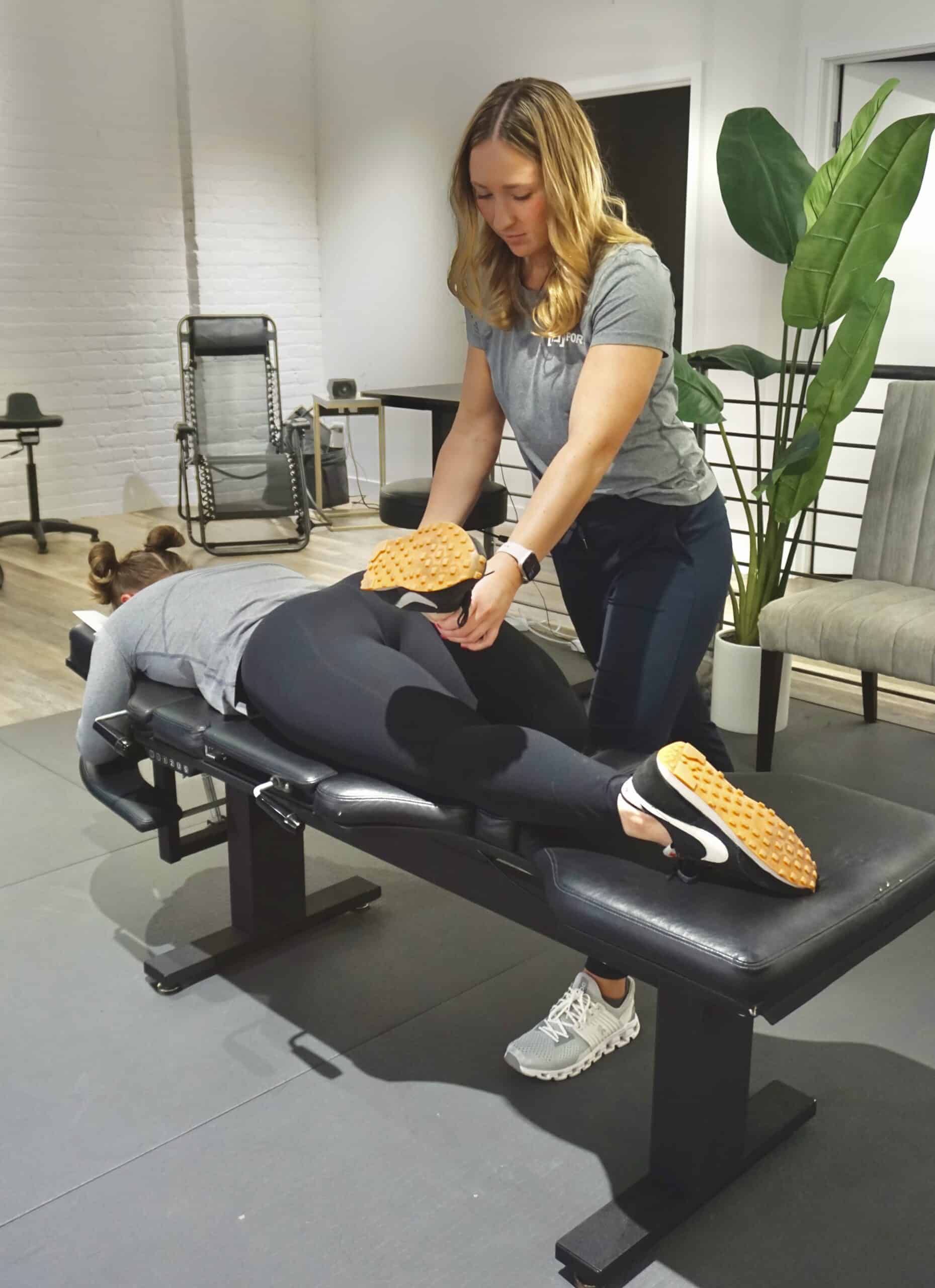
Your spine is made of vertebrae stacked on top of each other, with an intervertebral disc between each pair. Each disc has a tough outer ring (the annulus) and a soft, gel-like center (the nucleus). Together they absorb shock and let your spine bend and twist.
A disc injury happens when that structure is damaged or worn down. The disc may bulge, tear, or lose height, and in many cases it irritates or presses on a nearby nerve. That nerve involvement is why disc pain often travels into the buttock, leg, or arm.

A herniated disc (often called a slipped or ruptured disc) happens when part of the soft center pushes through a tear in the outer ring. The material can press on a spinal nerve and cause sharp, burning, or electric pain. Herniations are most common in the lower back and neck. Learn more from the Mayo Clinic’s overview of herniated discs.
With a bulging disc, the disc extends past its normal border but the outer ring stays intact. Many bulges cause no symptoms. When one does, it’s usually because it narrows the space around a nerve.
Despite the name, degenerative disc disease isn’t really a disease. It describes discs that lose water, height, and cushioning over time. This can lead to stiffness, recurring low back or neck pain, and a higher chance of bulges or herniations.
A tear in the disc’s outer ring can be painful on its own, even before any disc material escapes. Annular tears often follow a sudden lift or twist.
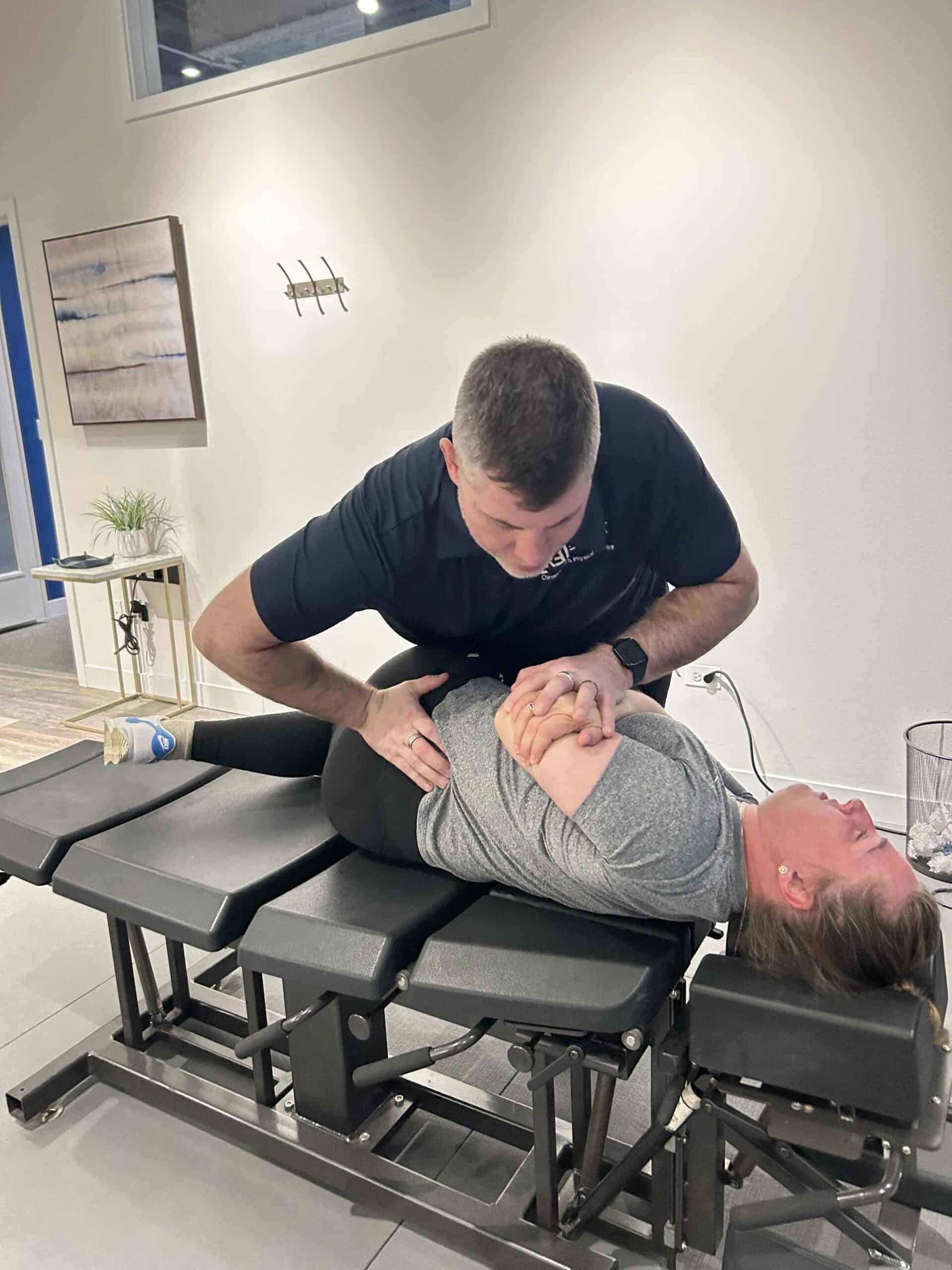
Symptoms depend on where the injured disc is and whether a nerve is involved. Common signs include:
Most disc injuries come from a mix of gradual wear and a final straw. Long hours at a desk, repeated bending and lifting, and heavy training loads all add stress over time. A single awkward lift, fall, or twist can then cause the disc to give.
Risk factors include age, extra body weight, smoking, a physically demanding job, long periods of sitting or driving, and a family history of disc problems. Keeping a healthy weight, staying active, building core strength, and lifting with good mechanics can help lower your risk.
Most disc injuries can be treated conservatively, but some symptoms need immediate medical attention. Go to an emergency room or call 911 if you have back pain along with:
These can signal severe nerve compression or another condition that needs urgent care. If we see any of these signs at RESPORT, we’ll refer you right away.
Effective herniated disc treatment in Chicago rarely comes down to a single tool, so we don’t rely on one. The same chiropractor who adjusts you also guides your rehab, under one plan that calms pain first, then restores movement, then builds the strength that keeps the injury from coming back.
Your plan may include:
When you’re ready to return to training, personal training and sports injury rehab help you rebuild load safely. If your symptoms don’t respond as expected, we’ll coordinate imaging or a referral to a spine specialist.
Wear comfortable clothes you can move in. No referral is needed, and we work with many insurance plans, including Blue Cross Blue Shield, Aetna, Cigna, and UnitedHealthcare. Check your chiropractic insurance coverage.

It depends on the size and location of the injury and how long you’ve had symptoms. Many people feel meaningfully better within 6 to 12 weeks of conservative care. Your provider will give you a clearer timeline after your exam.
Avoid heavy lifting and long periods of sitting, but keep moving gently; strict bed rest usually slows recovery. Ice for 15 to 20 minutes at a time every 2 to 3 hours can ease pain in the first few days, and over-the-counter pain relievers may help if they’re safe for you. Then get evaluated so you know what you’re dealing with.
For most people, yes. We screen every patient first and use low-force techniques that don’t twist an injured disc. If your exam shows signs that need medical care or imaging, we’ll refer you before starting treatment.
A herniated disc in your lower back can press on a nerve root that travels into the leg, often the sciatic nerve. That’s why you can feel pain, numbness, or weakness in your buttock, leg, or foot even though the problem starts in your spine. Learn more about back pain and sciatica.
Yes. Most herniated discs improve with conservative care such as chiropractic treatment, physical therapy, and activity changes. Surgery is usually considered only when severe symptoms don’t improve or when there are signs of significant nerve damage.
Not always. Many disc injuries can be diagnosed and treated based on a thorough exam. Imaging is helpful when symptoms are severe, getting worse, or not improving with care, and we’ll coordinate it when it’s needed.
No referral is needed to book with us. Some insurance plans require one for coverage, so check with your provider if you plan to use insurance.