

If you’re reading this, there’s a good chance you’ve already tried a lot. Rest. Ice. Stretching. Maybe a brace or orthotic. Possibly physical therapy, a cortisone injection, months of modified activity. And the pain is still there — not necessarily unbearable, but persistent enough that you’re starting to wonder if it’s just something you’ll have to live with.
Here’s the thing worth understanding before you give up on finding relief: the fact that those treatments haven’t worked doesn’t mean your pain isn’t treatable. It often means your pain has moved past the point where those particular treatments are capable of resolving it — and that’s an important distinction, because it points toward what actually will help. This guide explains, in plain terms, why chronic tendon pain frequently outlasts standard treatments, and why shockwave therapy is specifically designed to work in exactly this situation.
The Problem Isn't That You Did Something Wrong
Before getting into the biology, it’s worth saying clearly: if rest, stretching, and standard treatment haven’t resolved your pain, that’s not a sign you didn’t try hard enough or follow instructions correctly. Chronic tendon pain has a specific, well-understood biological reason for being so resistant to these approaches — and once you understand it, it makes a lot more sense why symptom-focused treatments plateau the way they do.
Why Most Standard Treatments Are Built to Manage Symptoms, Not Fix the Underlying Problem
This is the core issue, and it’s the answer to the question in the title. Most of the treatments people try first — rest, ice, NSAIDs, stretching, even a lot of standard physical therapy — are designed around the assumption that the tissue is inflamed and needs time and reduced stress to calm down and heal on its own. That assumption is often correct for acute injuries. It’s frequently wrong for chronic ones.
Chronic tendon pain usually isn’t primarily an inflammation problem — it’s a degeneration problem. When a tendon is injured, it initially goes through an inflammatory healing phase, much like any other injury. But if that tendon keeps getting loaded before it fully heals — which happens easily, since tendons are involved in nearly every movement you make — it can get stuck in a different state entirely: tendinosis, where the tissue becomes thickened, disorganized, and poorly structured, rather than properly repaired. This is a fundamentally different problem than acute inflammation, and it doesn’t respond the same way to rest and anti-inflammatory approaches.
This distinction explains a pattern many patients have lived through without necessarily having language for it: symptoms improve somewhat with rest, then return as soon as normal activity resumes — not because the activity is inherently bad, but because the underlying tendon tissue was never actually repaired in the first place. It was just given a temporary break from load.
Why Tendons Specifically Get "Stuck" This Way
There’s a biological reason chronic tendon problems are so much more stubborn than, say, a muscle strain: tendons have a much poorer blood supply than muscle tissue. Blood flow delivers the oxygen, nutrients, and cellular building blocks tissue needs to actually repair itself. Muscle tissue is well-vascularized and generally heals relatively efficiently. Tendon tissue is comparatively starved of that blood supply, which means the healing process is inherently slower and more fragile — and, in chronic cases, can stall out almost entirely without an additional stimulus to restart it.
This is compounded by the fact that most tendons are under near-constant mechanical load just from daily life — walking, standing, gripping, reaching. Unlike a broken bone that can be immobilized in a cast to guarantee true rest, most tendons don’t get a genuine, complete break from load even when you’re actively trying to rest an injury. The combination of poor blood supply and near-constant use is exactly why chronic tendon injuries are so resistant to a “just rest it” approach, no matter how disciplined you are about resting.
Why Physical Therapy Sometimes Isn't Enough Either
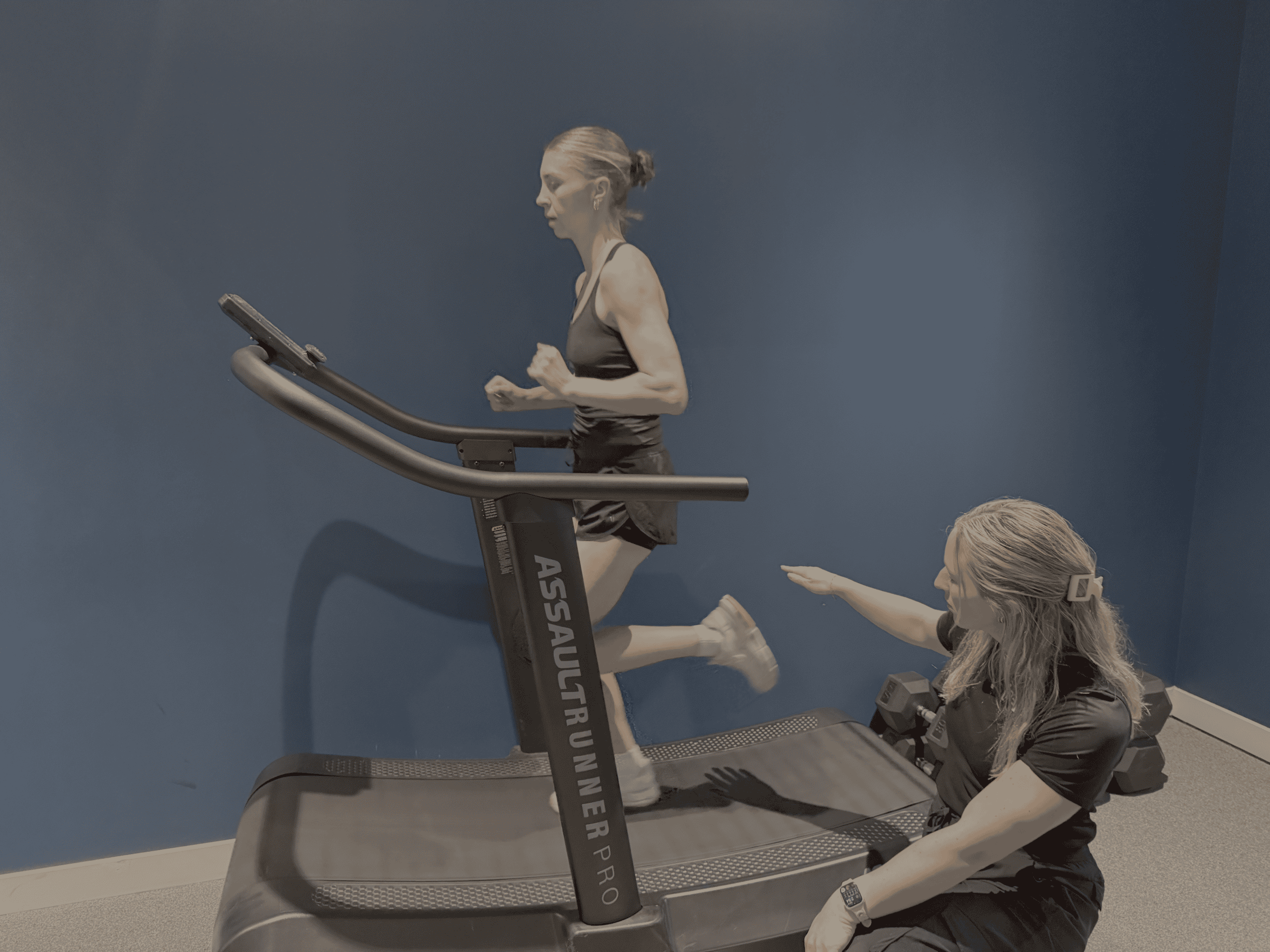
This one surprises a lot of patients, since physical therapy is often positioned as the definitive next step after basic rest hasn’t worked — and for many injuries, it is. But physical therapy is fundamentally an exercise-based intervention: it builds strength, corrects movement mechanics, and can stimulate some tissue adaptation through controlled loading, particularly eccentric exercise protocols that have real research support for certain tendon conditions.
What physical therapy doesn’t reliably do, on its own, is provide a strong enough direct biological stimulus to restart healing in tendon tissue that has been degenerated for months or years. In more chronic, established cases, the tissue may need something beyond what movement and loading alone can provide — which is a real biological gap, not a reflection of effort or compliance with the program.
What Shockwave Therapy Does Differently
This is where shockwave therapy fits in, and why it’s specifically designed to work in cases where symptom-focused treatments and even structured rehab have plateaued.
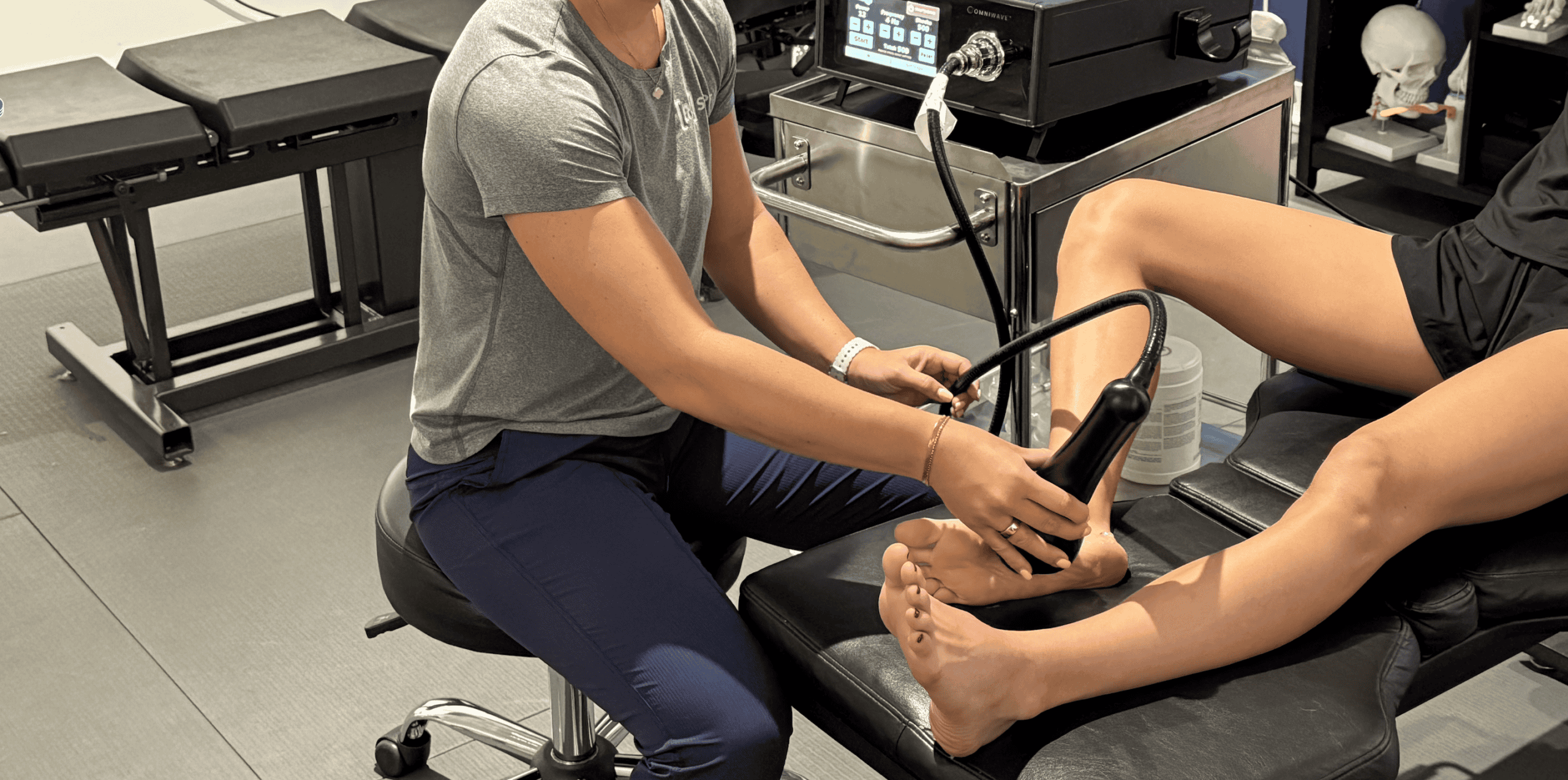
Shockwave therapy — Extracorporeal Shock Wave Therapy (ESWT) — delivers targeted acoustic pressure waves directly into the degenerated tendon tissue. Rather than relying on rest (removing load) or exercise (controlled loading) to stimulate healing indirectly, shockwave therapy directly triggers the specific biological processes that chronic, stalled tendon tissue is missing:
It directly stimulates new blood vessel growth into the tendon. This addresses the core problem described above — poor blood supply — by promoting neovascularization directly in the degenerated tissue, essentially delivering the improved circulation that rest and exercise alone haven’t been able to achieve.
It restarts the healing cascade the tissue has stalled out of. Shockwave therapy has been shown to trigger the release of growth factors and stimulate collagen-producing cells (fibroblasts), essentially giving the tissue a fresh signal to begin genuine repair rather than remaining in its disorganized, degenerated state.
It reduces pain sensitivity at the source, which is part of why many patients notice symptom improvement earlier in the treatment course than the full tissue-healing timeline would predict on its own.
In some conditions, it directly breaks down pathological tissue changes — calcific deposits in calcific tendonitis, for example — that other treatments have no mechanism to address at all.
In short: where rest removes load, and exercise applies controlled load, shockwave therapy does something different entirely — it delivers a direct mechanical and biological stimulus intended specifically to restart a healing process that has genuinely stalled. That’s a categorically different intervention than anything else you may have already tried, which is exactly why it can succeed where those other approaches haven’t.
This Is Why "Chronic" Cases Are Often the Best Candidates
It might seem counterintuitive, but patients whose pain has persisted the longest — the ones who feel like they’ve “tried everything” — are often excellent candidates for shockwave therapy, precisely because their condition fits the profile the treatment is designed to address: chronic, degenerated tendon tissue that hasn’t responded to rest or exercise-based approaches alone. Shockwave therapy generally isn’t the first recommendation for a brand-new, acute injury (where rest and standard care are still appropriate first steps) — it becomes a particularly strong option once a condition has clearly moved into that chronic, stalled state.
What the Research Supports About This Specific Pattern
This isn’t just a theoretical explanation — it’s reflected directly in how shockwave therapy has been studied. A substantial portion of the clinical research on shockwave therapy specifically enrolls patients who have already failed a defined period of conservative treatment (often six months or more) before starting shockwave therapy, and this research consistently shows meaningful pain reduction in that exact population. In other words, the research base isn’t primarily built on patients with mild, recent symptoms — it’s substantially built on patients whose situation closely matches “I’ve tried everything and nothing has worked,” which is directly relevant if that’s where you find yourself.
What This Means for You
If you’ve been dealing with pain that hasn’t resolved despite genuinely trying rest, activity modification, and possibly physical therapy, the explanation isn’t that your body doesn’t heal well or that you’re somehow the exception to normal recovery. It’s more likely that your specific tissue has moved into a state that needs a different kind of intervention than what you’ve tried so far — one that provides a direct biological stimulus rather than relying on time and controlled activity alone.
That’s a genuinely useful piece of information, because it means the right next step isn’t necessarily “try resting more” or “push through physical therapy longer” — it’s considering a treatment specifically designed to address tissue that has already demonstrated it needs more than that.
What to Expect at RESPORT Chicago
If this pattern sounds familiar — persistent pain despite real effort with rest, activity changes, or physical therapy — an evaluation at our Old Town clinic starts with understanding exactly what you’ve already tried and how your body has responded, so we can determine whether your condition fits the profile shockwave therapy is designed to address. We’ll walk you through your specific diagnosis, what the tissue changes likely look like at this stage, and what a realistic treatment timeline looks like — generally 4 to 6 sessions over several weeks, building progressively rather than resolving overnight.
Frequently Asked Questions
Why didn't rest fix my tendon pain?
Chronic tendon injuries frequently move past a simple inflammation stage into a degenerated state called tendinosis, which doesn't resolve with rest alone the way an acute inflammatory injury does. Tendons also have relatively poor blood supply and rarely get true, complete rest given how much daily activity involves them, both of which limit how much rest alone can accomplish.
Why didn't physical therapy fully resolve my symptoms?
Physical therapy is excellent for building strength and correcting mechanics, but in more chronic, established cases, the tendon tissue may need a more direct biological stimulus than exercise alone can provide to fully restart the healing process.
If nothing else has worked, why would shockwave therapy be different?
Shockwave therapy works through a fundamentally different mechanism than rest or exercise — it directly stimulates new blood vessel formation and triggers the body's healing cascade at the site of the injury, addressing the underlying biological limitation (poor tendon blood supply) rather than relying on time or controlled loading to eventually resolve it.
Am I a good candidate if I've had this pain for a long time?
Often, yes. Patients with more chronic, established symptoms are frequently good candidates for shockwave therapy, since their condition matches the profile the treatment is specifically designed to address. An evaluation is the best way to confirm this for your specific case.
Does shockwave therapy replace the need for physical therapy or activity changes?
Not usually — shockwave therapy tends to work best combined with continued strengthening and mechanical corrections, giving that rehab work a healthier tissue foundation to build on once the healing process has been restarted.
How long until I know if shockwave therapy is working for me?
Most patients notice some improvement within the first few sessions, with continued progressive improvement over the full treatment course as the tissue remodels. Your provider will track your response across sessions to confirm the treatment is working as expected.
You've Tried Enough on Your Own — Let's Figure Out What's Actually Going On
If you’ve done the work and you’re still in pain, that’s frustrating, but it’s not the end of the road. It’s a signal that your tissue needs a different kind of help than what you’ve already tried — and that’s exactly the gap shockwave therapy is built to fill.
RESPORT Chicago’s Old Town clinic specializes in exactly this situation: patients who’ve tried the standard approach and are still dealing with pain that won’t resolve. We’ll give you an honest evaluation and a clear explanation of what’s actually going on with your tissue, not just another round of the same advice you’ve already followed.
Ready to find out why your pain has been so resistant to treatment — and what can actually help? Book an evaluation at RESPORT Chicago today.
Questions? Contact our team — we’re happy to help you determine whether ESWT is right for your condition.
This article was medically reviewed by the RESPORT Chicago clinical team.