

If you’ve been dealing with numbness, tingling, or a persistent ache in your thumb, index, and middle fingers — especially symptoms that wake you up at night or flare up after typing, gripping, or repetitive hand use — you may be dealing with carpal tunnel syndrome. It’s one of the most common nerve compression conditions, and while surgery is often what comes to mind first, there are effective non-surgical options worth understanding before going that route, particularly for mild-to-moderate cases.
Shockwave therapy has become an increasingly studied non-surgical option for carpal tunnel syndrome, with a growing body of research specifically supporting its use — a somewhat different evidence picture than shockwave therapy’s role in some other nerve-related conditions, since carpal tunnel syndrome involves a mix of nerve compression and tissue changes that shockwave therapy’s mechanism can genuinely influence. At RESPORT Chicago, we treat carpal tunnel syndrome patients throughout Old Town and the North Side, and we think it’s worth understanding both where this treatment can help and where surgical evaluation remains the more appropriate path.
What Is Carpal Tunnel Syndrome?
Carpal tunnel syndrome occurs when the median nerve — which runs from the forearm into the hand, providing sensation to the thumb, index, middle, and part of the ring finger, along with motor function to some of the thumb muscles — becomes compressed as it passes through the carpal tunnel, a narrow passageway in the wrist formed by the carpal bones and the transverse carpal ligament.
Several factors can contribute to this compression, including:
- Tenosynovitis — swelling and thickening of the tendon sheaths surrounding the flexor tendons that also pass through the carpal tunnel, which reduces the available space for the nerve
- Repetitive hand and wrist motion, particularly repeated gripping, typing, or vibrating tool use
- Anatomical factors, including a naturally smaller carpal tunnel space in some individuals
- Hormonal and metabolic factors, including pregnancy, hypothyroidism, and diabetes, all of which are associated with increased risk
- Wrist positioning, particularly prolonged or repetitive wrist flexion or extension
Regardless of the underlying contributing factor, the shared endpoint is the same: increased pressure on the median nerve within a confined space, leading to the characteristic symptoms of the condition.
Who Gets Carpal Tunnel Syndrome?
Carpal tunnel syndrome is especially common among:
- Office workers and anyone doing prolonged computer or keyboard use
- Assembly line and manual laborers performing repetitive gripping or hand motions
- Musicians, particularly those playing instruments requiring repetitive hand positioning
- Pregnant individuals, due to hormonally-related fluid retention and tissue swelling
- People with diabetes, hypothyroidism, or rheumatoid arthritis
- Individuals using vibrating power tools regularly
Common Symptoms of Carpal Tunnel Syndrome
Symptoms typically involve the thumb, index, middle, and part of the ring finger — the area supplied by the median nerve — and generally include:
- Numbness or tingling in the thumb, index, middle finger, and half of the ring finger
- Symptoms that are often worse at night, sometimes waking patients from sleep
- A sensation of hand swelling, even when no visible swelling is present
- Weakness or clumsiness, particularly with fine motor tasks like buttoning a shirt or holding small objects
- Pain that can radiate up the forearm in more advanced cases
- In more severe, longstanding cases, visible wasting (atrophy) of the thumb muscle at the base of the thumb
The severity and progression of symptoms matters significantly for treatment planning — mild, intermittent symptoms are approached very differently than advanced cases with muscle wasting, which is an important distinction covered further below.
Why Carpal Tunnel Syndrome Can Be Difficult to Resolve With Rest Alone
Similar to chronic tendon conditions, carpal tunnel syndrome often doesn’t resolve with simple rest, particularly once symptoms have been present for more than a few weeks. This is partly because most patients can’t fully rest their hands and wrists given how much daily activity — typing, driving, cooking, dressing — depends on hand function. It’s also because the underlying tissue changes contributing to nerve compression, particularly tenosynovitis (thickened, swollen tendon sheaths), don’t necessarily resolve simply by reducing activity, especially in cases related to a chronic underlying cause like diabetes or a naturally narrow carpal tunnel.
Standard first-line conservative treatments include wrist splinting (particularly at night, to prevent the wrist positions that increase carpal tunnel pressure), activity modification, and sometimes a cortisone injection into the carpal tunnel to reduce inflammation and swelling around the nerve. These approaches help many patients, particularly with mild symptoms, but a meaningful number of patients continue to have symptoms despite trying them — which is where shockwave therapy has emerged as an additional non-surgical option worth considering before proceeding to surgery.
How Shockwave Therapy May Help Carpal Tunnel Syndrome
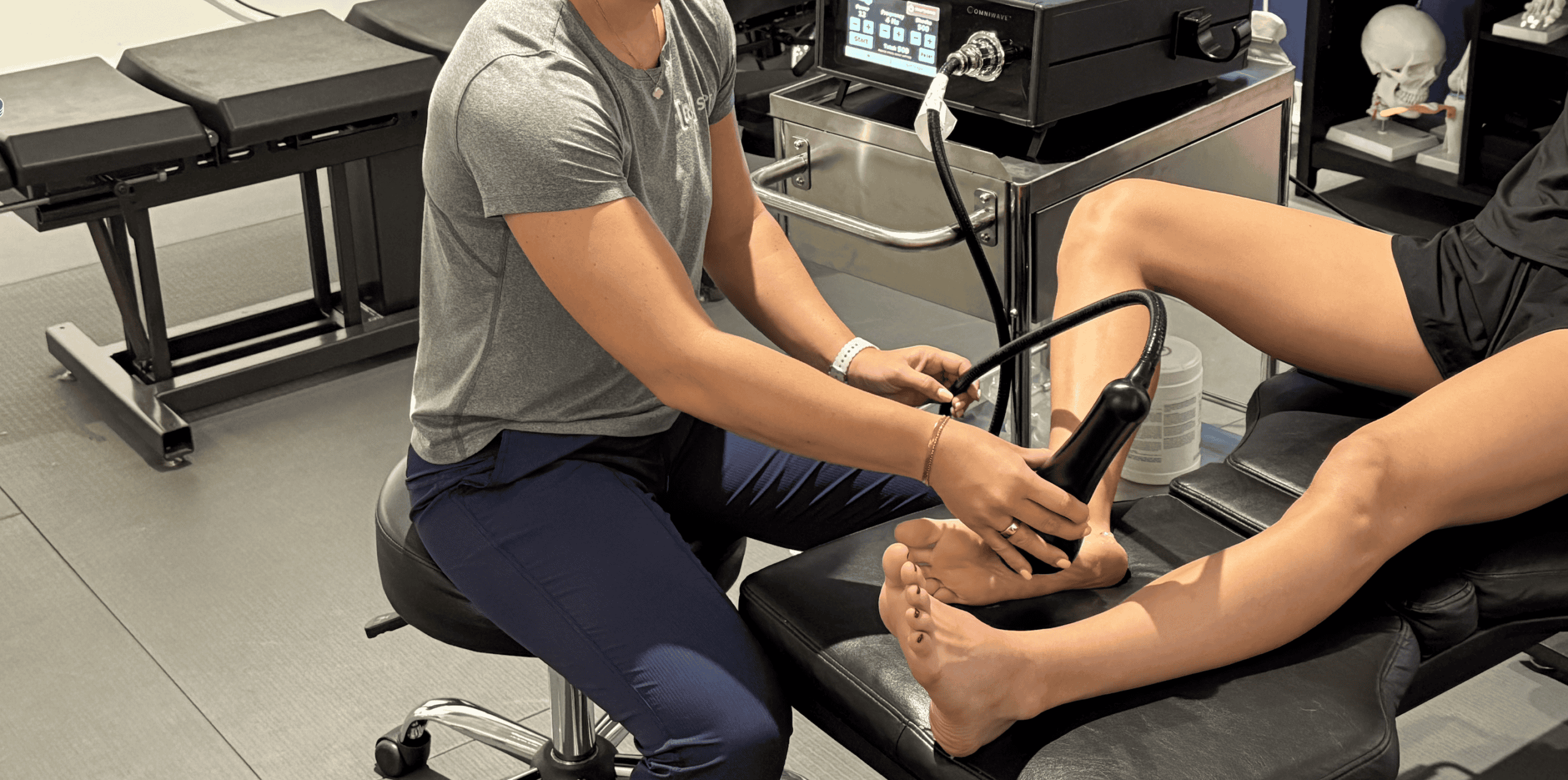
Shockwave therapy — also known as Extracorporeal Shock Wave Therapy (ESWT) — delivers targeted, lower-intensity acoustic pressure waves through a handheld applicator to the wrist and carpal tunnel region. Its proposed mechanisms for carpal tunnel syndrome specifically include:
- Reducing tenosynovial thickening. By stimulating tissue remodeling and improving local blood flow, shockwave therapy may help reduce the swelling and thickening of the tendon sheaths contributing to nerve compression.
- Improving microcirculation around the compressed nerve. Chronic nerve compression can impair local blood flow to the nerve itself, and shockwave therapy’s ability to stimulate circulation may help support the nerve’s own healing capacity.
- Reducing pain and altered sensation. Shockwave therapy has documented effects on modulating pain and sensory nerve signaling, which may contribute to symptom improvement even before underlying tissue changes have fully resolved.
- Supporting nerve tissue health in mild compressive neuropathy. Some research suggests shockwave therapy may support nerve regeneration processes in cases of mild, non-severe nerve compression, though this remains an area of ongoing study rather than a fully established mechanism.
It’s worth being clear that shockwave therapy for carpal tunnel syndrome typically uses a lower-intensity protocol than shockwave therapy for tendon conditions like plantar fasciitis, given the sensitive nerve tissue and confined anatomical space involved.
What the Research Says
Research specifically on shockwave therapy for carpal tunnel syndrome has grown meaningfully in recent years, with several studies — including some directly comparing shockwave therapy to standard treatments like wrist splinting and corticosteroid injection — showing favorable results for symptom reduction and, in some studies, measurable improvement on nerve conduction testing (a diagnostic test that measures how well electrical signals travel through the nerve). This objective, measurable outcome is notable, since it provides evidence beyond patient-reported symptom improvement alone.
That said, this evidence base, while growing and encouraging, remains smaller than shockwave therapy’s extensive research for classic tendon conditions like plantar fasciitis or calcific tendonitis. Most current research focuses on mild-to-moderate carpal tunnel syndrome; there’s little to no evidence supporting shockwave therapy as an effective treatment for severe cases with significant, longstanding nerve compression or visible muscle wasting, where surgical decompression remains the appropriate and most effective treatment.
When Surgery Is the More Appropriate Option
It’s important to be direct about this: shockwave therapy is not an appropriate substitute for surgical evaluation in the following situations:
- Visible thenar muscle wasting (atrophy of the muscle at the base of the thumb), which indicates significant, longstanding nerve damage
- Severe findings on nerve conduction studies, indicating advanced nerve compression
- Progressive weakness that’s worsening rather than stable or improving
- Symptoms that are constant rather than intermittent, particularly with significant sensory loss
Patients with these findings generally need surgical decompression (carpal tunnel release) to prevent permanent nerve damage, and delaying appropriate surgical treatment in favor of conservative options, including shockwave therapy, isn’t advisable once these signs are present. This is exactly why a proper diagnostic evaluation — including nerve conduction testing when indicated — matters before starting any treatment plan, including shockwave therapy.
What to Expect During Shockwave Therapy at RESPORT
If your evaluation at our Old Town clinic confirms mild-to-moderate carpal tunnel syndrome without the warning signs above, here’s what treatment typically looks like:
1. Initial Evaluation
We begin with a thorough history and physical exam, including specific tests for carpal tunnel syndrome (such as Tinel’s and Phalen’s tests), and an assessment for any signs suggesting a more severe presentation that would warrant referral for nerve conduction studies or surgical evaluation rather than conservative treatment.
2. Treatment Sessions
Shockwave therapy is applied over the carpal tunnel region at the wrist using a handheld device, typically at a lower intensity than used for tendon conditions elsewhere in the body. Most patients describe the sensation as mild pressure or discomfort. Sessions typically last 10–15 minutes.
3. Treatment Course
Most carpal tunnel syndrome patients undergo 4 to 6 sessions, spaced about a week apart, similar to shockwave protocols for other soft tissue conditions.
4. Complementary Care
Shockwave therapy for carpal tunnel syndrome works best as part of a broader treatment plan. At RESPORT, we typically pair shockwave sessions with:
- Nerve gliding and wrist mobility exercises, specifically designed to help the median nerve move more freely through the carpal tunnel
- Wrist splinting guidance, particularly for nighttime use, to reduce the wrist positions that increase carpal tunnel pressure
- Ergonomic assessment, addressing keyboard, mouse, and workstation setup for patients whose symptoms are related to repetitive computer use
- Activity modification guidance for patients whose occupation or hobbies involve repetitive gripping or vibrating tool use
5. Recovery and Follow-Up
Because shockwave therapy is non-invasive, there’s no formal recovery period required. We’ll track your symptoms across the treatment course, and if your response is inadequate or your presentation changes to suggest a more severe underlying issue, we’ll discuss referral for further evaluation rather than continuing conservative treatment indefinitely.
Frequently Asked Questions
Can shockwave therapy cure carpal tunnel syndrome without surgery?
For many patients with mild-to-moderate carpal tunnel syndrome, shockwave therapy can meaningfully reduce symptoms and may help patients avoid surgery. It is not an appropriate treatment for severe cases with significant nerve damage or muscle wasting, which typically require surgical decompression.
How many shockwave therapy sessions do I need for carpal tunnel syndrome?
Most patients complete 4 to 6 sessions, spaced about a week apart, similar to shockwave protocols for other soft tissue conditions.
Is shockwave therapy for carpal tunnel syndrome the same intensity as for tendon conditions?
No. Treatment for carpal tunnel syndrome typically uses a lower-intensity protocol, given the sensitive nerve tissue and confined anatomical space of the carpal tunnel.
How do I know if my carpal tunnel syndrome is mild or severe?
Mild-to-moderate cases typically involve intermittent numbness and tingling, often worse at night, without significant weakness. Severe cases often involve constant symptoms, visible thumb muscle wasting, and progressive weakness. Nerve conduction studies can objectively assess severity when the diagnosis isn't clear from symptoms and physical exam alone.
Can shockwave therapy help if I've already tried a wrist splint without relief?
Possibly, yes — many patients considering shockwave therapy have already tried splinting without full symptom resolution. An evaluation can help determine whether your presentation is a good fit for shockwave.
Is shockwave therapy better than a cortisone injection for carpal tunnel syndrome?
Both have a role depending on the individual case. Cortisone injections can provide effective short-term symptom relief for carpal tunnel syndrome, while shockwave therapy’s effects build progressively over a treatment course. Some research has directly compared the two, generally finding both provide meaningful benefit
Is shockwave therapy covered by insurance for carpal tunnel syndrome?
Shockwave therapy is typically offered as a per-session or package rate. Contact our team directly for current pricing — we are happy to walk you through the details.
Get an Evaluation for Carpal Tunnel Syndrome at RESPORT Chicago
Numbness and tingling in your hand can be more than just annoying — left untreated, more severe carpal tunnel syndrome can lead to lasting nerve damage. The right first step is an accurate evaluation of your specific severity, so you know whether conservative treatment like shockwave therapy is a reasonable option or whether surgical evaluation is the more appropriate path.
RESPORT Chicago’s Old Town clinic offers a thorough evaluation for carpal tunnel syndrome, with shockwave therapy and complementary conservative care for appropriate candidates — and an honest referral recommendation if your presentation calls for it instead.
Ready to find out what's causing your hand numbness, and what can help? Book an evaluation at RESPORT Chicago today.
Questions? Contact our team — we’re happy to help you determine whether ESWT is right for your condition.
This article was medically reviewed by the RESPORT Chicago clinical team.