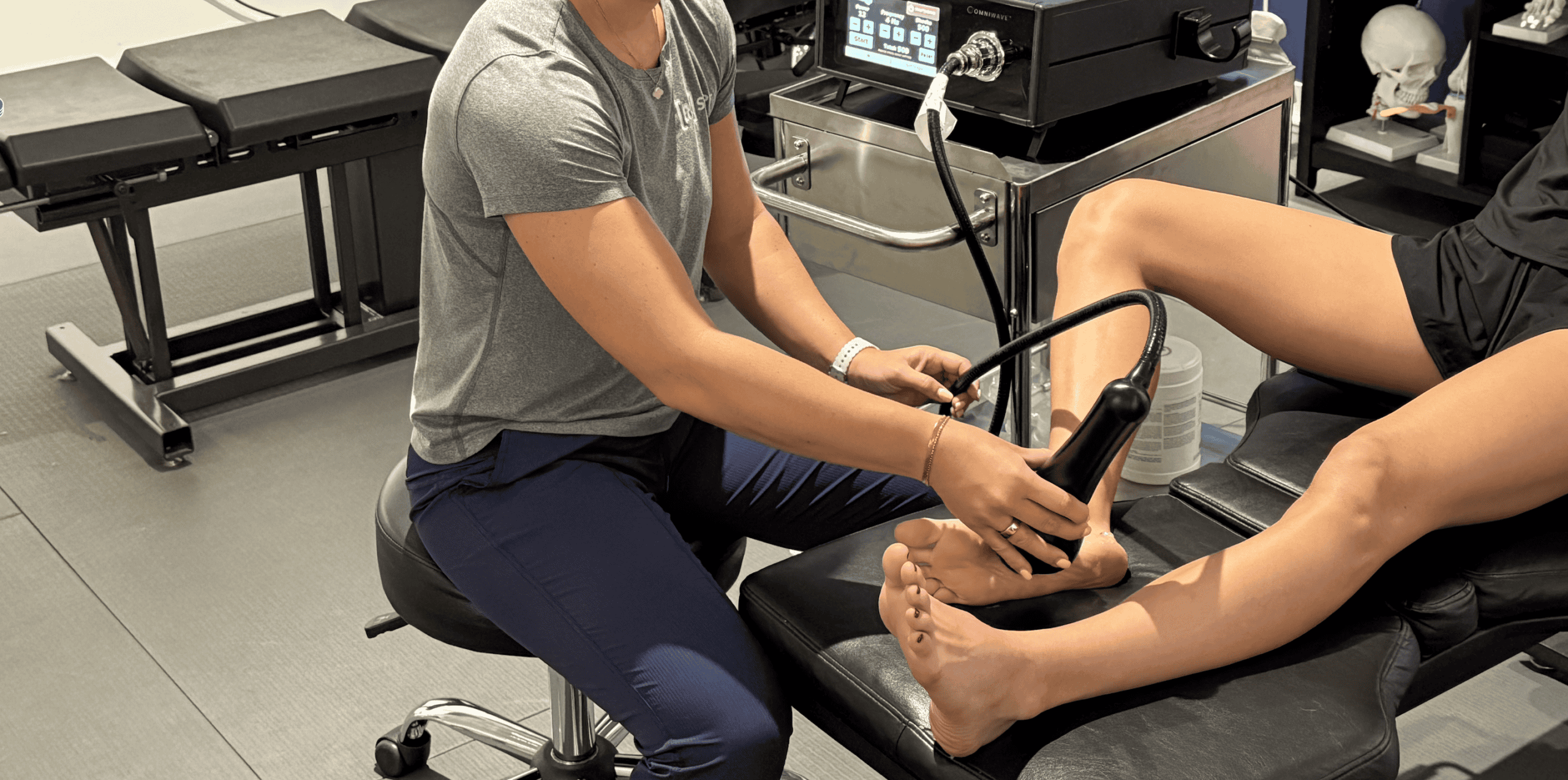


Achilles tendon pain is one of the most common overuse injuries affecting athletes, runners, and active individuals. Whether you are training for a race, playing sports, lifting weights, or simply staying active, achilles pain can significantly limit your ability to move comfortably. When it won’t go away, shockwave therapy for achilles tendonitis is one of the most effective non-invasive options available.
The achilles tendon is the strongest tendon in the human body, connecting the calf muscles to the heel bone. It plays a critical role in walking, running, jumping, and pushing off during movement. Because of the large amount of force placed through the achilles tendon during activity, it is vulnerable to overuse injuries and chronic irritation.
Many people refer to achilles tendon pain as “achilles tendonitis,” but chronic cases are often more accurately described as achilles tendinopathy. Unlike an acute inflammatory injury, chronic achilles problems typically involve changes in the tendon structure, including collagen disorganization, thickening, and reduced ability to tolerate load.
While many cases improve with activity modification, physical therapy, stretching, and progressive strengthening, some individuals continue experiencing symptoms despite months of conservative care.
For chronic achilles tendon pain, shockwave therapy has become an effective non-invasive treatment option. Extracorporeal shockwave therapy (ESWT) uses targeted acoustic waves to stimulate healing within the tendon, improve circulation, and promote tissue remodeling.
At RESPORT Chiropractic and Physical Therapy in Chicago, shockwave therapy is incorporated into a comprehensive treatment approach designed to reduce pain, restore strength, and help athletes and active individuals return to the activities they enjoy.
WHAT IS ACHILLES TENDONITIS
The achilles tendon is a thick band of connective tissue that attaches the gastrocnemius and soleus calf muscles to the back of the heel bone (calcaneus).
Every time you:
- Walk
- Run
- Jump
- Sprint
- Change direction
- Push off your toes
the achilles tendon absorbs and transfers significant amounts of force.
When the demands placed on the tendon exceed its ability to recover, irritation and tissue breakdown can occur.
Achilles tendon injuries typically occur in two main areas:
Insertional Achilles Tendinopathy
Insertional achilles tendinopathy affects the area where the tendon attaches to the heel bone.
Common symptoms include:
- Pain at the back of the heel
- Tenderness where the tendon meets the heel
- Pain while wearing certain shoes
- Stiffness after periods of rest
- Discomfort with running or jumping
Midportion Achilles Tendinopathy
Midportion achilles tendinopathy occurs in the middle portion of the tendon, usually 2–6 centimeters above the heel bone.
Symptoms may include:
- Morning stiffness
- Pain during activity
- Thickening of the tendon
- Tenderness along the achilles tendon
- Pain that worsens with running or jumping
WHAT CAUSES ACHILLES TENDON PAIN?
Achilles tendon problems typically develop when repetitive stress exceeds the tendon’s ability to adapt. Several factors can contribute to achilles tendinopathy.
Sudden Increase in Training Volume
One of the most common causes of achilles pain is increasing activity too quickly.
Examples include:
- Increasing running mileage
- Adding sprint workouts
- Beginning a new sport
- Increasing jumping exercises
- Returning to exercise after time off
Tendons adapt more slowly than muscles, meaning rapid increases in workload can overload the tissue.
Repetitive Impact Activities
Athletes who participate in high-impact activities place significant stress on the achilles tendon.
Common activities associated with achilles injuries include:
- Running
- Basketball
- Tennis
- Soccer
- Volleyball
- CrossFit
- Track and field
Limited Ankle Mobility
Restricted ankle movement can change how forces are distributed during walking, running, and jumping. Limited ankle dorsiflexion may increase stress on the achilles tendon by altering lower extremity mechanics.
Calf Weakness or Imbalance
The calf muscles and achilles tendon work together to create movement. Weakness or poor endurance in the calf complex can increase strain on the tendon.
Foot and Lower Extremity Mechanics
Factors such as:
- Excessive foot pronation
- Poor running mechanics
- Lower extremity alignment issues
- Improper footwear
may contribute to increased stress on the achilles tendon.
A complete evaluation should look at the entire movement system rather than focusing only on the painful area.
IS ACHILLES TENDONITIS ACTUALLY INFLAMMATION?
Despite the name, chronic achilles tendon problems are often not primarily inflammatory.
The term “tendonitis” implies inflammation, but many long-lasting achilles injuries involve a process called tendinopathy.
Chronic achilles tendinopathy may involve:
- Changes in collagen structure
- Reduced tendon strength
- Increased tendon thickness
- Poor tissue organization
- Decreased ability to tolerate load
This explains why treatments focused only on reducing inflammation may not fully resolve chronic achilles pain.
Successful treatment typically involves improving the tendon’s capacity to handle stress through:
- Progressive strengthening
- Load management
- Movement correction
- Tissue stimulation
WHAT IS SHOCKWAVE THERAPY?
Shockwave therapy, also called extracorporeal shockwave therapy (ESWT), is a non-invasive treatment that uses acoustic waves to stimulate healing in injured tissues.
Despite the name, shockwave therapy does not involve electricity or electrical shocks. Instead, a specialized device delivers mechanical sound waves directly into the affected tendon.
These waves create controlled stimulation within the tissue, triggering biological responses that encourage healing.
Shockwave therapy may help achilles tendon injuries by:
- Increasing blood flow
- Stimulating collagen production
- Improving tendon remodeling
- Breaking down unhealthy tissue changes
- Reducing pain sensitivity
- Improving tissue quality
For achilles tendinopathy, treatment is typically applied directly along the painful portion of the tendon.
HOW DOES SHOCKWAVE THERAPY HELP ACHILLES TENDONITIS?
Chronic achilles tendon pain can be difficult to resolve because tendons have a limited blood supply compared to muscles. When healing becomes stalled, symptoms may persist despite rest and traditional treatments.
Shockwave therapy helps restart the healing process by providing targeted mechanical stimulation.
Stimulates Tendon Repair
Shockwave therapy creates controlled stress within the tendon, encouraging the body to increase repair activity.
This process may improve:
- Collagen organization
- Tendon strength
- Tissue resilience
- Ability to tolerate exercise
The goal is not simply to decrease pain temporarily but to improve the tendon’s long-term function.
Improves Blood Flow
Healthy circulation is important for tissue repair. Shockwave therapy promotes increased blood flow and cellular activity, helping deliver nutrients and healing factors to the affected area.
Promotes Tendon Remodeling
Chronic achilles injuries often involve abnormal tendon structure. Shockwave therapy encourages remodeling of damaged tissue, helping the tendon become healthier and better able to handle load.
Reduces Chronic Pain
Long-standing tendon injuries can create increased sensitivity within the nervous system. Shockwave therapy may help decrease pain signaling and improve tolerance to movement.
RESEARCH BEHIND SHOCKWAVE THERAPY FOR ACHILLES TENDONITIS
Research on shockwave therapy for achilles tendonitis and achilles tendinopathy has shown promising results, particularly for individuals with chronic symptoms who have not improved with traditional conservative care.
Studies examining extracorporeal shockwave therapy (ESWT) for achilles tendon disorders have demonstrated improvements in:
- Pain reduction
- Function and mobility
- Tendon tolerance to loading
- Return to activity
- Patient-reported outcomes
Shockwave therapy is especially valuable for chronic achilles tendon problems because it targets the biological healing process rather than only managing symptoms.
Many patients with achilles pain have already tried:
- Rest
- Ice
- Anti-inflammatory medications
- Stretching
- Shoe modifications
- Bracing
without achieving lasting improvement. Shockwave therapy provides another non-invasive option that can be combined with an active rehabilitation program.
The most successful treatment plans typically include shockwave therapy alongside progressive tendon loading exercises, strength training, and movement correction.
WHAT DOES SHOCKWAVE THERAPY FEEL LIKE?
One of the most common questions patients ask is, “Does shockwave therapy hurt?”
During a shockwave therapy session, a handheld applicator is placed over the painful portion of the achilles tendon. The device delivers controlled acoustic waves into the tissue.
Patients often describe the sensation as:
- A tapping or pulsing feeling
- Pressure deep within the tendon
- Mild discomfort at the treatment area
- A sensation similar to a deep massage
Because the treatment targets an irritated tendon, some sensitivity is expected. However, treatment intensity can be adjusted based on comfort level.
A typical session is brief and does not require:
- Anesthesia
- Medication
- Needles
- Surgery
- Recovery time
Most patients can walk normally and return to daily activities immediately following treatment.
Some temporary soreness, stiffness, or tenderness may occur after treatment. This is generally considered part of the body’s response to the stimulation.
how many shockwave therapy sessions are needed for achilles tendonitis?
The number of shockwave therapy sessions needed depends on several factors, including:
- How long symptoms have been present
- Severity of tendon changes
- Activity level
- Training demands
- Age and overall health
- Response to treatment
A typical treatment plan may include:
- 3–6 shockwave therapy sessions
- Treatments spaced approximately one week apart
- Progressive strengthening throughout the treatment process
Because shockwave therapy stimulates tissue remodeling, improvement often continues after the treatment series is completed.
Over the first several weeks, patients may notice the following as the tendon continues adapting:
- Decreased pain during activity
- Improved walking comfort
- Less morning stiffness
- Better tolerance for running or exercise
shockwave therapy vs cortisone injections for achilles tendon pain
Corticosteroid injections are sometimes used for pain relief in musculoskeletal conditions, but they are generally used cautiously around the Achilles tendon.
The achilles tendon experiences extremely high loads, and corticosteroid injections near the tendon may increase the risk of tendon weakening or rupture.
Shockwave therapy offers a different approach by focusing on improving tendon health rather than temporarily reducing symptoms.
Benefits of Shockwave Therapy:
- Non-invasive
- No medication involved
- Stimulates natural healing processes
- Encourages collagen remodeling
- Minimal downtime
- Can be combined with rehabilitation
Considerations With Cortisone:
- May reduce pain temporarily
- Does not improve tendon structure
- May negatively affect tendon quality when used improperly
For individuals looking to improve the strength and resilience of the achilles tendon, shockwave therapy may provide a more tissue-focused approach.
shockwave therapy vs surgery for achilles tendon injuries
Most achilles tendon pain does not require surgery. Conservative treatment is successful for many individuals, especially when the cause of tendon overload is addressed.
However, chronic achilles tendinopathy can become frustrating when symptoms persist despite months of rehabilitation.
Surgery may involve:
- Removing damaged tendon tissue
- Repairing tendon abnormalities
- A lengthy rehabilitation period
Potential drawbacks of surgery include:
- Extended recovery time
- Temporary activity restrictions
- Surgical risks
- Delayed return to sport
Shockwave therapy provides a non-surgical treatment option that may help stimulate tendon recovery before considering more invasive procedures.
For athletes and active individuals, avoiding surgery and maintaining activity levels is often a major priority.
who is a good candidate for shockwave therapy?
Shockwave therapy may be a good option for individuals who:
- Have achilles pain lasting several weeks or months
- Have been diagnosed with achilles tendinopathy
- Have not improved with traditional treatment
- Want a non-invasive treatment option
- Are trying to avoid injections or surgery
- Need to return to sports or exercise
It may be especially beneficial for:
- Runners
- Marathon athletes
- CrossFit athletes
- Tennis players
- Basketball players
- Soccer players
- Active adults
- Individuals with physically demanding jobs
A thorough evaluation is important because not all heel pain comes from the achilles tendon. Other conditions, such as plantar fasciitis, bursitis, or calf injuries, can create similar symptoms.
What to Expect During Shockwave Therapy treatment for achilles tendonitis
A shockwave therapy appointment typically involves several steps.
1. Comprehensive Evaluation
Before treatment, your provider will assess:
- Location of pain
- Achilles tendon sensitivity
- Ankle mobility
- Calf strength
- Walking and running mechanics
- Training history
- Activity demands
This evaluation helps determine why the tendon became overloaded and how to create the most effective treatment plan.
2. Shockwave Treatment
During treatment, the provider applies the shockwave therapy device directly to the affected tendon. The treatment usually takes only a few minutes. The intensity may gradually increase as the tissue becomes less sensitive.
3. Rehabilitation and Strengthening
Shockwave therapy works best when combined with appropriate loading exercises.
Your treatment plan may include:
- Calf strengthening
- Eccentric heel raises
- Isometric exercises
- Balance training
- Mobility exercises
- Gradual return-to-running programming
The goal is to rebuild the tendon’s capacity so it can tolerate the demands of your lifestyle.
how long does it take to recover from achilles tendonitis with shockwave therapy?
Recovery time varies depending on the severity and duration of symptoms.
Factors that influence recovery include:
- How long the injury has been present
- Current activity level
- Training habits
- Strength deficits
- Consistency with rehabilitation
Because tendons adapt slowly, recovery is usually measured in weeks to months, not days.
A general timeline may look like:
First few weeks:
- Reduced pain sensitivity
- Improved comfort with daily activities
- Decreased stiffness
Several weeks to months:
- Improved strength
- Better exercise tolerance
- Increased tendon capacity
Long-term:
- Gradual return to higher-demand activities
- Improved resilience against future injury
The goal of treatment is not simply to get through pain but to build a tendon that can handle future demands.
preventing achilles tendonitis from returning
Once symptoms improve, maintaining achilles tendon health is essential.
Increase Training Gradually
Avoid sudden spikes in:
- Running mileage
- Sprinting
- Jumping volume
- Sports participation
A gradual increase allows the tendon to adapt.
Strengthen the Calves and Achilles Tendon
Strong calf muscles reduce stress placed directly on the achilles tendon.
Helpful exercises include:
- Standing calf raises
- Single-leg heel raises
- Slow eccentric lowering exercises
- Plyometric progression
Address Mobility Restrictions
Maintaining adequate ankle mobility can improve movement efficiency and reduce unnecessary tendon stress.
Wear Appropriate Footwear
Shoes that match your activity level and foot mechanics can help manage stress placed on the achilles tendon.
Listen to Early Warning Signs
Early achilles symptoms often include:
- Morning stiffness
- Mild soreness after exercise
- Increasing tenderness
Addressing these symptoms early can prevent progression into chronic tendinopathy.
Frequently Asked Questions about shockwave therapy for achilles tendonitis
Can shockwave therapy fix achilles tendonitis?
Shockwave therapy can help stimulate tendon healing, decrease pain, and improve function. However, the best results typically occur when it is combined with progressive strengthening and addressing the factors that contributed to the injury.
Is shockwave therapy safe for the achilles tendon?
Yes. Shockwave therapy is considered a safe, non-invasive treatment when performed by a trained healthcare provider. Temporary soreness or tenderness after treatment is common.
Can I run after shockwave therapy?
Many patients can continue normal activity after treatment, but high-impact activities may need to be temporarily modified depending on symptoms and the stage of recovery. Your provider can help determine appropriate training modifications.
How quickly will I feel better after shockwave therapy?
Some patients notice improvement within a few sessions, while others continue to improve over several weeks as the tendon remodels.
Does achilles tendonitis come back after treatment?
Achilles pain can return if the underlying causes are not addressed.Preventing recurrence requires improving:Tendon strengthTraining progressionRunning mechanicsMobilityRecovery habits
treat achilles tendon pain at the source with shockwave therapy
Achilles tendon pain can be frustrating, especially for active individuals who want to keep running, training, and playing sports. While rest and traditional treatments may help some people, chronic achilles injuries often require a treatment approach focused on improving tendon health.
Shockwave therapy for achilles tendonitis provides a non-invasive option designed to stimulate healing, improve tendon strength, and help patients return to the activities they enjoy.
At RESPORT Chiropractic and Physical Therapy in Chicago, shockwave therapy is combined with movement assessment, rehabilitation, and individualized treatment plans to address both pain and the underlying causes of achilles tendon dysfunction.
If you are dealing with persistent achilles pain, schedule an evaluation to determine whether shockwave therapy may be the right treatment option for your condition and take the next step toward getting back to the activities you love.
Ready to find out if shockwave therapy is right for you? Book an assessment at RESPORT Chicago today.
Questions? Contact our team — we’re happy to help you determine whether ESWT is right for your condition.
This article was medically reviewed by the RESPORT Chicago clinical team.