


Physical Therapy for Ankle Pain
in Old Town, Chicago
RESPORT’s ankle physical therapy in Chicago gets you walking, running, and training without that nagging ache or the fear of rolling it again. Our team in Old Town finds what’s actually driving your ankle pain, then treats it with hands-on care, targeted exercise, and chiropractic adjustments in one plan.
Your ankle handles every step, landing, and change of direction. When it hurts, everything from your commute to your long run suffers. Rest and ice can calm a flare-up, but they don’t restore the strength and balance a healthy ankle needs.
We see patients from Old Town, Lincoln Park, the Gold Coast, and River North, from first-time sprains to runners with years of recurring pain.

COMMON CAUSES OF ANKLE PAIN WE TREAT
Ankle pain isn’t one condition, so we don’t treat it with one tool. The most common causes we see in Old Town include:
- Ankle sprains. A rolled ankle stretches or tears the ligaments, usually on the outside of the joint. See our sprains and strains page.
- Chronic ankle instability. The ankle keeps “giving way” months or years after a sprain that never fully healed.
- Achilles tendonitis. Pain and stiffness at the back of the ankle, often worse first thing in the morning or at the start of a run.
- Posterior tibial and peroneal tendon pain. Overuse pain along the inside or outside of the ankle, common in runners.
- Ankle arthritis and stiffness. Wear in the joint, or lost motion after an old injury, that limits squatting, stairs, and running.
- Post-surgery and post-fracture recovery. Rebuilding motion and strength once the bone or ligament has healed. See post-surgery rehab.
Pain on the bottom of the heel is often plantar fasciitis, which we also treat.

Why Ankle Pain Keeps Coming Back
A sprain that “heals” on its own often leaves a weaker, less stable ankle behind. Swelling goes down, but the ligaments, the muscles around them, and your balance haven’t fully recovered.
That’s why rest alone so often leads to the next sprain. An evidence-based clinical guideline in the British Journal of Sports Medicine recommends supervised, exercise-based rehab over passive treatments because it restores the joint’s functional stability. It also reserves surgery for cases that don’t respond to thorough exercise-based care.
Our goal is simple: treat today’s pain and lower your odds of the next injury.
Our approach to physical therapy for ankle pain
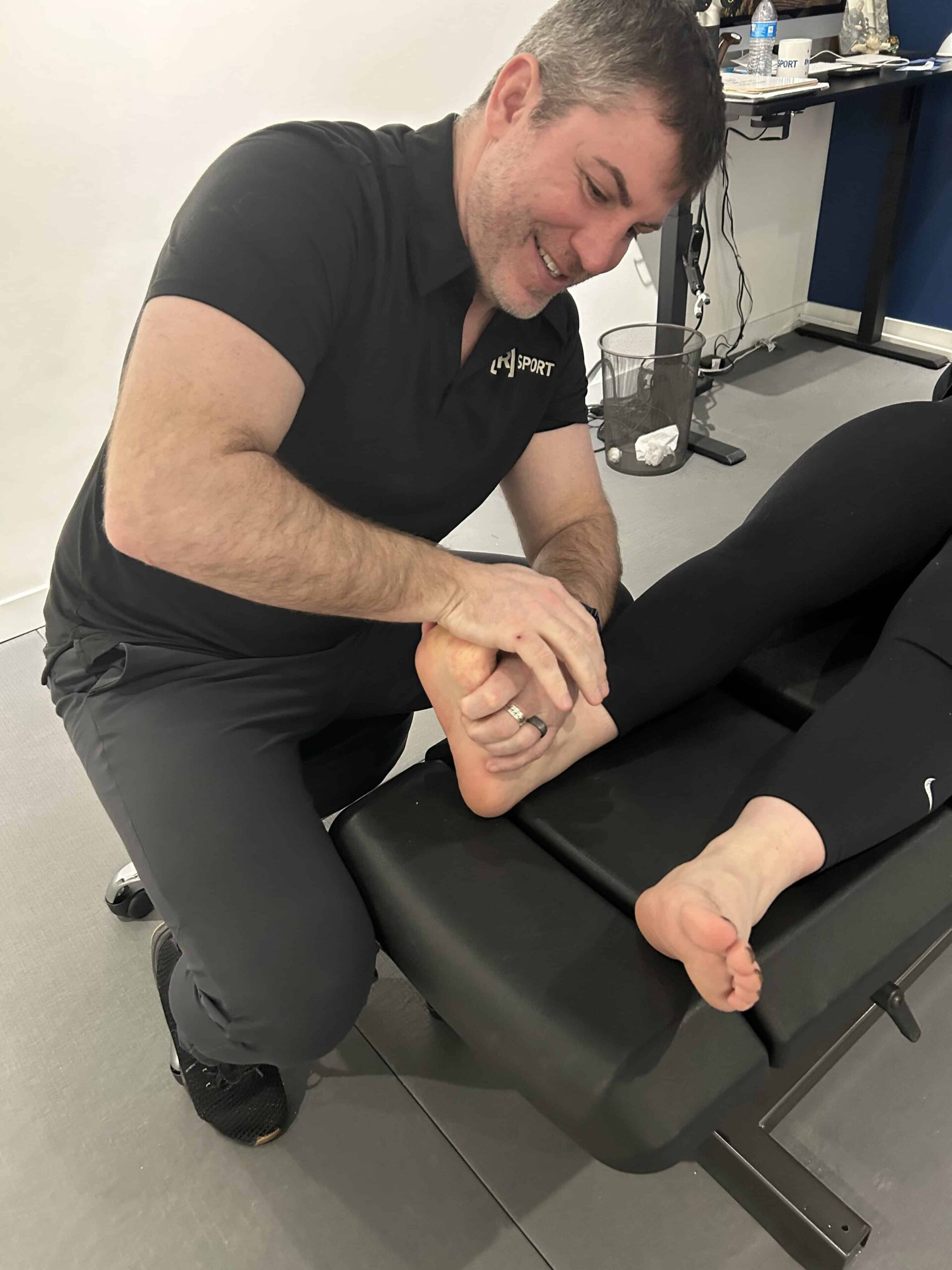
We combine hands-on treatment with active rehab, so you get relief now and a stronger ankle for the long run. Your plan may include:
- Strength and stability exercises for the calf, ankle, and hip muscles that control every step.
- Balance and proprioception training. Proprioception is your body’s sense of where your ankle is in space; retraining it is key to preventing re-sprains.
- Manual therapy and joint mobilization to restore stiff joints and loosen tight tissue.
- Dry needling to release tight, painful calf and shin muscles.
- Shockwave therapy for stubborn tendon pain like Achilles tendonitis.
- A return-to-sport progression that rebuilds hopping, cutting, and running before you’re back at full speed.
- A home exercise program so you keep progressing between visits.
Chiropractic care for ankle injuries
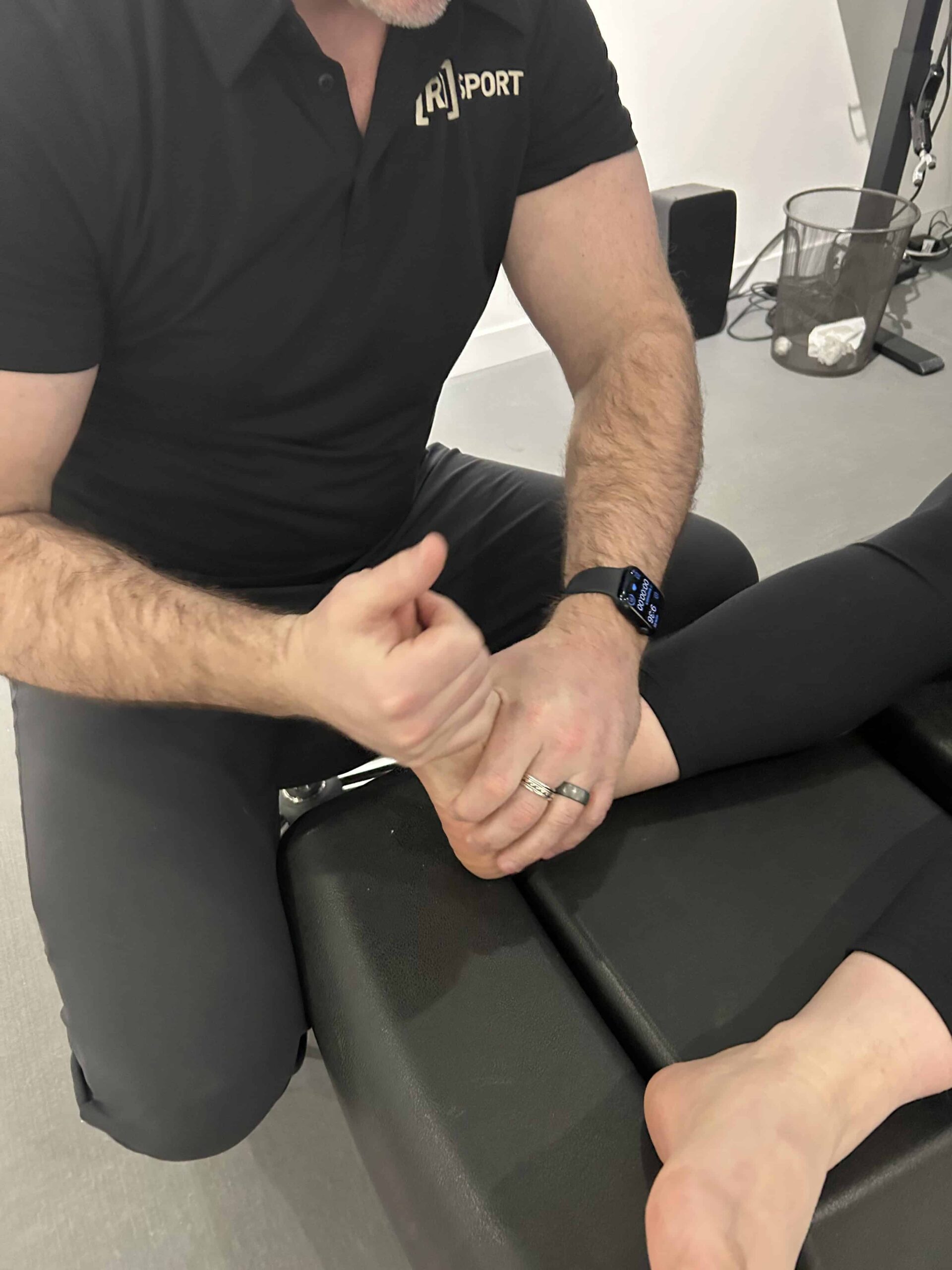
A chiropractor can help an ankle injury by restoring motion in joints that have stiffened up after a sprain or years of compensation. The ankle and foot have many small joints, and when one stops moving well, the others take on extra load.
Our chiropractors use precise extremity adjustments, including low-force instrument options, to improve ankle and foot mobility. We then pair adjustments with rehab, so the new range of motion becomes strength and control. Learn more about our chiropractic care.
Ankle Pain in Runners
If your ankle pain flares with mileage, your mechanics may be part of the problem. A running gait analysis shows how your foot lands and how load travels up the leg, so we can fix the cause instead of just calming symptoms. We work with runners training for the Chicago Marathon and local races.
What to Expect At Your First Visit
You’ll leave your first visit with a clear diagnosis, a plan, and usually your first treatment.
- History. We talk through how the pain started, past injuries, your activity level, and your goals.
- Exam. We test ankle motion, strength, balance, and ligament stability, and check the knee and hip for contributing problems.
- Treatment. Hands-on care and your first exercises often start the same day.
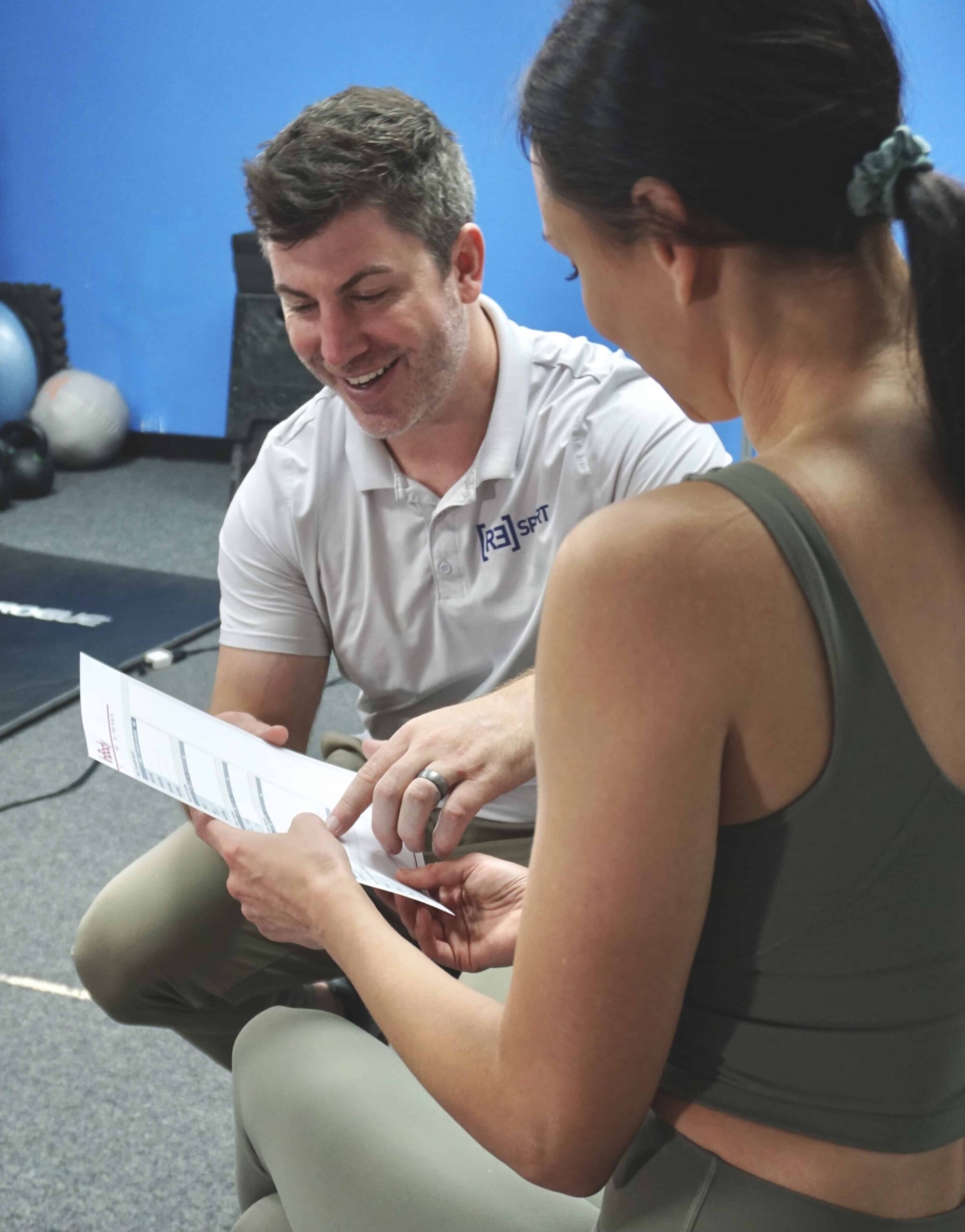
- Your plan. You leave knowing what we found, how often to come in, and what to do at home.
When to get an X-ray first: if you can’t take four steps on the ankle, or the ankle bones are tender to the touch after an injury, see a physician or urgent care to rule out a fracture. We’ll coordinate your care once it’s cleared.
What to wear: shorts or pants that roll above the calf, and the shoes you usually run or train in.

frequently asked Questions
Can a chiropractor help with ankle pain?
Yes. A chiropractor can restore motion in stiff ankle and foot joints after a sprain or overuse injury, which eases pain and takes stress off surrounding tissue. At RESPORT, adjustments are paired with rehab exercises so the ankle gets stronger, not just looser.
What are the best exercises for ankle pain?
The best exercises rebuild strength and balance together: calf raises, resistance-band ankle movements, and single-leg balance drills. The right mix depends on what’s causing your pain, so we’ll build a program around your diagnosis and progress it as you improve.
How do I relieve ankle pain at home?
Short-term, relative rest, ice, compression, and elevation can calm a flare-up. For lasting relief, the ankle needs to regain strength, motion, and balance, which is what a guided rehab program delivers.
What Causes Ankle Pain?
The most common causes are sprains, tendon overuse (such as Achilles tendonitis), chronic instability after an old sprain, and arthritis. A hands-on exam pinpoints which one you’re dealing with.
How long does a sprained ankle take to heal?
Mild sprains often feel better in one to three weeks, while moderate to severe sprains can take several weeks to a few months. Pain usually fades before strength and balance return, so finishing rehab is what prevents the next sprain.
Should I see a doctor or a physical therapist for ankle pain?
If you can’t put weight on the ankle or the bones are tender after an injury, get an X-ray first to rule out a fracture. Otherwise, you can start with us; no referral is needed to book. Some insurance plans require one for coverage.
Does insurance cover ankle physical therapy?
Many plans do. See our insurance page or call (312) 900-2640 and we can verify your coverage.