

If you’ve been dealing with sharp pain, tingling, or numbness that radiates from your neck down into your arm or hand, you may be experiencing cervical radiculopathy — commonly known as a pinched nerve in the neck. It’s one of the most frequent conditions we treat at RESPORT Chicago, and the good news is that most cases respond well to conservative, non-surgical care. If you’re experiencing more general neck pain alongside these symptoms, learn about our full range of neck pain treatment options at RESPORT.
This guide explains what cervical radiculopathy is, what causes it, how symptoms vary depending on which nerve is affected, and what treatment options — including chiropractic care, physical therapy, and targeted exercises — can help you recover.
What Is Cervical Radiculopathy?
Your cervical spine is the section of your neck made up of seven vertebrae (C1–C7). Between each vertebra, nerve roots branch off the spinal cord and travel down into your shoulders, arms, and hands. Cervical radiculopathy occurs when one of these nerve roots becomes compressed or irritated — causing pain, weakness, or numbness that can radiate far from the source.
It’s important to understand that the symptoms often show up where the nerve travels, not just where the compression is. That’s why patients are sometimes surprised when a neck problem turns out to be the source of pain or weakness in their hand or fingers.
Common Causes of Cervical Radiculopathy
Several conditions can compress or irritate a cervical nerve root:
- Herniated disc: The soft inner material of a spinal disc pushes through the outer layer and presses on a nearby nerve root. This is one of the most common causes, especially in adults under 50.
- Bone spurs (osteophytes): As the spine ages, small bony growths can form along the vertebrae. These spurs can narrow the spaces where nerve roots exit, leading to compression and nerve pain in the arm.
- Spinal stenosis: A narrowing of the spinal canal or the foraminal openings (where nerve roots exit) can pinch cervical nerve roots. This is more common in patients over 50 and often develops gradually.
- Degenerative disc disease: Over time, the discs between vertebrae lose height and hydration. This brings the vertebrae closer together, reducing space for the nerve roots and increasing the risk of compression.
Symptoms by Nerve Root: Where You Feel It Depends on Which Nerve Is Affected
One of the key features of cervical radiculopathy is that symptoms follow a predictable pattern based on which nerve root is compressed. Here’s what each level typically produces:
- C5 (between C4 and C5 vertebrae): Pain and weakness in the shoulder and upper arm; possible numbness over the outer shoulder. Deltoid and bicep weakness are common.
- C6 (between C5 and C6 vertebrae): Pain and tingling radiating into the forearm, thumb, and index finger. Bicep reflex may be diminished. This is one of the most frequently affected levels.
- C7 (between C6 and C7 vertebrae): Pain running into the middle finger; tricep weakness and reduced tricep reflex. C7 is the most commonly affected nerve root in cervical radiculopathy.
- C8 (between C7 and T1): Numbness or tingling in the ring and little fingers, with grip weakness. Patients often notice difficulty with fine motor tasks like buttoning a shirt.
Knowing which nerve root is involved helps guide treatment. Your provider will use this symptom map alongside a physical exam and imaging to pinpoint the source of your nerve pain in the arm.
How Is Cervical Radiculopathy Diagnosed?
Diagnosis typically begins with a thorough physical exam. Your provider will assess your range of motion, muscle strength, sensation, and reflexes in the affected arm. Specific tests — such as the Spurling’s test, where the neck is gently compressed while tilted toward the symptomatic side — can help reproduce and localize the symptoms.
Imaging may be ordered to confirm the diagnosis and rule out other causes:
- X-ray: Identifies bone spurs, disc space narrowing, and spinal alignment.
- MRI: The gold standard for visualizing soft tissue. Shows disc herniations, nerve root compression, and spinal cord involvement.
- CT scan: Useful for evaluating bony anatomy, particularly in patients who cannot have an MRI.
- Nerve conduction study / EMG: Sometimes used to confirm nerve root involvement and assess severity.
Cervical Radiculopathy Treatment Options
The majority of cases of cervical radiculopathy — estimated at 75–90% — improve with conservative, non-surgical treatment. The approach depends on the severity of symptoms, which nerve root is affected, and how long symptoms have been present.
Chiropractic Adjustments
Chiropractic care for cervical radiculopathy focuses on restoring proper movement to the cervical spine and reducing mechanical pressure on the affected nerve root. At RESPORT Chicago, our sports chiropractors use a combination of cervical manipulation, mobilization, and targeted soft tissue work to reduce inflammation and improve range of motion. Many patients experience significant relief within a few weeks of starting care.
Learn more about chiropractic care at RESPORT Chicago.
Physical Therapy
Physical therapy addresses the muscular imbalances and movement patterns that can perpetuate cervical nerve root compression. A PT program typically includes strengthening exercises for the deep cervical flexors and scapular stabilizers, postural correction, and neural mobilization techniques to reduce nerve tension.
Learn more about physical therapy at RESPORT Chicago.
Dry Needling
Dry needling targets trigger points in the cervical musculature — particularly the scalenes, levator scapulae, and upper trapezius — that can refer pain down the arm and contribute to nerve root irritation. By releasing these taut bands of muscle tissue, dry needling can reduce pain and improve mobility as part of a comprehensive cervical radiculopathy treatment plan.
Learn more about dry needling at RESPORT Chicago.
Shockwave Therapy
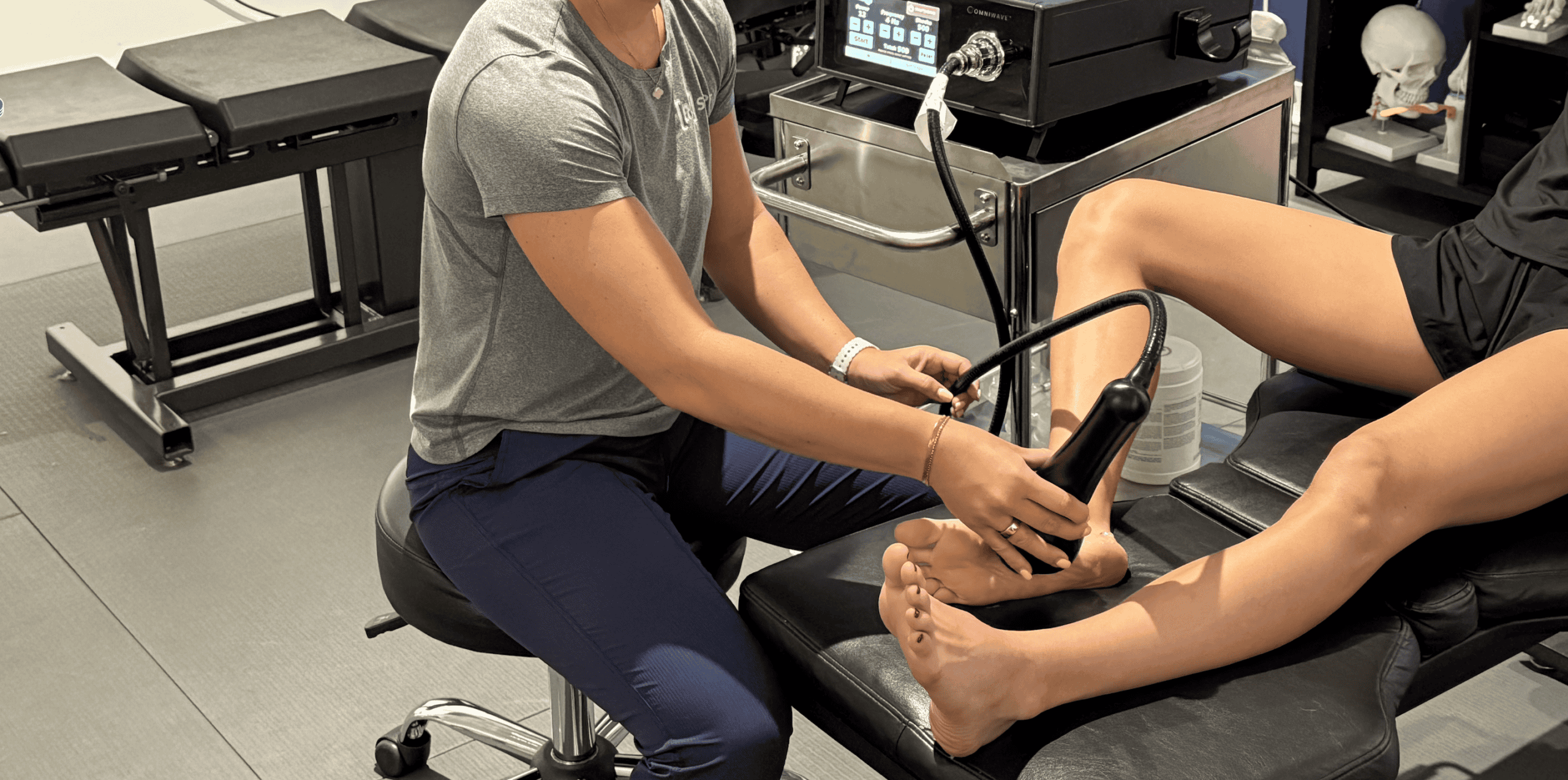
For patients with chronic cervical radiculopathy that hasn’t responded to adjustments or PT alone, shockwave therapy uses targeted acoustic waves to stimulate tissue healing and reduce nerve irritation. It’s a non-invasive option that pairs well with chiropractic and physical therapy as part of a comprehensive treatment plan.
Learn more about shockwave therapy at RESPORT Chicago.
Conventional Treatment Comparison
Some patients research cervical epidural steroid injections or surgery as possible treatments. Injections can provide temporary relief and are sometimes used when conservative care hasn’t resolved symptoms, but they don’t address the underlying mechanical cause. Surgery (such as ACDF — anterior cervical discectomy and fusion) is typically reserved for cases with severe neurological deficits or when conservative care has failed after 6–12 weeks. For most patients, chiropractic care and physical therapy should be the first line of treatment.
Cervical Radiculopathy Exercises: 4 Stretches to Relieve Nerve Pain
These cervical radiculopathy exercises can help reduce nerve tension, improve range of motion, and support recovery. Always perform them gently and stop if they increase your arm pain or tingling. When in doubt, check with a physical therapist or chiropractor before starting.
1. Cervical Retraction ("Chin Tuck")
This exercise corrects forward head posture and reduces compression on the lower cervical nerve roots.
- Sit or stand with your spine tall.
- Gently draw your chin straight back — like you’re making a “double chin.” Do not tilt your head down.
- Hold for 3–5 seconds, then release.
- Repeat 10 times. Perform 2–3 sets throughout the day.
Pro tip: This is especially effective for C6 and C7 radiculopathy and can be done at a desk.
Click here for a video demonstration.
2. Cervical Side-Glide (Neural Mobilization)
This neural mobilization technique gently moves the affected nerve root through its natural range of motion to reduce adhesion and tension.
- Sit upright with both arms relaxed at your sides.
- Slowly tilt your head away from your symptomatic side (e.g., tilt left if your right arm is affected).
- At the same time, gently reach your symptomatic arm toward the floor, palm facing inward.
- Hold 5 seconds, return to neutral. Repeat 10 times.
- Perform 1–2 sets once daily.
Common mistake to avoid: Do not force range of motion. This should feel like a stretch — not reproduce sharp pain or significant tingling.
3. Scalene Stretch
The scalene muscles run along the sides of the neck and can compress the cervical nerve roots if chronically tight. This stretch targets them directly.
- Sit upright and hold the edge of your chair with the hand on your symptomatic side.
- Slowly tilt your head to the opposite side and slightly rotate your chin upward.
- Hold 20–30 seconds. Release slowly.
- Repeat 2–3 times per side.
Who it’s for: Patients with C5–C6 nerve root involvement who experience tightness along the side of the neck and into the outer shoulder.
4. Shoulder Blade Retraction (Scapular Squeeze)
Weak scapular stabilizers alter cervical posture and can increase tension on the lower cervical nerve roots. This simple exercise targets the rhomboids and middle trapezius.
- Sit or stand with arms relaxed at your sides.
- Gently squeeze your shoulder blades together and slightly downward — as if tucking them into your back pockets.
- Hold 5 seconds, release.
- Repeat 15 times. Perform 2–3 sets daily.
Sets/reps summary: 2–3 sets of 15. Can be performed at a desk or standing.
When to Seek Care for Cervical Radiculopathy
See a healthcare provider promptly if you experience any of the following:
- Radiating arm pain, numbness, or tingling that persists beyond a few days
- Progressive weakness in your arm, hand, or grip
- Symptoms that worsen with certain neck positions or at night
- Neck and arm pain following a trauma or fall
- Loss of bladder or bowel control (seek emergency care immediately — this may indicate spinal cord involvement)
Earlier intervention typically leads to faster recovery. Left untreated, chronic nerve root compression can result in permanent nerve damage or muscle atrophy.
When Is Surgery Necessary?
Surgery for cervical radiculopathy is rarely required. It is typically considered only when:
- Conservative care (chiropractic, PT, dry needling) has not provided adequate relief after 6–12 weeks
- There is significant progressive neurological deficit (rapid muscle wasting, loss of reflexes)
- Imaging shows severe spinal cord compression (myelopathy)
- Pain is severe and unmanageable with non-surgical options
If you’re unsure whether surgery is appropriate for your case, a consultation with a RESPORT Chicago chiropractor or physical therapist is a good first step. We can review your imaging and symptom history and give you an honest assessment of whether conservative care is likely to work for you.
Frequently Asked Questions
How long does cervical radiculopathy last?
Most cases of cervical radiculopathy resolve within 4–12 weeks with appropriate conservative treatment. Research suggests that 75–90% of patients improve without surgery. However, the timeline depends on the underlying cause, the severity of nerve root compression, and how quickly treatment is initiated. Some patients experience relief within a few weeks; others with significant disc herniation or stenosis may require longer-term management. If symptoms haven’t improved after 6–8 weeks of consistent conservative care, further imaging or specialist referral may be warranted.
Can a chiropractor help a pinched nerve?
Yes. Chiropractic care is one of the most effective and evidence-supported treatments for cervical radiculopathy. A sports chiropractor can use spinal manipulation and mobilization to reduce mechanical compression on the affected nerve root, combined with soft tissue techniques and therapeutic exercises to address the underlying postural and muscular contributors. Multiple clinical studies support chiropractic adjustments as effective for reducing arm pain and improving function in patients with a pinched nerve in the neck.
Is cervical radiculopathy serious?
Cervical radiculopathy can range from mildly uncomfortable to significantly debilitating. While many cases resolve on their own or with conservative treatment, it should not be ignored. Untreated chronic nerve root compression can lead to lasting nerve damage, muscle weakness, or atrophy. The condition becomes more serious if symptoms include progressive weakness, loss of grip strength, or any involvement of bowel and bladder function — the latter requires immediate medical evaluation.
What’s the difference between cervical radiculopathy and a herniated disc?
A herniated disc is one of the most common causes of cervical radiculopathy — but they aren’t the same thing. A herniated disc refers to the structural problem: the inner disc material has pushed through the outer disc wall. Cervical radiculopathy refers to the resulting nerve dysfunction: the pain, tingling, and weakness that occurs when that herniated disc (or another cause like a bone spur) compresses a cervical nerve root. You can have a herniated disc without radiculopathy, and radiculopathy can occur without disc herniation — for example, from spinal stenosis or degenerative disc disease alone.
Need Help with Cervical Radiculopathy in Chicago?
At RESPORT Chicago, our team of sports chiropractors and physical therapists specializes in diagnosing and treating cervical radiculopathy and pinched nerve conditions. We take a comprehensive approach — combining chiropractic adjustments, dry needling, physical therapy, and targeted exercise programming to get you out of pain and back to doing what you love.
Located in Old Town on Chicago’s North Side, RESPORT treats athletes, desk workers, and everyone in between. Book a PT or chiropractic assessment today and get a personalized treatment plan for your neck and arm pain.
Ready to Book an Appointment?
Take the first step toward relieving your neck and arm pain. Our sports chiropractors and physical therapists at RESPORT Chicago are ready to build a personalized treatment plan for you.
Still Have Questions?
Not sure if RESPORT is right for your situation? We’re happy to help. Reach out and one of our team members will get back to you.