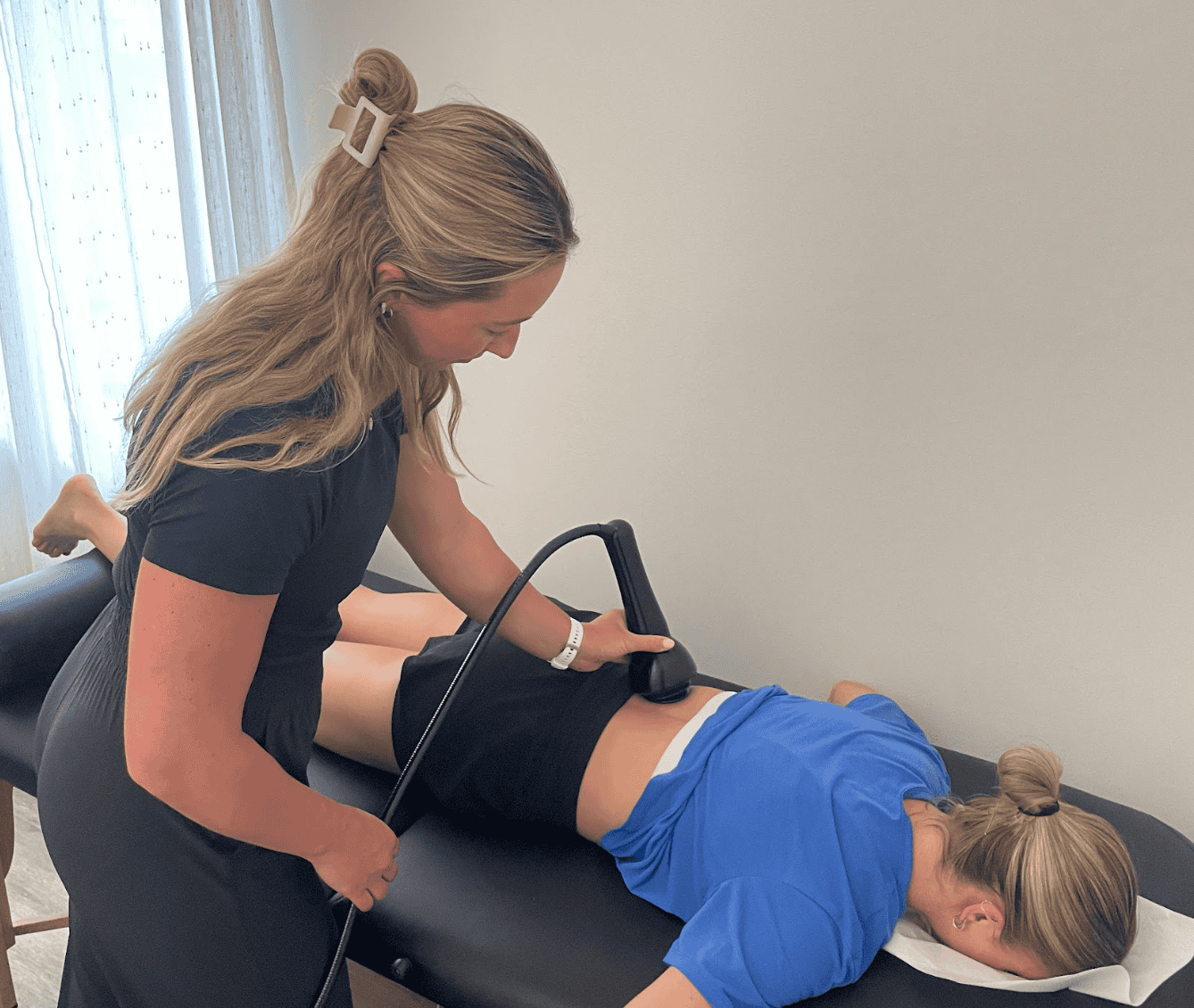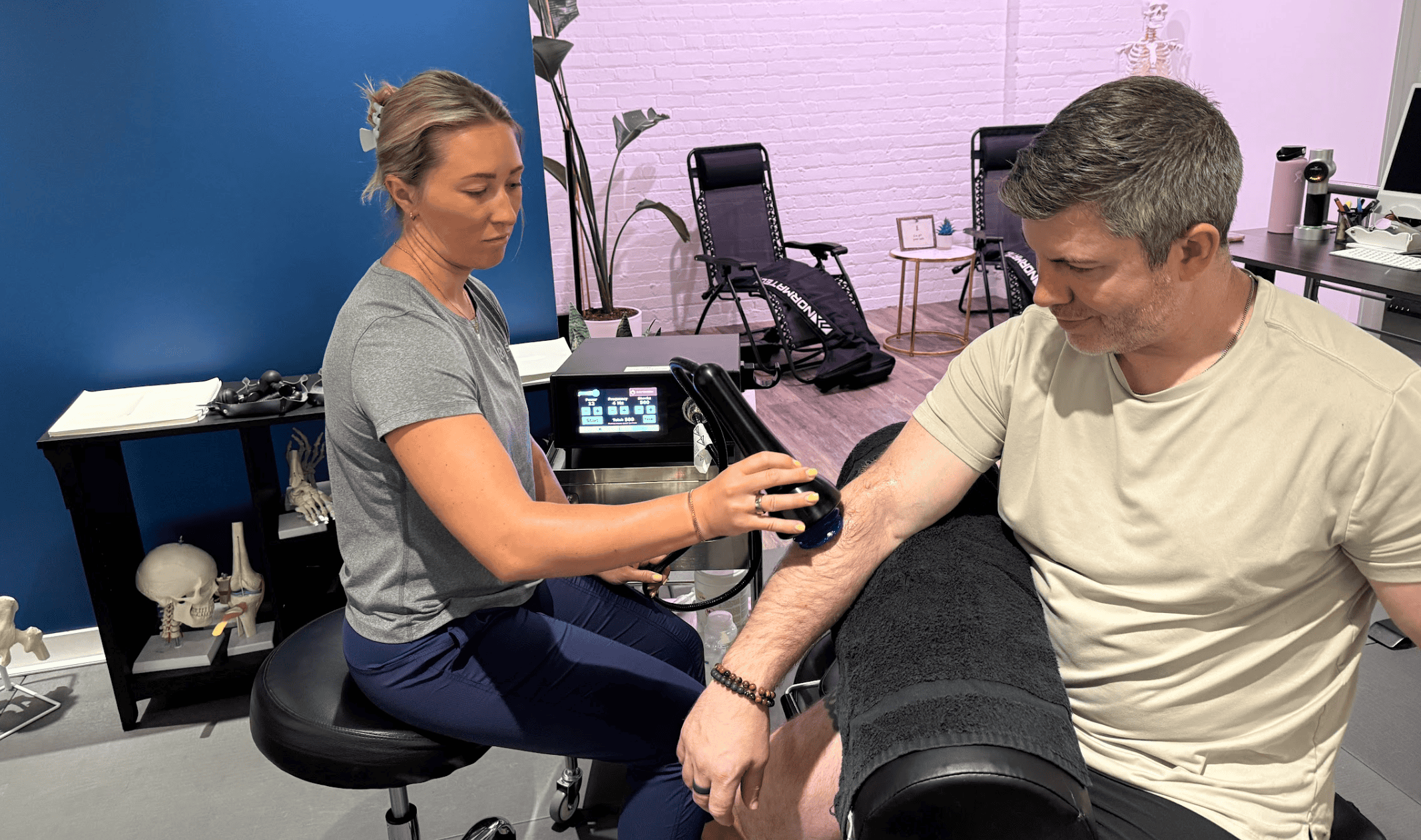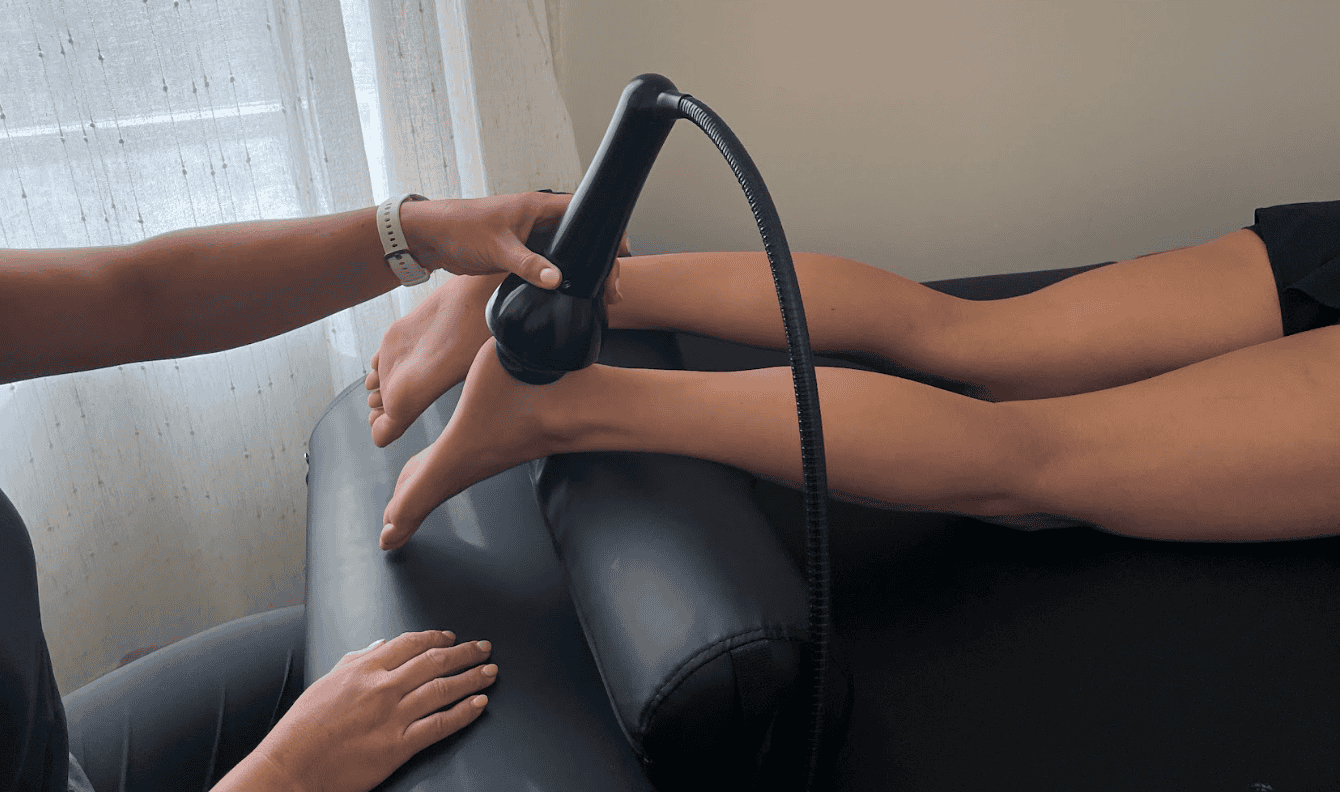


If you’ve been diagnosed with a herniated or bulging disc — or you suspect you have one based on your symptoms — you may be wondering whether shockwave therapy, given its growing reputation for chronic pain, could help. This is one of the more important questions to answer honestly and directly, because the answer has real implications for how you approach your recovery.
Shockwave therapy does not treat disc injuries. It has no mechanism for repairing, reducing, or otherwise directly affecting a herniated, bulging, or degenerated spinal disc. At RESPORT Chicago, we think it’s important to be completely clear about this upfront, rather than letting shockwave therapy’s effectiveness for other conditions create confusion about what it can do for disc-related pain specifically. This guide explains what disc injuries actually are, why shockwave therapy isn’t the right tool for treating them directly, what actually does help, and where shockwave therapy has a narrow, legitimate supporting role.
What Is a Disc Injury?
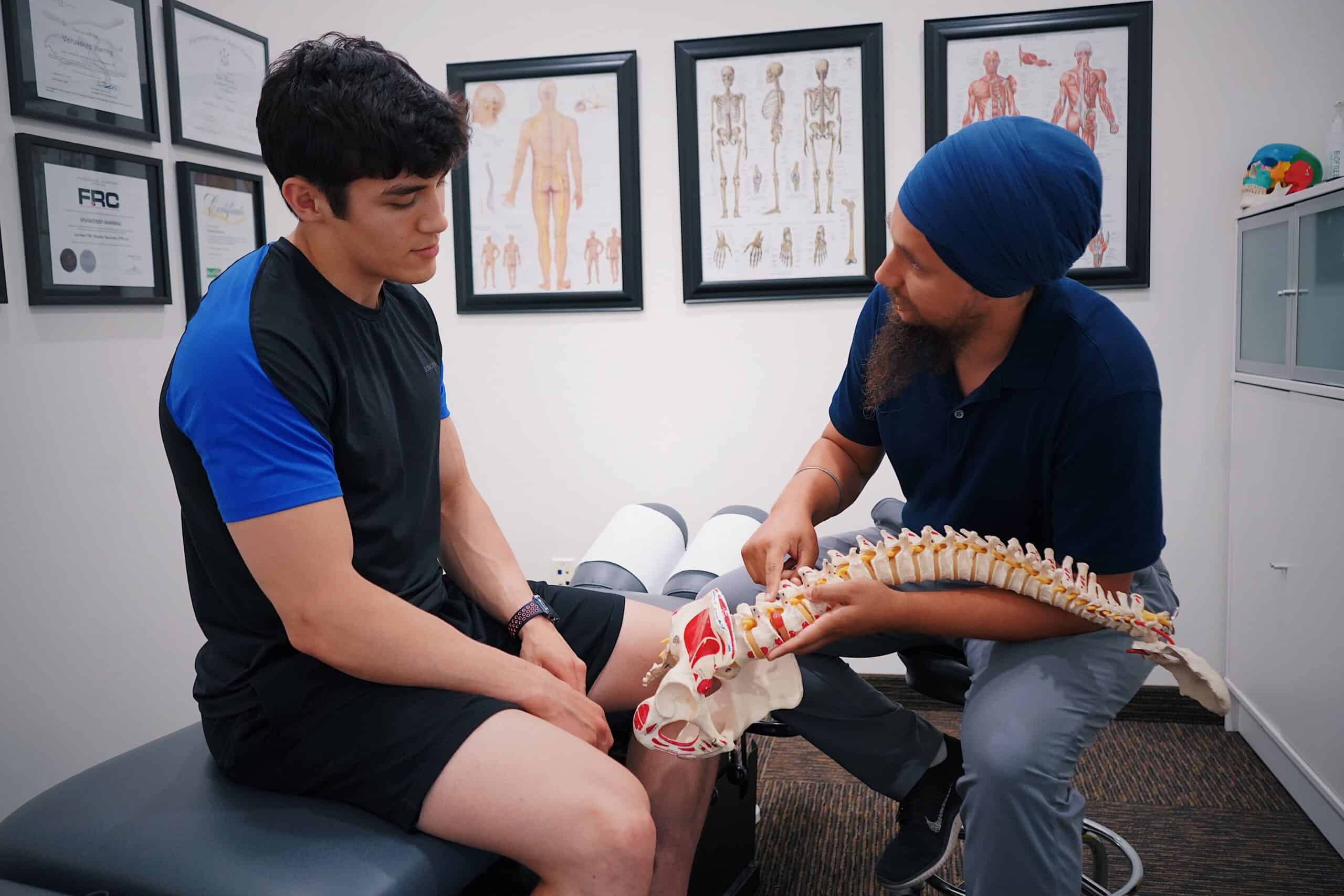
The discs in your spine are cartilage-like cushions sitting between each vertebra, made up of a tough outer layer (the annulus fibrosus) surrounding a softer, gel-like center (the nucleus pulposus). They absorb shock and allow the spine to bend and rotate. A disc injury generally falls into one of these categories:
Disc bulge — the disc extends slightly beyond its normal boundary, without the outer layer being torn. Bulges are common and don’t always cause symptoms.
Disc herniation — the outer layer of the disc tears, allowing some of the inner gel-like material to push through and, in some cases, press on a nearby nerve root or the spinal cord.
Degenerative disc disease — a gradual, age-related process where discs lose height, hydration, and cushioning capacity over time, which can contribute to chronic back or neck pain and, in some cases, secondary nerve irritation.
Disc injuries can occur anywhere along the spine, though they’re most common in the lumbar (low back) and cervical (neck) regions, given the greater mobility and mechanical stress these areas experience.
Why Shockwave Therapy Doesn't Treat the Disc Itself
Shockwave therapy — also known as Extracorporeal Shock Wave Therapy (ESWT) — works by delivering targeted acoustic pressure waves into tissue to stimulate blood flow, collagen production, and a biological healing response. This mechanism is well suited to tendons and, to a lesser extent, muscle tissue — structures that are relatively close to the skin surface and have identifiable biological healing pathways that shockwave therapy can meaningfully influence.
Discs are fundamentally different. They sit deep within the spinal column, are not accessible to the kind of targeted, superficial-to-moderate-depth pressure waves shockwave therapy delivers, and — critically — have very limited blood supply as adult tissue, which is part of why disc injuries are notoriously slow to heal on their own in the first place. There is no established mechanism, and no credible research, supporting the idea that shockwave therapy can repair a torn disc annulus, reduce herniated disc material, or reverse degenerative disc changes. Any provider suggesting shockwave therapy will “fix” your disc is making a claim well beyond what the treatment is capable of.
This is a meaningfully different situation from, say, calcific shoulder tendonitis, where shockwave therapy directly and measurably affects the pathological tissue (the calcium deposit) causing the problem. With a disc injury, the pathology is structurally out of reach of what shockwave therapy does.
What Actually Helps Disc Injuries
Understanding what does work for disc-related pain is more useful than focusing on what doesn’t. Treatment approaches with genuine evidence and clinical relevance for disc injuries include:
Time and activity modification. Many disc herniations, particularly smaller ones, improve significantly over weeks to months as the body’s own inflammatory and healing processes reduce swelling around the affected area and, in some cases, the herniated material itself gradually shrinks (a process called resorption).
Physical therapy and targeted exercise. Specific exercise protocols — often centered on core stabilization, directional preference exercises (movements that centralize or reduce radiating symptoms), and gradual return to activity — have strong evidence for improving disc-related pain and function over time.
Chiropractic care. Spinal manipulation and mobilization techniques can help manage pain and improve mobility for many patients with disc-related back or neck pain, particularly when combined with an active exercise program.
Epidural steroid injections. For patients with significant nerve-related pain (radiculopathy) from disc herniation, an epidural injection delivers anti-inflammatory medication directly to the affected nerve root, which can meaningfully reduce pain and allow for more effective participation in rehabilitation.
Surgical evaluation. For patients with severe, persistent symptoms — significant weakness, loss of bowel or bladder control (a medical emergency requiring immediate evaluation), or pain that hasn’t improved after an adequate trial of conservative treatment — surgical options like microdiscectomy may be appropriate and effective.
The right combination of these approaches depends on the severity of your disc injury, whether nerve involvement is present, and how you’ve responded to initial conservative care — which is exactly why an accurate diagnosis matters so much before starting any treatment plan.
Where Shockwave Therapy Does Have a Narrow, Legitimate Role
While shockwave therapy cannot treat the disc itself, it can play a supporting role in a broader disc injury recovery plan in one specific way: addressing secondary muscle tension and guarding.
When you have a disc injury, the surrounding muscles frequently tighten up protectively — a phenomenon called muscle guarding — as the body attempts to limit movement in the injured area. Over time, this protective muscle tension can become its own source of chronic pain, separate from (though related to) the original disc injury. This secondary muscle tightness is a legitimate target for shockwave therapy, using the same mechanism described in our guides on shockwave therapy for upper back and low back pain — releasing chronic trigger points and improving blood flow to tight, guarded muscle tissue.
It’s important to understand this distinction clearly: in this context, shockwave therapy isn’t treating your disc injury. It’s treating a secondary muscular consequence of it, as one part of a broader treatment plan that also addresses the disc itself through appropriate means. This is a genuinely useful role, but a limited and specific one — not a treatment for the disc injury as a whole.
Warning Signs That Require Immediate Medical Attention
Regardless of what treatment approach you’re considering, certain symptoms associated with disc injuries require prompt medical evaluation and should never be managed with shockwave therapy, chiropractic care, or any conservative treatment alone:
- Loss of bowel or bladder control, or saddle anesthesia (numbness in the groin/inner thigh area) — these can indicate cauda equina syndrome, a surgical emergency
- Progressive weakness in the leg or arm that’s getting worse rather than improving
- Significant, rapidly worsening neurological symptoms, including numbness or weakness spreading to new areas
If you’re experiencing any of these symptoms, seek immediate medical evaluation rather than starting with any conservative treatment approach, including an evaluation at a chiropractic or physical therapy clinic.
What to Expect During an Evaluation at RESPORT Chicago
If you’re dealing with back or neck pain and suspect a disc injury, your evaluation at our Old Town clinic starts with a thorough history and physical exam, including neurological testing to assess for nerve involvement. This helps confirm whether a disc issue is likely, assess its severity, and screen for any of the warning signs described above that would require more urgent evaluation elsewhere.
If your presentation is consistent with a disc injury, we’ll discuss a treatment plan appropriate to your specific situation — which may include chiropractic care, targeted exercise, and referral for imaging or additional evaluation if warranted — being direct with you about the fact that shockwave therapy isn’t a treatment for the disc itself, though it may be incorporated to address secondary muscle tension if that’s contributing to your symptoms.
Frequently Asked Questions
Can shockwave therapy heal a herniated disc?
No. Shockwave therapy has no established mechanism for repairing disc material or reducing a herniation. It's not an appropriate treatment for the disc injury itself.
Can shockwave therapy help sciatica from a disc herniation?
Not directly. Sciatica caused by disc-related nerve compression requires evaluation and treatment specific to the nerve and disc, not a muscle-focused treatment like shockwave therapy. If muscle guarding has developed as a secondary issue, shockwave therapy may play a limited supporting role in that specific component of your symptoms.
Is there any non-surgical treatment that can shrink a herniated disc?
Many disc herniations improve on their own over weeks to months through a natural process where the body gradually reabsorbs some of the herniated material, particularly with appropriate activity modification and physical therapy. This is a different biological process than anything shockwave therapy influences, and outcomes vary based on the size and type of herniation.
Why would a provider recommend shockwave therapy if I have a disc injury?
If shockwave therapy is recommended alongside a disc injury diagnosis, it should be specifically for addressing secondary muscle tension or guarding — not as a treatment for the disc itself. If a provider suggests shockwave therapy will resolve your disc herniation directly, that's worth questioning.
What symptoms mean I should see a doctor immediately rather than trying conservative treatment?
Loss of bowel or bladder control, numbness in the groin or inner thigh area, or progressively worsening weakness in an arm or leg are signs that require immediate medical evaluation, since they can indicate a more serious complication requiring urgent treatment.
Does chiropractic care help disc injuries?
For many patients with disc-related back or neck pain, chiropractic care combined with targeted exercise can help manage pain and improve function. The appropriate approach depends on the severity of the disc injury and whether significant nerve involvement is present, which is best determined through a proper evaluation.
Get an Accurate Diagnosis and Honest Treatment Plan at RESPORT Chicago
If you’re dealing with a suspected disc injury, the most important first step isn’t choosing a treatment — it’s getting an accurate diagnosis so you know what you’re actually dealing with. We’ll never recommend shockwave therapy as a treatment for a disc injury itself, because it isn’t one, and we believe patients deserve that clarity from the start.
RESPORT Chicago’s Old Town clinic offers a thorough evaluation for suspected disc injuries, with a treatment plan built around what will actually help your specific diagnosis — including chiropractic care, targeted exercise, and appropriate referrals when needed.
Ready to get an accurate diagnosis and an honest treatment plan? Book an evaluation at RESPORT Chicago today.
Questions? Contact our team — we’re happy to help you determine whether ESWT is right for your condition.
This article was medically reviewed by the RESPORT Chicago clinical team.