

If you’ve got a bony bump on the back of your heel that’s become increasingly painful — especially with certain shoes rubbing against it — you may be dealing with Haglund’s deformity. It’s a common cause of chronic heel pain, and it often comes with a confusing mix of information about treatment options, since the condition itself is structural, but much of the pain associated with it comes from soft tissue that responds well to non-surgical care.
At RESPORT Chicago, we treat Haglund’s deformity patients throughout Old Town and the North Side using shockwave therapy as part of a comprehensive, honest treatment approach — one that’s clear about what shockwave therapy can and can’t do for this specific condition. This guide explains what Haglund’s deformity actually is, why it causes pain, where shockwave therapy fits into treatment, and what to realistically expect.
What Is Haglund's Deformity?
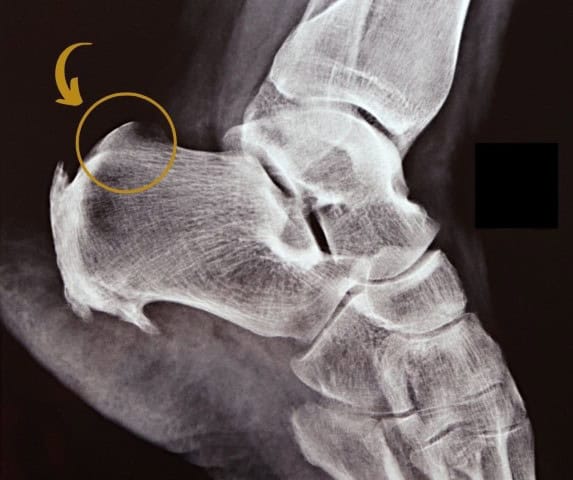
Haglund’s deformity is a bony enlargement that develops on the back of the heel bone (calcaneus), at the point where the Achilles tendon attaches. It’s sometimes called a “pump bump,” since it’s frequently aggravated — though not necessarily caused — by rigid-backed shoes like pumps, dress shoes, or ice skates that press directly against the area.
The bump itself is a structural, bony change. But the pain patients experience typically doesn’t come from the bone alone — it comes from the soft tissue structures irritated by the bony prominence rubbing against surrounding tissue and footwear. This distinction is the key to understanding treatment options for this condition, and it’s frequently glossed over in generic information about Haglund’s deformity.
The Soft Tissue Structures Involved
Haglund’s deformity commonly leads to irritation of two nearby soft tissue structures, and identifying which one (or both) is contributing to your pain matters for treatment:
Retrocalcaneal bursitis — inflammation of the small fluid-filled sac (bursa) that sits between the Achilles tendon and the heel bone, cushioning the tendon as it moves. The bony prominence of Haglund’s deformity can compress and irritate this bursa with repeated movement.
Insertional Achilles tendinopathy — degeneration of the Achilles tendon specifically at the point where it attaches to the heel bone. This is a distinct condition from midportion Achilles tendinopathy (which affects the tendon a few centimeters higher up) and behaves somewhat differently, partly because the bony prominence associated with Haglund’s deformity can directly contribute to tendon irritation at the insertion point.
Many patients with Haglund’s deformity have some combination of both conditions contributing to their symptoms, along with irritation of the skin and soft tissue overlying the bump itself.
Who Gets Haglund's Deformity?
Haglund’s deformity is especially common among:
- People with a naturally higher-arched foot structure, which tends to tilt the heel bone in a way that increases prominence at the back of the heel
- Women who frequently wear rigid, low-backed dress shoes or heels
- Runners and athletes, particularly those in sports involving repetitive ankle motion
- People with a tight Achilles tendon, which increases pressure against the bony prominence
- Individuals with a family history of the condition, since foot structure has a genetic component
Common Symptoms of Haglund's Deformity
Patients typically describe a combination of a visible or palpable bump and pain that’s aggravated by specific triggers. Common signs include:
- A noticeable bony bump on the back of the heel, sometimes with redness or swelling over it
- Pain that worsens with certain shoes, particularly those with a rigid back
- Pain and tenderness where the Achilles tendon meets the heel bone
- Swelling in the area, particularly after activity or prolonged shoe-related irritation
- Pain that’s often worse at the start of activity and may ease somewhat with movement, then return afterward
- In some cases, thickened or calloused skin over the bump from repeated friction
Why Shockwave Therapy Can't Shrink the Bony Bump — But Can Still Help
It’s important to be direct about this: shockwave therapy does not reduce the size of the bony prominence itself. Haglund’s deformity is a structural bone change, and no non-surgical treatment — shockwave therapy included — reshapes or removes bone. If a provider suggests otherwise, that claim goes beyond what the treatment is capable of.
What shockwave therapy can meaningfully help with is the soft tissue pain associated with the deformity — specifically insertional Achilles tendinopathy and, to a lesser extent, the tendon and soft tissue changes that accompany chronic retrocalcaneal irritation. This is a genuinely useful distinction, because for many patients, the soft tissue pain is the primary source of daily discomfort, even though the bony bump is the underlying anatomical cause.
How Shockwave Therapy Treats the Associated Tendon Pain
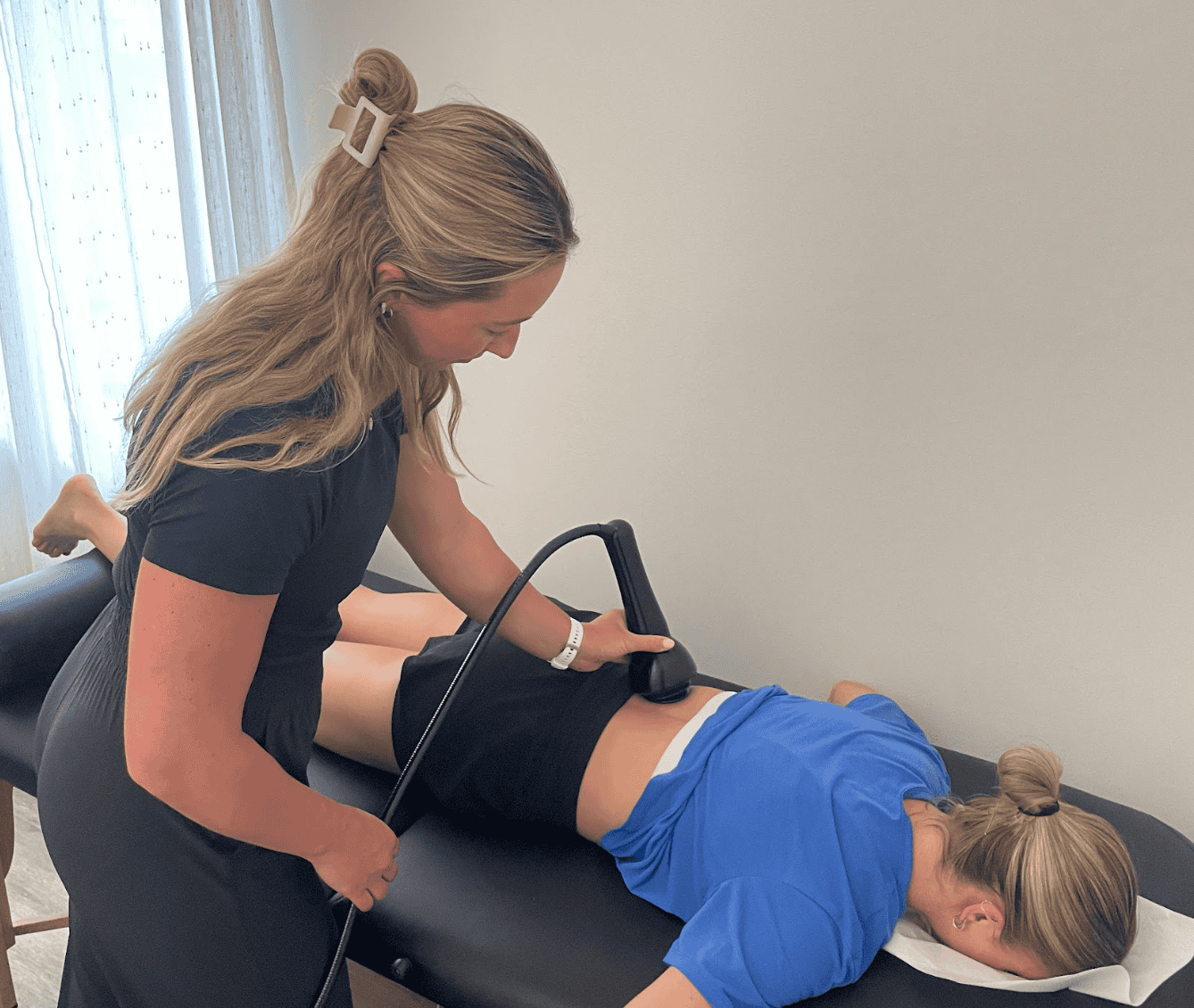
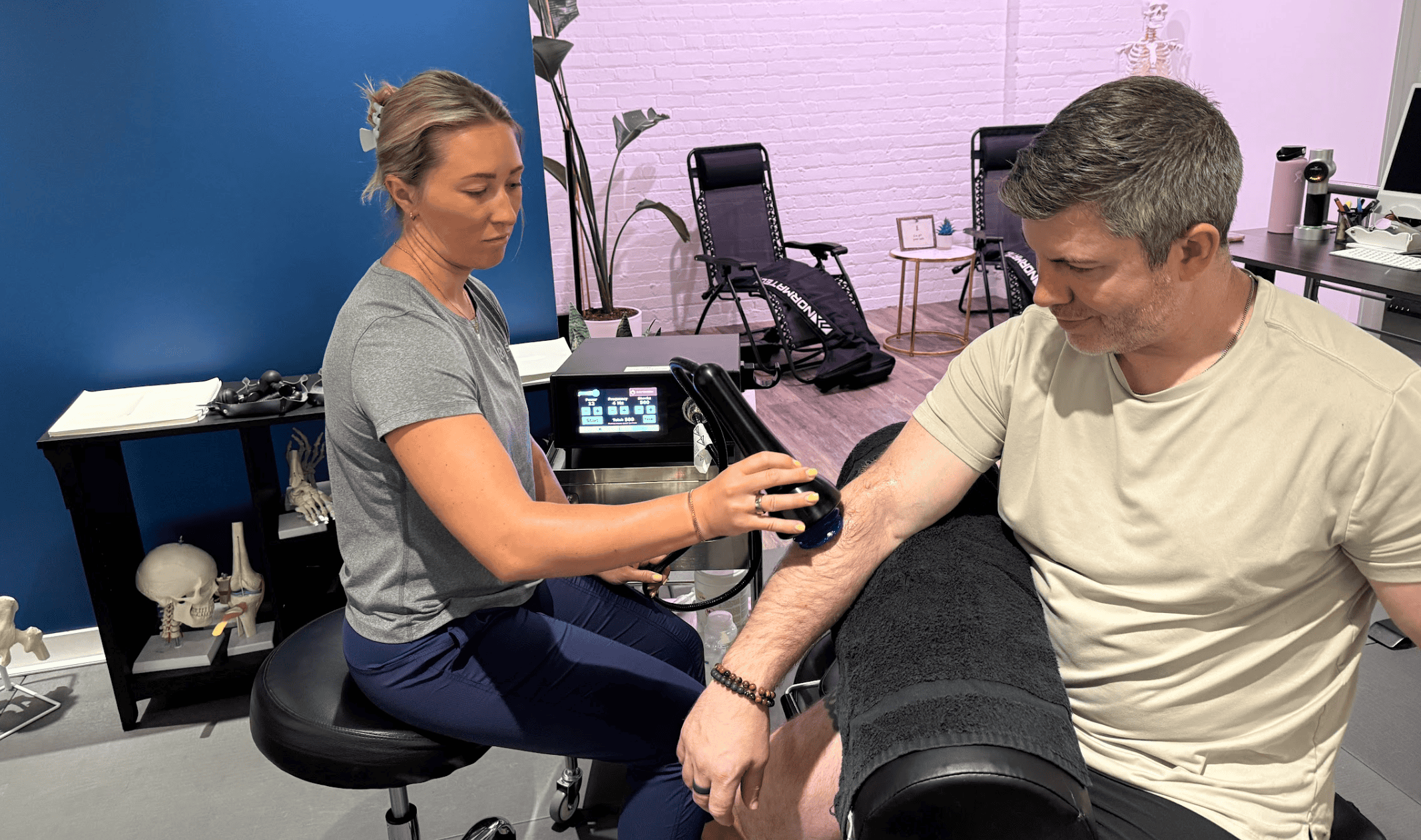
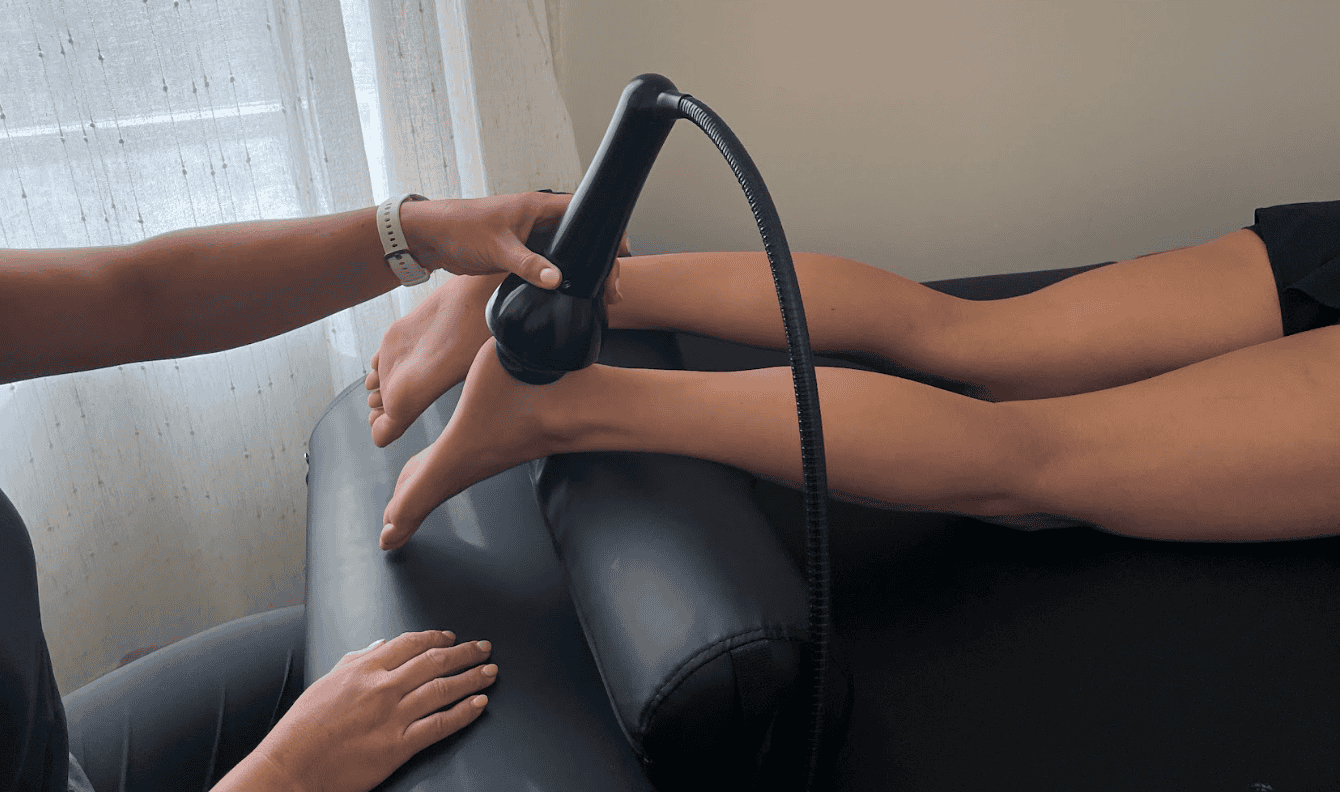
Shockwave therapy — also known as Extracorporeal Shock Wave Therapy (ESWT) — delivers targeted acoustic pressure waves through a handheld applicator to the affected tendon tissue at the back of the heel. This stimulates a controlled healing response in the degenerated Achilles insertion without an incision, injection, or anesthesia.
Here’s what shockwave therapy does at the tissue level:
- Stimulates blood flow to the tendon. The pressure waves promote new blood vessel formation (neovascularization) in the degenerated portion of the Achilles insertion, improving delivery of the oxygen and nutrients needed for tissue repair.
- Triggers a healing cascade. Shockwave therapy prompts the release of growth factors and stimulates collagen production, helping disorganized tendon fibers at the insertion point rebuild in a more structured, load-tolerant way.
- Reduces pain signaling. The treatment has a documented desensitizing effect on local pain receptors, which is why many patients notice reduced pain within the first several sessions, even before full tissue remodeling has occurred.
Because insertional Achilles tendinopathy behaves somewhat differently than midportion Achilles tendinopathy — partly due to the influence of the underlying bony prominence — treatment protocols and expected outcomes can differ slightly from standard Achilles tendon treatment, which is why an accurate diagnosis distinguishing insertional from midportion involvement matters.
What the Research Says
Research on shockwave therapy specifically for insertional Achilles tendinopathy, including cases associated with Haglund’s deformity, has generally shown positive outcomes for pain reduction and functional improvement, though the evidence base is somewhat smaller and shows more variable results than shockwave research for midportion Achilles tendinopathy or plantar fasciitis. Several studies suggest that insertional cases may respond somewhat more slowly or require a more tailored treatment approach compared to midportion tendon issues, which is consistent with the general clinical understanding that insertional tendinopathy — especially when a bony deformity like Haglund’s is contributing to the irritation — can be a more complex problem to fully resolve with any single conservative treatment.
What to Expect During Shockwave Therapy at RESPORT
If you’re considering shockwave therapy for Haglund’s deformity-related pain at our Old Town clinic, here’s what the process typically looks like:
1. Initial Evaluation
Treatment begins with a thorough assessment, including a review of your symptoms, footwear habits, and a physical exam to determine whether your pain is coming primarily from insertional Achilles tendinopathy, retrocalcaneal bursitis, or both. Imaging (X-ray to assess the bony prominence, and sometimes ultrasound or MRI to assess the tendon and bursa) is often used to confirm the diagnosis and understand the extent of soft tissue involvement.
2. Treatment Sessions
Shockwave therapy is applied directly over the affected tendon at the back of the heel using a handheld device. Most patients describe the sensation as a firm, rhythmic pressure or mild discomfort. Sessions typically last 10–15 minutes.
3. Treatment Course
Most patients require 4 to 6 sessions, spaced about a week apart. Given that insertional Achilles cases can respond somewhat more gradually than other tendon conditions, your provider will track your progress across the treatment course and discuss realistic expectations based on your specific presentation.
4. Complementary Care
Shockwave therapy works best as part of a broader treatment plan that also addresses the mechanical factors contributing to your symptoms. At RESPORT, we typically pair shockwave sessions with:
- Footwear modification guidance — open-backed or well-cushioned shoes that avoid direct pressure on the bony prominence can significantly reduce ongoing irritation
- Achilles and calf flexibility and strengthening exercises to reduce tension on the tendon insertion, generally with modified loading angles appropriate for insertional (rather than midportion) tendon issues
- Heel lifts or padding to reduce friction and pressure against the deformity during the healing process
- Chiropractic and gait assessment to identify any biomechanical factors, including foot structure and ankle mobility, contributing to ongoing irritation
5. Recovery and Follow-Up
Because shockwave therapy is non-invasive, there’s no formal recovery period required. Some patients feel mild soreness in the treated area for a day or two after each session. Activity and footwear modifications during the treatment course are particularly important for this condition, since continued direct pressure against the bony prominence can undermine the healing process even while undergoing treatment.
When Is Surgery Necessary for Haglund's Deformity?
For most patients, especially those catching the condition before significant tendon degeneration has occurred, conservative treatment — including shockwave therapy, footwear changes, and targeted exercise — successfully manages symptoms without surgery. However, surgical removal of the bony prominence (with repair of the Achilles insertion if needed) may be considered for patients with:
- Severe, persistent pain that hasn’t responded to a full course of conservative treatment, including shockwave therapy
- Significant structural deformity causing ongoing mechanical irritation regardless of footwear or activity modification
- Advanced insertional Achilles tendon damage, including partial tearing, visible on imaging
If you’ve been told surgery is your only option, it’s worth getting an evaluation to confirm whether a full course of conservative treatment, including shockwave therapy, has genuinely been tried first — since many patients successfully avoid surgery with the right non-surgical approach.
Is Shockwave Therapy Right for You?
Shockwave therapy tends to work best for Haglund’s deformity patients who:
- Have pain primarily from insertional Achilles tendinopathy or associated soft tissue irritation, rather than pain driven purely by mechanical rubbing against the bony prominence alone
- Have had symptoms for more than several weeks that haven’t resolved with footwear changes and basic conservative care
- Want to avoid or delay surgery
- Are willing to combine treatment with footwear and activity modifications, since these matter significantly for this specific condition
If you’re unsure whether shockwave therapy fits your specific presentation, an evaluation — including imaging if needed — is the best way to find out. At RESPORT, we’ll give you an honest assessment of what shockwave therapy can realistically accomplish for your case, rather than overpromising results it isn’t designed to deliver.
Frequently Asked Questions
Can shockwave therapy shrink or remove a Haglund's bump?
No. Shockwave therapy doesn't reduce the size of the bony prominence itself, since it's a structural bone change. Shockwave therapy treats the associated soft tissue pain — primarily insertional Achilles tendinopathy — rather than the bone deformity.
How many shockwave therapy sessions do I need for Haglund's deformity?
Most patients complete 4 to 6 sessions, spaced about a week apart, though insertional Achilles cases can respond somewhat more gradually than other tendon conditions, so your provider will track your progress and adjust expectations accordingly.
Will I still need surgery if I try shockwave therapy first?
Many patients successfully avoid surgery with a full course of conservative treatment, including shockwave therapy combined with footwear and activity modifications. Surgery is generally reserved for cases with significant structural deformity or advanced tendon damage that doesn't respond to conservative care.
Does shoe choice matter during shockwave therapy treatment?
Yes, significantly. Continued pressure from rigid-backed shoes against the bony prominence can undermine healing even during active treatment. Switching to open-backed or well-cushioned footwear is an important part of a successful treatment plan for this specific condition.
What's the difference between Haglund's deformity and plantar fasciitis?
Both cause heel pain, but they involve different structures. Haglund’s deformity affects the back of the heel, involving the bony prominence and the Achilles tendon insertion. Plantar fasciitis affects the bottom of the heel, involving the plantar fascia ligament. They’re distinct conditions requiring different diagnostic focus, though both are treated with shockwave therapy when appropriate.
Is shockwave therapy covered by insurance?
Shockwave therapy is typically offered as a per-session or package rate. Contact our team directly for current pricing — we are happy to walk you through the details.
Get an Honest Evaluation for Haglund's Deformity at RESPORT Chicago
Haglund’s deformity can be a confusing condition to research, since so much information conflates the bony bump with the pain it causes. We believe in giving patients a clear, honest picture of what shockwave therapy can and can’t do for this specific condition, so you can make an informed decision about your treatment path.
RESPORT Chicago’s Old Town clinic offers shockwave therapy alongside footwear guidance, targeted exercise, and chiropractic care — giving North Side patients a comprehensive, non-surgical approach to managing Haglund’s deformity-related pain.
Ready to find out if shockwave therapy can help your heel pain? Book an evaluation at RESPORT Chicago today.
Questions? Contact our team — we’re happy to help you determine whether ESWT is right for your condition.
This article was medically reviewed by the RESPORT Chicago clinical team.