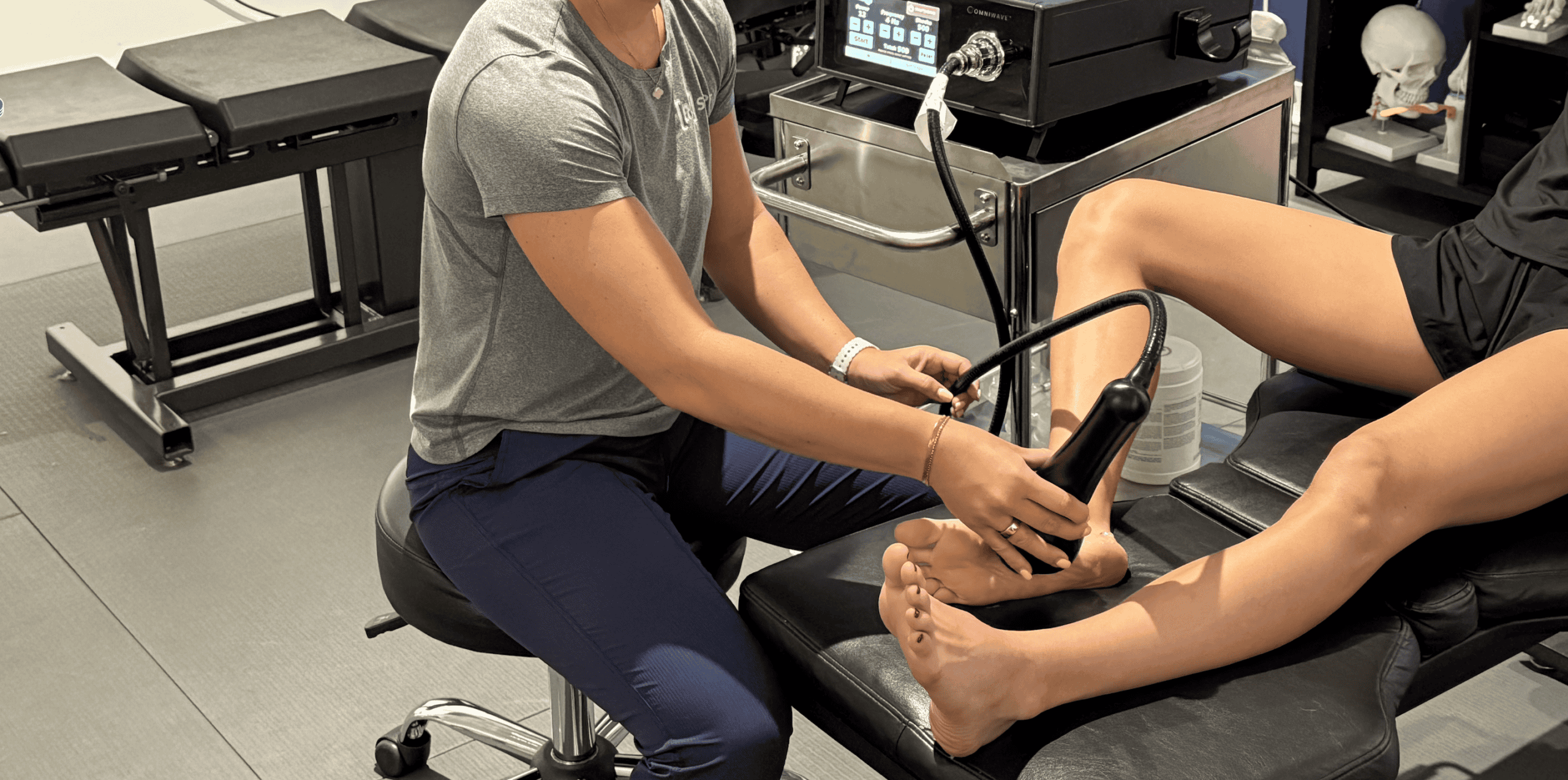


If a sharp, burning pain is shooting from your lower back down one leg, you may be dealing with sciatica. It’s one of the most common reasons patients visit our Old Town clinic. Sciatica isn’t a diagnosis on its own. It describes pain that follows the path of the sciatic nerve, which runs from the lower back through the hips and buttocks and down each leg. It usually affects only one side of the body.
The good news is that most cases improve with conservative, non-surgical care. Below, the RESPORT team explains what causes sciatica, how it differs from a herniated disc, exercises you can try at home, and when it’s time to get help. That applies whether you’re a runner logging miles on the Lakefront Trail or a desk worker commuting into the Loop.
Symptoms of Sciatica
Sciatica symptoms can vary widely but typically include:
- Radiating pain: A sharp, burning, or shooting pain that starts in the lower back and travels down the buttock and the back of the leg.
- Numbness or tingling: A pins-and-needles feeling, often in the leg or foot.
- Muscle weakness: Weakness in the affected leg that can affect mobility and balance.
- Lower back pain: Back pain sometimes comes with the leg pain, though the leg pain is usually worse.
- Pain that worsens with certain positions: Long periods of sitting or standing, sudden movements, and even coughing or sneezing can make it flare.
What Causes Sciatica?
Sciatica symptoms can vary widely but typically include:
- Radiating pain: A sharp, burning, or shooting pain that starts in the lower back and travels down the buttock and the back of the leg.
- Numbness or tingling: A pins-and-needles feeling, often in the leg or foot.
- Muscle weakness: Weakness in the affected leg that can affect mobility and balance.
- Lower back pain: Back pain sometimes comes with the leg pain, though the leg pain is usually worse.
- Pain that worsens with certain positions: Long periods of sitting or standing, sudden movements, and even coughing or sneezing can make it flare.
Sciatica vs. Herniated Disc: What's the Difference?
Patients often use these terms interchangeably, but they aren’t the same thing. Sciatica is a symptom pattern: pain traveling along the sciatic nerve. A herniated disc is a structural problem, and it is one of several things that can cause sciatica.
Not every herniated disc causes sciatica. Many people have disc bulges on an MRI and no symptoms at all. Likewise, not all sciatica comes from a disc, since piriformis syndrome or stenosis can produce the same leg pain.
| Sciatica | Herniated Disc | |
|---|---|---|
| What it is | Nerve pain along the sciatic nerve path | Disc material pushing out of place |
| Where you feel it | Buttock, back of thigh, calf, foot | Can cause back pain, leg pain, or no pain |
| Cause or symptom? | Symptom | One possible cause |
| Other possible sources | Stenosis, piriformis syndrome, spondylolisthesis | — |
| How it's identified | Symptom pattern + physical exam | Physical exam, confirmed with imaging if needed |
Knowing the source matters because it changes the treatment. For example, exercises that help a disc-related case may differ from those that help piriformis-related pain. If a disc injury is behind your symptoms, learn more about our approach to disc injuries.
When to Seek Immediate Care
Most sciatica is not an emergency. Go to the emergency room or call 911 if you experience:
- Loss of bladder or bowel control, or difficulty urinating
- Numbness in the groin, inner thighs, or “saddle” area
- Sudden or worsening weakness in one or both legs, or foot drop (trouble lifting the front of your foot)
- Sciatica symptoms in both legs at once
These can be signs of cauda equina syndrome, a rare condition that needs urgent medical attention. See a doctor promptly if your pain follows a fall or accident, or comes with fever, unexplained weight loss, or a history of cancer
Sciatica Treatment Options
Treatment depends on the underlying cause and the severity of your symptoms. At RESPORT, we start with a thorough assessment to find what’s irritating the nerve, then build a plan that combines hands-on care with active rehab.
Chiropractic care
Targeted adjustments and spinal mobilization can reduce pressure on irritated nerve roots and restore normal movement. Learn more about our sciatica and back pain treatment in Chicago.
Physical therapy
Exercises and stretches strengthen the muscles that support the spine and improve flexibility. Our physical therapists also coach posture, lifting mechanics, and a safe return to running or training.
Dry needling
For sciatica driven by tight glute, piriformis, or low back muscles, dry needling can release trigger points and ease muscle tension around the nerve.
Massage therapy
Soft tissue work reduces muscle guarding and improves circulation.
Heat and ice
Ice can calm an acute flare. Heat can relax tight muscles once the initial pain settles.
Medications and injections
Over-the-counter anti-inflammatories can help short term. Epidural steroid injections are an option your physician may discuss for severe cases.
Surgery
In a small number of cases where conservative care fails or nerve function is at risk, surgery such as a discectomy or laminectomy may be needed. Most patients never reach this point.
Sciatica Exercises You Can Try at Home
These gentle exercises can help relieve sciatic nerve pain for many people. Move slowly and stay in a pain-free range. Stop any exercise that sends pain further down your leg. If pain moves toward your back instead, that is generally a good sign.
1. Knee-to-Chest Stretch. Lie on your back and gently pull one knee toward your chest. Hold for 20–30 seconds. Repeat 3 times per side.
2. Supine Figure-4 (Piriformis) Stretch. Lying on your back, cross one ankle over the opposite knee. Pull the bottom thigh toward you until you feel a stretch in the buttock. Hold for 20–30 seconds, 3 times per side.
3. Sciatic Nerve Glide. Sit tall in a chair. Straighten one knee while pointing your toes up and looking up, then bend the knee as you look down. Do 10 slow, gentle repetitions. It should feel like a light pull, never sharp pain.
4. Prone Press-Up. Lie face down and press your upper body up on your hands, keeping your hips on the floor. Do 10 repetitions. This often helps disc-related sciatica, but skip it if it increases leg pain.
5. Glute Bridge. Lie on your back with knees bent. Squeeze your glutes and lift your hips. Hold for 3 seconds. Do 2 sets of 10 to build support for the lower back.
Walking in short, frequent bouts also helps. Staying gently active usually beats bed rest. If your symptoms haven’t improved after a week or two of home care, a professional assessment can pinpoint what’s driving the pain.
Preventing Sciatica
- Exercise regularly: Strengthen your core, glutes, and back muscles.
- Break up long sitting: Stand and move every 30–45 minutes, whether you’re at a desk or on a long commute.
- Lift properly: Use your legs and avoid twisting, including when shoveling snow during a Chicago winter.
- Set up an ergonomic workstation: Keep your screen at eye level and your feet flat on the floor.
- Maintain a healthy weight: Extra weight adds strain on the lower back.
Sciatica FAQ
How long does sciatica last?
Many cases improve within about 4–6 weeks with conservative care. Sciatica can last longer if the underlying cause isn’t addressed, so recurring or lingering symptoms are worth having evaluated.
Can a chiropractor help with sciatica?
Yes. Chiropractic care can reduce nerve irritation, restore spinal movement, and relieve pain without surgery. At RESPORT, we combine adjustments with physical therapy and soft tissue work for longer-lasting results.
Should I rest or stay active with sciatica?
Stay gently active. Short walks and light stretching usually help more than bed rest, which can lead to stiffness and weakness.
Is heat or ice better for sciatica?
Ice generally works best in the first few days of a flare. Heat helps relax tight muscles afterward. Many people find that alternating the two works well.
Do I need an MRI for sciatica?
Usually not at first. Most cases can be diagnosed with a physical exam. Imaging is typically reserved for severe symptoms, red-flag signs, or pain that doesn’t improve with care.
Will I need surgery for sciatica?
Most people don’t. Surgery is generally considered only when conservative treatment fails or when there is significant nerve compression causing weakness or loss of function.
Sciatica Treatment in Old Town and Chicago's North Side
Sciatica can make sitting at work, running, or even sleeping miserable, but you don’t have to wait it out. RESPORT’s chiropractors and physical therapists help patients across Chicago’s North Side find the source of their sciatic nerve pain and get back to moving well. Our clinic is at 1221 N LaSalle Dr. in Old Town and is easy to reach from Lincoln Park, the Gold Coast, River North, and the Loop.