

Hip pain is a common complaint among athletes, active adults, and anyone who experiences repetitive stress through the lower body. Whether you’re running, lifting weights, playing sports, or simply trying to sleep comfortably, chronic lateral hip pain can significantly impact your ability to move and participate in the activities you enjoy.
One of the most common causes of persistent outside-hip pain is hip tendinopathy — also known as gluteal tendinopathy or greater trochanteric pain syndrome (GTPS) — involving the tendons that attach to the outside of the hip. Many people associate this pain with bursitis or inflammation, but chronic cases are often related to changes within the tendon itself, causing what’s sometimes described as glute tendon pain.
While many individuals improve with physical therapy, strengthening exercises, and activity modification, some continue experiencing pain despite months of conservative care — and understandably want a hip tendon pain treatment without surgery before considering more invasive options.
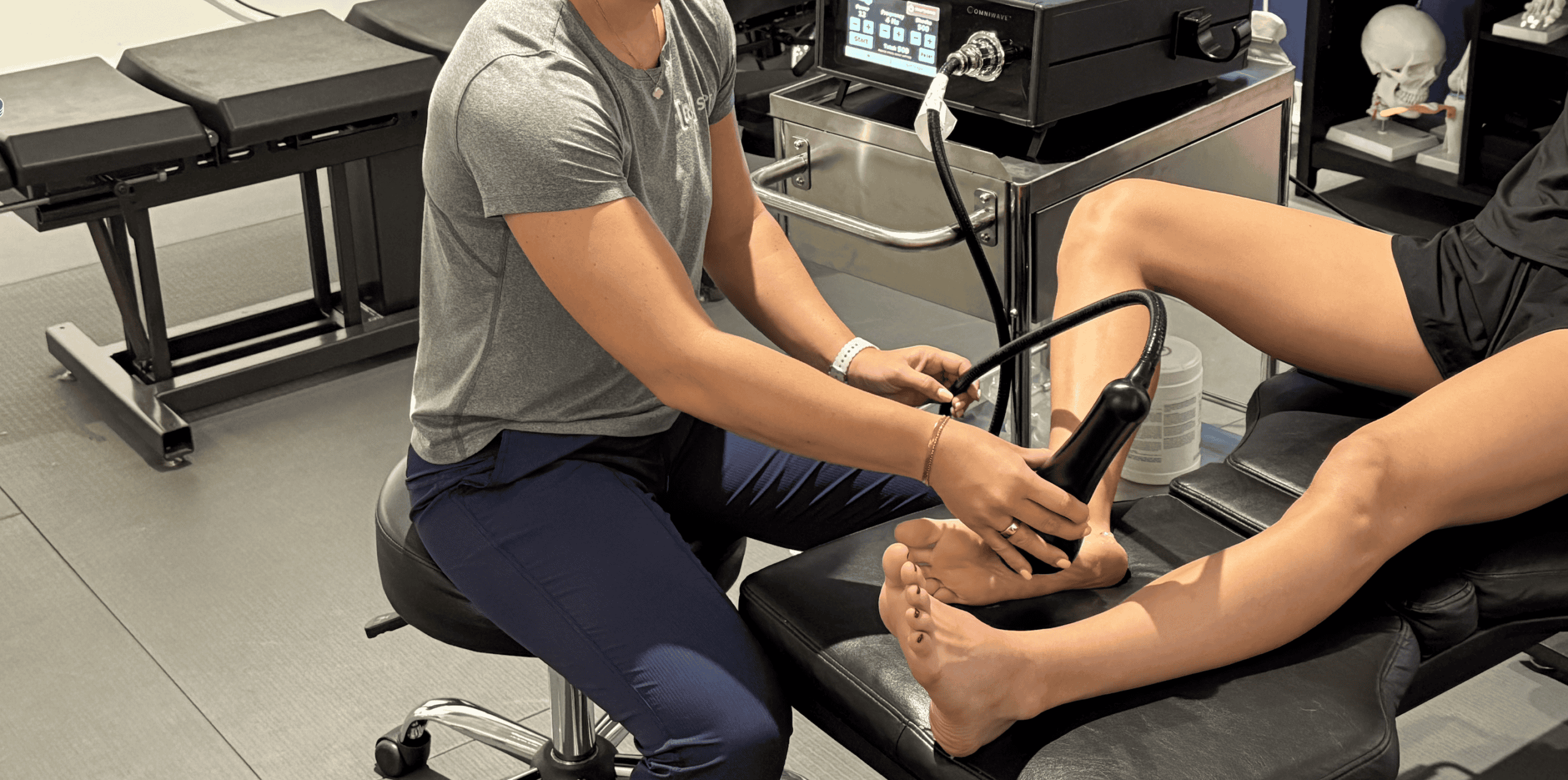
Shockwave therapy for hip pain is a non-invasive treatment option designed to stimulate tendon healing, improve circulation, decrease pain, and promote healthier tissue remodeling. Extracorporeal shockwave therapy (ESWT) uses targeted acoustic waves to stimulate the body’s natural repair response within damaged tendons, and is commonly used for chronic tendon conditions affecting the lower extremity, including gluteal tendinopathy.
At RESPORT Chiropractic and Physical Therapy, we offer lateral hip pain treatment in Chicago that combines shockwave therapy with movement assessment, rehabilitation, and personalized treatment plans — helping patients reduce hip pain, restore strength, and return to the activities they love.
What Is Hip Tendinopathy?
Hip tendinopathy most commonly involves the tendons of the gluteus medius and gluteus minimus muscles, which attach to the greater trochanter on the outside of the hip.
These muscles are responsible for:
- Stabilizing the pelvis
- Controlling hip movement
- Maintaining balance during walking and running
- Supporting single-leg activities
Every step places load through these tendons. During activities such as running, climbing stairs, or jumping, the demand on the gluteal tendons increases significantly.
When the tendons are repeatedly overloaded without enough recovery, microscopic damage can develop.
Common symptoms of hip tendinopathy include:
- Pain on the outside of the hip
- Tenderness over the greater trochanter
- Pain when lying on the affected side
- Discomfort walking or running
- Pain with stairs
- Weakness during single-leg activities
- Pain after prolonged sitting
- Difficulty with exercise or sports
Hip tendinopathy is sometimes incorrectly diagnosed as hip bursitis because both conditions can cause pain around the outside of the hip. However, many cases involve the tendon rather than the bursa.
What Causes Hip Tendinopathy?
Hip tendinopathy develops when the stress placed on the gluteal tendons exceeds their ability to adapt and recover.
Several factors can contribute to developing chronic hip pain:
Running and High-Impact Activities
Runners and athletes are commonly affected by hip tendinopathy because the gluteal tendons experience repeated loading during movement.
Activities that may contribute include:
- Distance running
- Trail running
- Sprinting
- Hiking
- Jumping sports
Sudden increases in training volume, intensity, or hills can place additional stress on the hip tendons.
Sudden Changes in Activity Level
Many cases of hip tendinopathy occur after a change in routine.
Examples include:
- Increasing mileage too quickly
- Returning to exercise after time off
- Starting a new sport
- Increasing strength training volume
- Adding more single-leg exercises
Tendons adapt more slowly than muscles, meaning they require gradual progression.
Weakness and Movement Control Issues
The gluteal muscles play an important role in controlling the pelvis and lower extremity.
Weakness or poor coordination may increase stress on the hip tendons.
Contributing factors may include:
- Reduced glute strength
- Poor single-leg control
- Hip stability deficits
- Knee movement issues
- Limited core control
A complete evaluation should assess the entire movement system rather than focusing only on the painful area.
Prolonged Compression of the Hip Tendons
One unique factor with gluteal tendinopathy is sensitivity to compression.
Certain positions may increase pressure on the tendons, including:
- Sleeping directly on the painful side
- Crossing the legs
- Standing with the hip pushed outward
- Sitting in certain positions for long periods
Managing compression while gradually strengthening the tendon is often an important part of recovery.
Is Hip Tendinopathy an Inflammation Problem?
Although hip tendon pain is often called “hip bursitis” or “tendonitis,” chronic cases are usually not caused by inflammation alone.
Long-standing tendon conditions are often better described as tendinopathy, which involves changes such as:
- Collagen disruption
- Reduced tendon strength
- Poor tissue organization
- Increased sensitivity to load
This explains why simply resting, icing, or taking anti-inflammatory medications may not fully resolve chronic hip pain.
Effective treatment focuses on improving:
- Tendon capacity
- Strength
- Movement patterns
- Load tolerance
What Is Shockwave Therapy?
Shockwave therapy, also known as extracorporeal shockwave therapy (ESWT), is a non-invasive treatment that uses acoustic waves to stimulate healing within injured tissues.
Despite its name, shockwave therapy does not involve electricity. Instead, a specialized device delivers mechanical sound waves into the affected tendon.
These waves create controlled stimulation that encourages the body’s natural healing response.
Shockwave therapy may help hip tendinopathy by:
- Increasing local blood flow
- Stimulating collagen production
- Improving tendon remodeling
- Reducing pain sensitivity
- Improving tissue quality
- Supporting recovery
For gluteal tendinopathy, shockwave therapy is typically applied around the painful tendon attachment near the outside of the hip.
How Does Shockwave Therapy Help Hip Tendinopathy?
Chronic hip tendon injuries can be difficult to resolve because tendons have slower healing capabilities compared to muscles.
Shockwave therapy helps stimulate the biological processes involved in tendon recovery.
Stimulates Tendon Healing
Shockwave therapy creates controlled mechanical stimulation within the tendon, encouraging repair and remodeling.
This may improve:
- Collagen organization
- Tendon strength
- Tissue resilience
- Ability to tolerate activity
The goal is not simply to reduce pain but to improve the tendon’s long-term function.
Improves Blood Flow and Cellular Activity
Healthy circulation supports tissue repair by delivering oxygen and nutrients to the affected area.
Shockwave therapy promotes increased local blood flow and cellular activity around the injured tendon.
Reduces Chronic Hip Pain
Long-term tendon pain can involve increased sensitivity in the nervous system.
Shockwave therapy may help reduce pain signaling and improve tolerance to movement.
Supports Return to Exercise
When combined with progressive strengthening, shockwave therapy can help patients return to:
- Running
- Strength training
- Sports
- Hiking
- Daily activities
Research Behind Shockwave Therapy for Hip Tendinopathy
Research on shockwave therapy for hip tendinopathy, particularly gluteal tendinopathy and greater trochanteric pain syndrome (GTPS), has shown promising results for individuals experiencing chronic lateral hip pain.
Studies evaluating extracorporeal shockwave therapy (ESWT) for gluteal tendon disorders have demonstrated improvements in:
- Pain reduction
- Hip function
- Ability to perform daily activities
- Quality of life
- Return to exercise and sport
Chronic hip tendon pain can be challenging because many patients experience recurring symptoms despite rest, stretching, medications, or general exercise programs.
Shockwave therapy provides a treatment option that focuses on improving the health of the tendon rather than simply masking symptoms.
The best outcomes are typically achieved when shockwave therapy is combined with a comprehensive rehabilitation program that includes:
- Progressive glute strengthening
- Hip stability exercises
- Core strengthening
- Movement retraining
- Load management
- Gradual return to activity
The goal is to improve the tendon’s ability to tolerate stress and reduce the likelihood of recurring pain.
What Does Shockwave Therapy for Hip Tendinopathy Feel Like?
A common question patients ask is, “What will shockwave therapy feel like on my hip?”
During treatment, a handheld applicator is placed over the painful area, typically around the outside of the hip near the greater trochanter where the gluteal tendons attach.
The device delivers controlled acoustic waves into the affected tissue.
Patients commonly describe the sensation as:
- A tapping or pulsing feeling
- Deep pressure around the hip
- Mild discomfort over the irritated tendon
- A temporary increase in sensitivity during treatment
Because the treatment targets an area that is already irritated, some tenderness is expected. However, intensity can be adjusted based on patient comfort.
A typical shockwave therapy session:
- Takes only several minutes
- Does not require injections
- Does not require medication
- Does not require anesthesia
- Allows patients to continue normal daily activities
Some mild soreness, stiffness, or tenderness may occur afterward but typically resolves within a short period of time.
How Many Shockwave Therapy Sessions Are Needed for Hip Tendinopathy?
The number of treatments needed depends on several factors, including:
- Duration of symptoms
- Severity of tendon changes
- Activity level
- Training demands
- Age
- Overall movement patterns
- Response to treatment
A typical treatment plan may include:
- 3–6 shockwave therapy sessions
- Treatments spaced approximately one week apart
- Continued strengthening exercises throughout the treatment process
Because shockwave therapy stimulates tissue remodeling, improvement often occurs gradually rather than immediately.
Patients may notice the following over several weeks as the tendon continues to adapt:
- Less pain while sleeping on the affected side
- Improved walking tolerance
- Increased ability to exercise
- Reduced discomfort with stairs
- Improved hip strength
Shockwave Therapy vs Cortisone Injections for Hip Tendinopathy
Cortisone injections are commonly used for lateral hip pain because they may temporarily reduce symptoms. However, they primarily address pain rather than improving the long-term quality of the tendon.
For chronic gluteal tendinopathy, relying only on reducing symptoms without improving tendon strength can lead to recurring problems.
Shockwave therapy provides a different approach by stimulating tissue recovery.
Benefits of Shockwave Therapy:
- Non-invasive
- No medication required
- Supports tendon remodeling
- Encourages collagen production
- Minimal downtime
- Can be combined with rehabilitation
Considerations With Cortisone Injections:
- May provide short-term pain relief
- Does not improve tendon capacity
- Repeated use may have concerns related to tissue quality
For individuals with chronic hip tendon pain who want to restore strength and function, shockwave therapy may be a valuable treatment option.
Shockwave Therapy vs Cortisone Injections for Hip Tendinopathy
Most individuals with hip tendinopathy do not require surgery. The majority of cases improve with appropriate rehabilitation focused on strengthening the hip muscles and improving load tolerance.
However, chronic hip pain can become frustrating when symptoms continue despite months of conservative treatment.
Surgical treatment for gluteal tendon problems may involve:
- Repairing damaged tendons
- Addressing significant tendon tears
- Removing irritated tissue
Surgery may require:
- Recovery restrictions
- Rehabilitation
- Temporary limitations on activity
Shockwave therapy provides a non-surgical option that can be considered before more invasive procedures.
For active individuals, avoiding surgery and maintaining the ability to exercise and work is often a major priority.
Who Is a Good Candidate for Shockwave Therapy for Hip Tendinopathy?
Shockwave therapy may be a good option for individuals who:
- Have pain on the outside of the hip
- Have symptoms lasting several weeks or months
- Have been diagnosed with gluteal tendinopathy or GTPS
- Have difficulty sleeping on one side
- Experience pain with running or exercise
- Have not improved with traditional treatments
- Want a non-invasive treatment option
It may be especially beneficial for:
- Runners
- Tennis players
- Pickleball players
- CrossFit athletes
- Weightlifters
- Hikers
- Active adults
- Individuals with physically demanding jobs
A proper evaluation is important because not all hip pain comes from the gluteal tendons. Hip joint problems, low back conditions, and other soft tissue injuries can create similar symptoms.
What to Expect During Shockwave Therapy Treatment for Hip Tendinopathy
A typical shockwave therapy appointment involves three main steps.
1. Hip Evaluation
Before treatment begins, your provider will assess:
- Location of hip pain
- Hip range of motion
- Glute strength
- Single-leg stability
- Walking and running mechanics
- Training history
- Activity demands
This helps identify why the tendon became overloaded and how treatment should be customized.
2. Shockwave Therapy Application
During treatment, the shockwave therapy applicator is placed over the affected tendon area.
The treatment usually lasts only several minutes.
The provider may adjust intensity based on:
- Tissue sensitivity
- Pain response
- Stage of injury
3. Rehabilitation and Strengthening
Shockwave therapy is most effective when paired with targeted strengthening.
A hip rehabilitation program may include:
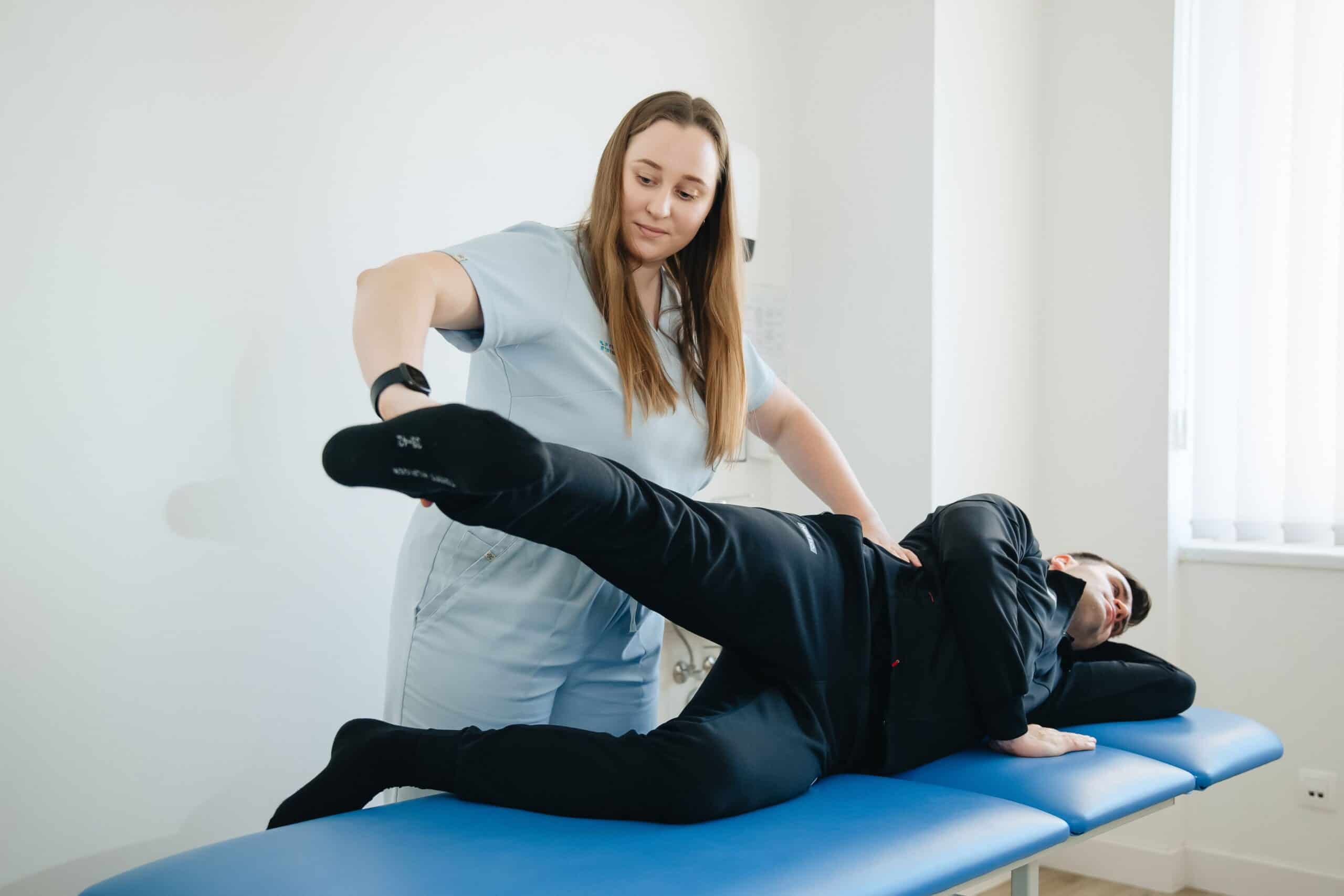
- Side-lying hip abduction exercises
- Glute bridges
- Hip stability drills
- Single-leg strengthening
- Squat progression
- Running progression
The goal is to restore the strength and capacity needed for daily activities and sports.
How Long Does It Take to Recover From Hip Tendinopathy With Shockwave Therapy?
Recovery timelines vary depending on:
- How long symptoms have been present
- Severity of tendon involvement
- Activity level
- Strength deficits
- Consistency with rehabilitation
Because tendons adapt slowly, recovery is usually measured in weeks to months.
A general timeline may include:
| Early Phase (First Few Weeks) | Patients may experience: - Reduced pain sensitivity - Improved comfort during daily activities - Better tolerance for movement |
| Rehabilitation Phase (Several Weeks to Months) | The focus shifts toward: - Increasing glute strength - Improving hip stability - Returning to higher-level activities |
| Long-Term Phase | The goal is: - Full return to exercise - Improved hip function - Reduced risk of recurrence - Successful treatment focuses on building a stronger, more resilient tendon rather than simply reducing pain. |
Preventing Hip Tendinopathy From Returning
Once symptoms improve, maintaining hip strength and tendon health is essential.
Strengthen the Gluteal Muscles
Strong glute muscles help stabilize the pelvis and reduce stress placed on the tendons.
Important exercises include:
- Hip abduction exercises
- Single-leg exercises
- Squats
- Step-ups
- Hip hinges
Increase Activity Gradually
Avoid sudden increases in:
- Running mileage
- Training intensity
- Hills
- Jumping volume
- Strength training load
Gradual progression allows tendons to adapt.
Improve Single-Leg Stability
Many activities require the body to control movement on one leg.
Training should focus on:
- Pelvic control
- Hip stability
- Lower extremity alignment
Manage Tendon Compression
Individuals with gluteal tendinopathy may benefit from avoiding excessive compression of the tendon, especially during painful periods.
Strategies may include:
- Avoiding prolonged lying directly on the painful side
- Adjusting sitting positions
- Modifying irritating activities temporarily
Address Early Symptoms
Early signs of hip tendon irritation may include:
- Pain lying on one side
- Outside hip soreness after exercise
- Increased discomfort with stairs
- Reduced tolerance for running
Addressing symptoms early can prevent progression into chronic tendinopathy.
Frequently Asked Questions About Shockwave Therapy for Hip Tendinopathy
Can shockwave therapy fix hip tendinopathy?
Shockwave therapy can help reduce pain and stimulate tendon remodeling, but the best results typically occur when combined with progressive strengthening and addressing the factors that contributed to the injury.
Is shockwave therapy safe for hip pain?
Yes. Shockwave therapy is considered a safe, non-invasive treatment when performed by a trained healthcare professional. Temporary soreness or tenderness after treatment is common.
Can I exercise after shockwave therapy?
Most patients can continue exercising with modifications. Your provider may recommend temporarily reducing activities that significantly aggravate symptoms while the tendon adapts.
How quickly will I notice improvement?
Some patients experience improvements within a few sessions, while others continue improving for several weeks after completing treatment.
Can hip tendinopathy come back?
Hip tendon pain can return if the underlying causes are not addressed.
Long-term success depends on:
- Progressive strengthening
- Appropriate training volume
- Proper movement mechanics
- Adequate recovery
- Maintaining hip stability
Treat Hip Tendon Pain at the Source With Shockwave Therapy
Chronic hip pain can interfere with running, workouts, sports, sleep, and everyday movement. While rest and traditional treatments may provide temporary relief, persistent tendon pain often requires a comprehensive approach focused on improving tissue health and restoring function.
Shockwave therapy for hip tendinopathy provides a non-invasive treatment option designed to stimulate healing, improve tendon strength, and help patients return to the activities they enjoy.
At RESPORT Chiropractic and Physical Therapy in Chicago, shockwave therapy is combined with movement assessment, rehabilitation, and individualized treatment plans to address both hip pain and the underlying factors contributing to tendon dysfunction.
If you are experiencing persistent outside hip pain, difficulty running, or discomfort with daily activities, schedule an evaluation to determine whether shockwave therapy may be the right treatment option for your hip tendinopathy and take the next step toward getting back to doing what you love.
Ready to find out if shockwave therapy is right for you? Book a consultation at RESPORT Chicago today.
Questions? Contact our team — we’re happy to help you determine whether ESWT is right for your condition.
This article was medically reviewed by the RESPORT Chicago clinical team.