

If you’re considering shockwave therapy for a chronic tendon injury or joint pain, you probably have a handful of practical questions before you’re ready to book: Does it hurt? What does it cost? Are there side effects? How many sessions will you actually need?
These are the questions we hear most often at RESPORT Chicago, and they deserve straightforward, honest answers — not vague reassurances. This guide covers everything you need to know about what to expect from shockwave therapy at our Old Town clinic, organized by the four things patients ask about most.
Does Shockwave Therapy Hurt?
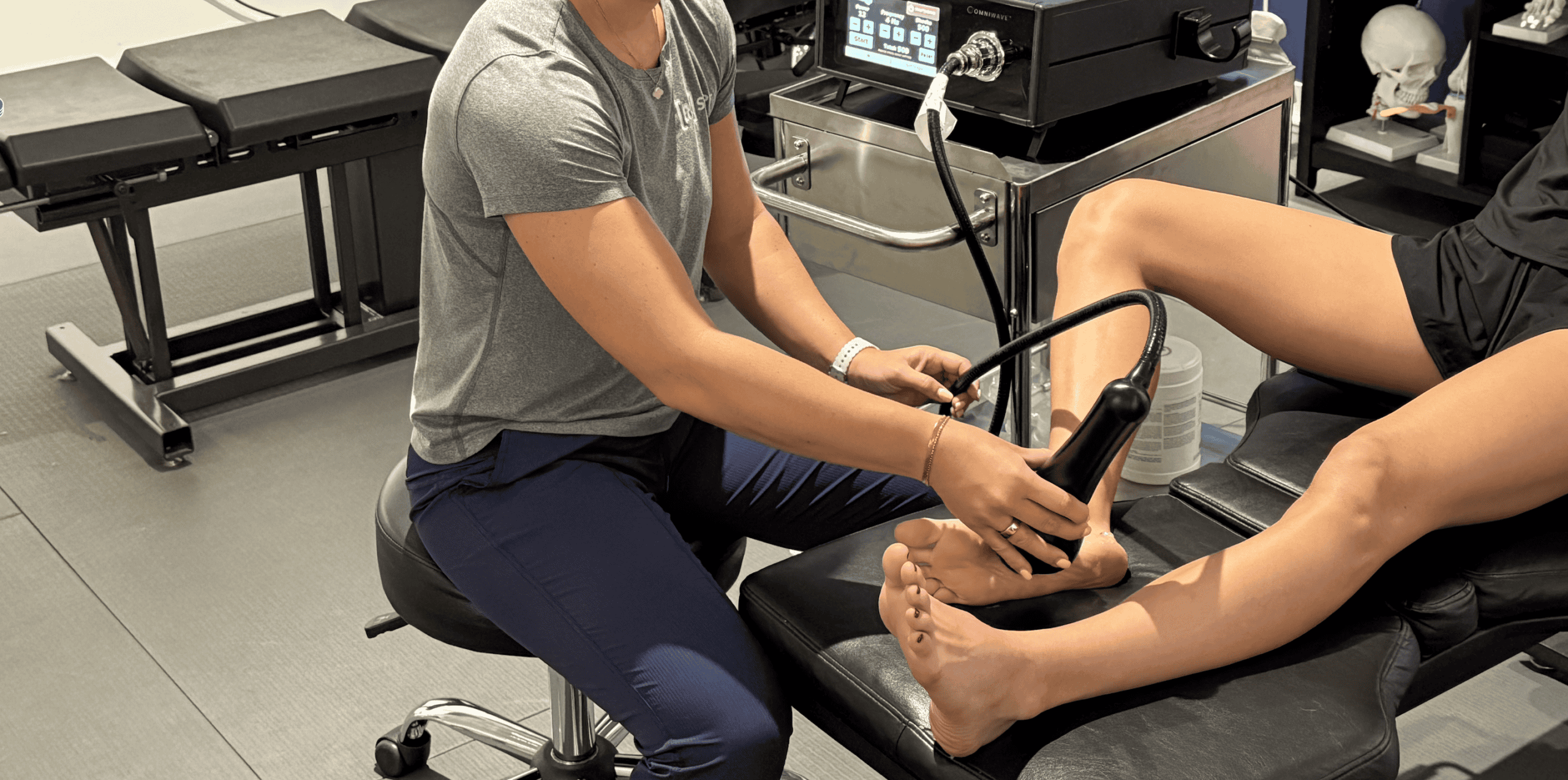
This is, understandably, the most common question we get. The honest answer: certain types of shockwave machines will involve some discomfort, but it’s usually well-tolerated, and most patients describe it as manageable rather than painful. Radial shockwave treatment is universally accepted as the most uncomfortable type of shockwave therapy.
What does it actually feel like? Most patients describe the sensation as a firm, rhythmic pressure or a dull, aching discomfort at the treatment site — similar to a deep tissue massage that’s slightly more intense. Some describe it as a tapping or thudding sensation as the device delivers pressure waves into the tissue. It is not comparable to an injection or a sharp, stabbing pain.
Does the discomfort level vary by condition? Yes. Areas with more sensitive tissue or less soft tissue padding over the treatment site tend to be more uncomfortable. Calcific shoulder tendonitis, for example, is generally considered one of the more sensitive conditions to treat with shockwave therapy, particularly if the calcium deposit is in an active, inflamed phase. Plantar fasciitis treatment, by contrast, is often well-tolerated given the thicker tissue on the bottom of the foot, though the heel itself can still be a sensitive area.
Does the discomfort get better or worse across the treatment course? Most patients report that later sessions feel similar to or slightly more tolerable than the first session, as they know what to expect. It’s common for the treated tissue to feel more tender for a day or two immediately after each session, which is a normal part of the healing response rather than a sign something is wrong.
Can treatment intensity be adjusted if it’s too uncomfortable? Yes. Shockwave devices allow providers to adjust the intensity of the pressure waves delivered. If a session is more uncomfortable than expected, your provider can reduce the intensity while still delivering an effective treatment — comfort along with effectiveness aren’t mutually exclusive, and a good provider will check in with you throughout the session rather than running it on a fixed setting regardless of your feedback.
Is anesthesia or numbing used during treatment? Typically not, and generally it isn’t necessary. Most patients tolerate shockwave therapy without any numbing agent. In some cases, particularly for more sensitive areas, a topical analgesic may be used, but this varies by provider and treatment area.
How Much Does Shockwave Therapy Cost?
Does insurance cover shockwave therapy at RESPORT Chicago? No. Shockwave therapy at RESPORT is a self-pay (cash) service. It is not billed to insurance. We made this choice deliberately, since insurance coverage for shockwave therapy is inconsistent across carriers, often restricted to narrow diagnoses with extensive prior authorization requirements, and frequently results in delays or denials that don’t serve patients well. A transparent, self-pay model means you know your cost upfront, with no surprise bills after the fact.
How is shockwave therapy priced? We offer shockwave therapy through individual sessions and session packages. Because most conditions require a full course of multiple sessions to see lasting results, session packages generally offer a lower per-session cost than paying individually at each visit. Your provider will walk through specific pricing and package options during your initial evaluation, based on the treatment plan recommended for your condition.
Can I use my HSA or FSA to pay for treatment? In many cases, yes. Shockwave therapy is generally an eligible expense for both Health Savings Accounts (HSA) and Flexible Spending Accounts (FSA), since it’s a recognized treatment for a diagnosed medical condition. Prior to beginning treatment, we recommend confirming treatment eligibility and paperwork requirements. Your provider can provide invoices or an itemized statement of services if needed.
Can I submit my receipt to insurance for possible reimbursement? Some patients do, particularly those with out-of-network benefits. Your provider should be able to provide the documentation necessary for a reimbursement claim, though approval and reimbursement amount are determined entirely by your insurance carrier, your specific policy, and cannot be guaranteed from our side.
How does the cost compare to other treatment options? It’s a reasonable question, since the honest answer depends on what you’re comparing it to. Cortisone injections are often covered by insurance with a lower per-injection out-of-pocket cost, but frequently require repeat injections and don’t address the underlying tendon tissue. PRP injections are occasionally covered by insurance, but are often self-pay. Typically at a meaningfully higher per-session cost than shockwave therapy. Surgery, even when partially covered by insurance, usually carries the highest total out-of-pocket cost once facility fees, copays, coinsurance, and recovery-related expenses are factored in. Viewed against these alternatives, a shockwave therapy session package is often one of the more predictable, manageable costs among realistic non-surgical treatment options.
Is shockwave therapy worth the cost? For many patients dealing with chronic tendon pain that hasn’t resolved with rest or physical therapy alone, yes — particularly given the strong research base behind the treatment and the alternative of ongoing pain, repeat injections, or eventual surgery. Whether it’s the right investment for your specific situation is something we’re glad to discuss honestly during an evaluation, rather than assuming it’s the right fit for every patient regardless of diagnosis.
What Are the Side Effects of Shockwave Therapy?
Shockwave therapy has an excellent overall safety profile, and serious complications are rare. That said, it’s worth understanding the realistic range of side effects rather than assuming there are none.
What’s the most common side effect? Mild to moderate soreness or tenderness in the treated area for 24–48 hours following each session. This is a normal, expected part of the treatment process — it reflects the localized tissue response the treatment is designed to trigger — rather than a sign of a problem.
Is bruising common? With most Shockwave Treatment, bruising is uncommon, especially with proper treatment intensity and dose.
Are there more serious risks? Serious complications from shockwave therapy are uncommon. The treatment doesn’t involve needles, incisions, or anesthesia, which eliminates several categories of risk associated with more invasive procedures like injections or surgery. This is one of the reasons shockwave therapy is often considered before more invasive options.
Does shockwave therapy cause skin damage? Skin irritation at the treatment site is possible but uncommon. With proper technique and appropriate treatment intensity, this is even less likely. Persistent skin changes are rare.
Will I feel worse before I feel better? Rarely, patients can experience a temporary increase in symptoms in the first day or two after a session, followed by gradual improvement. This is different from a true negative effect of the treatment. It is generally considered a normal part of the injured area’s response to the treatment. If pain significantly worsens or doesn’t improve as sessions continue, that is a situation to discuss with your provider rather than assuming it will resolve on its own.
How do the side effects compare to cortisone injections or surgery? Shockwave therapy has minimal to no side effects compared to either alternative. Cortisone injections carry risks including tendon weakening with repeated treatments and potential skin or fat tissue changes at the injection site. Surgery has the standard risks associated with any invasive procedure, including infection, anesthesia risk, and an often protracted recovery period. Since Shockwave therapy is non-invasive and has a quick recovery, that is a big part of its attraction to patients trying to avoid treatments with additional risks.
Who is more likely to experience side effects? Patients being treated for more sensitive conditions, such as calcific shoulder tendonitis, may experience more noticeable discomfort and post-treatment soreness than patients being treated for conditions in less sensitive areas. Additionally, patients on blood thinners or with bleeding disorders are at higher risk for bruising and generally require closer evaluation before treatment — which is part of why a thorough intake and medical history review matters before starting shockwave therapy.
How Many Shockwave Therapy Sessions Will I Need?
What’s the typical number of sessions? Most conditions require 4 to 6 sessions, spaced about a week apart. Calcific shoulder tendonitis is a bit of an exception, commonly requiring 3 to 5 sessions, since the treatment mechanism for breaking down a calcium deposit works somewhat differently than for standard chronic tendinopathy.
Why does treatment require multiple sessions instead of just one? Shockwave therapy works by stimulating a biological healing response — new blood vessel formation, collagen production, and tissue remodeling — that develops progressively over time rather than instantly. A single session can begin this process, but consistent, spaced-out sessions give the tissue repeated stimulus to fully complete the remodeling process, which is why completing the full recommended course matters even if you start feeling better after only a few sessions.
Why are sessions spaced about a week apart? This spacing allows the tissue enough time to respond to each treatment before the next session, based on the biological timeline of the healing processes shockwave therapy stimulates. Sessions spaced too closely together don’t allow adequate time for this response; sessions spaced too far apart can reduce the cumulative, progressive effect of the treatment course.
What happens if I stop treatment early because I feel better? It’s common to notice meaningful pain reduction partway through a treatment course, but stopping early — before the tendon tissue has had the opportunity to remodel fully — increases the likelihood that symptoms return once you resume full activity. Completing the full recommended course gives the best chance at a durable, lasting result rather than a partial or temporary one.
Will I need follow-up sessions later? For chronic conditions, some patients will return for additional sessions months or years later if symptoms recur. This is particularly true if the underlying mechanical cause (running mechanics, footwear, occupational demands) has not been fully addressed alongside treatment. This isn’t the norm for most patients who complete a full course and address contributing factors, but it’s a reasonable possibility worth knowing about.
Does the number of sessions vary based on how long I’ve had symptoms? Somewhat. Patients with more chronic, long-standing symptoms — particularly those who have already tried and failed physical therapy — may be at the higher end of the typical session range, since more established tissue degeneration generally requires a fuller course to resolve fully.
How will my provider determine my specific number of sessions? Your provider will perform a physical evaluation and, based on your diagnosis, symptom duration, and any prior treatment history, determine the number of sessions rather than applying a standardized number to every patient regardless of presentation.
Additional Frequently Asked Questions
Is shockwave therapy painful compared to other treatments like cortisone injections?
Most patients find shockwave therapy's discomfort more manageable and predictable than an injection, since there's no needle involved — though the pressure sensation during treatment can still be uncomfortable, specifically in sensitive areas.
How soon after treatment can I return to normal activity?
Immediately, in most cases. Shockwave therapy does not require any formal downtime following treatment. Modifying or avoiding certain activities or exercises that increase pain or discomfort during the treatment course can support the healing process.
Do I need a referral to get shockwave therapy?
This depends on the clinic. At RESPORT, we're happy to discuss what's needed to get started during an initial consultation.
Is shockwave therapy cheaper than surgery?
Generally, yes, and often significantly so once you account for surgical facility fees, anesthesia, follow-up care, and the extended recovery period surgery typically requires — even when insurance covers a portion of surgical costs.
Can I combine session packages if I need treatment for more than one condition?
This is something to discuss directly with your provider, since treatment plans and pricing are built around your specific diagnosis and needs.
Get Straightforward Answers at RESPORT Chicago
Deciding whether to move forward with shockwave therapy shouldn’t require guesswork about pain, cost, side effects, or how many visits you’re actually signing up for. We believe in giving patients honest, complete answers upfront.
RESPORT Chicago’s Old Town clinic offers shockwave therapy with transparent session pricing and packages, with a thorough evaluation to determine the right treatment plan — and realistic expectations — for your specific condition.
Have more questions, or ready to get started? Book a consultation at RESPORT Chicago today.
Questions? Contact our team — we’re happy to help you determine whether ESWT is right for your condition.
This article was medically reviewed by the RESPORT Chicago clinical team.