

You did the work. You showed up to physical therapy, did the exercises, followed the home program, gave it weeks — sometimes months — and the pain is still there. If that’s where you’re at, you’re not alone. Shockwave therapy after failed physical therapy has become one of the most researched treatment paths for patients exactly like you — people who completed a full PT course and still haven’t found lasting relief. It doesn’t mean you’re out of non-surgical options. It often means your tissue needs an additional biological stimulus that exercise-based rehab alone can’t always provide.
Shockwave therapy has become one of the most researched treatment options specifically for patients whose pain has persisted after a full course of physical therapy. At RESPORT Chicago, we regularly see patients who arrive at our Old Town clinic after months of PT for conditions like plantar fasciitis, tennis elbow, rotator cuff tendinopathy, and Achilles tendonitis — still in pain and unsure what comes next. This guide explains why physical therapy sometimes isn’t enough on its own, what shockwave therapy actually does that PT doesn’t, and what the research shows about its effects on pain when added after conservative care has plateaued.
Why Physical Therapy Alone Doesn't Always Resolve Chronic Pain
Physical therapy is genuinely effective for the vast majority of musculoskeletal injuries, and it remains the right starting point for almost every condition. But for a specific subset of injuries — chronic tendinopathies in particular — PT has a well-recognized limitation: exercise-based rehab is excellent at building strength, correcting mechanics, and restoring mobility, but it doesn’t always provide enough of a direct biological stimulus to reverse degenerated tendon tissue that has stopped healing properly on its own.
This matters because many of the conditions people go to PT for — plantar fasciitis, tennis elbow, Achilles tendonitis, rotator cuff tendinopathy, patellar tendonitis — aren’t primarily inflammatory. They’re tendinosis, a state of chronic tissue degeneration where the tendon fibers have become thickened and disorganized. Traditional rehab exercises, especially eccentric loading methods, can help stimulate some remodeling. Still, in tendons that have been degenerated for months or years, exercise sometimes alone isn’t a strong enough stimulus to restart the healing process.
There’s also a mechanical reality at play: tendons have relatively poor blood supply compared to muscle. That means healing is inherently slow, and in some patients it stalls entirely—not because they did rehab wrong, but because the tissue needs an additional trigger to reinitiate the repair process.
What Makes Shockwave Therapy Different From Physical Therapy
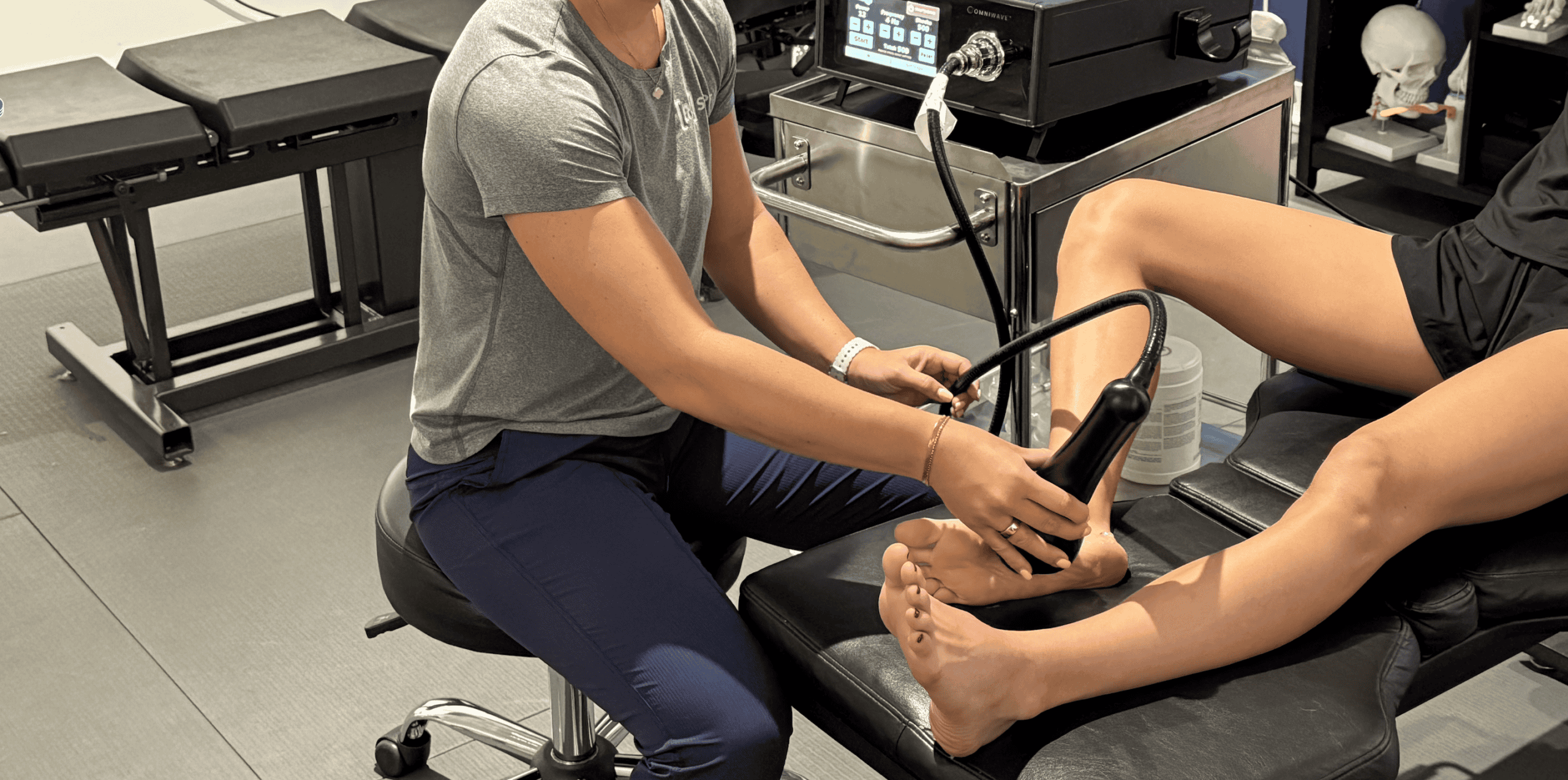
Shockwave therapy — also known as Extracorporeal Shock Wave Therapy (ESWT) — works through a different mechanism than exercise-based rehab. Rather than relying on movement and loading to stimulate adaptation, shockwave therapy delivers targeted acoustic pressure waves directly into the affected tissue to trigger a biological healing response.
Here’s what shockwave therapy does that supports — rather instead of replacing — the work done in physical therapy:
- Stimulates new blood vessel formation. Shockwave therapy has a well-documented effect on neovascularization, prompting the growth of new blood vessels into degenerated tendon tissue. This directly addresses the poor blood supply that often keeps chronic tendon injuries from healing on their own.
- Restarts the body’s healing cascade. In tissue that has essentially stalled in a degenerated state, shockwave therapy has been shown to reactivate the inflammatory and repair processes needed for genuine tissue remodeling — essentially giving the body a fresh signal to start healing again.
- Reduces pain sensitivity at the source. Shockwave therapy has a documented desensitizing effect on local pain receptors, which is one reason patients often notice pain reduction within the first several sessions, even before full tissue healing has occurred.
- Breaks down calcific deposits and disorganized scar tissue. In chronic cases, shockwave therapy can help break down calcified deposits or poorly organized scar tissue that has built up in the area — tissue changes that exercise alone cannot resolve.
This is why shockwave therapy is often recommended not as a replacement for physical therapy, but as an addition to it—a way to give stalled tissue the extra stimulus it needs so the strengthening and mobility work from PT can take hold.
What the Research Says About Pain Outcomes
A substantial body of clinical research has specifically studied shockwave therapy in patients who had already failed a course of conservative treatment, including physical therapy. Across conditions like plantar fasciitis, lateral epicondylitis (tennis elbow), and rotator cuff tendinopathy, studies consistently show statistically significant reductions in pain scores following shockwave treatment in patients who had not responded to prior conservative care, including formal physical therapy programs.
A few consistent findings across this research base are worth highlighting for patients considering this path:
- Pain reduction tends to be progressive rather than immediate. Most studies show meaningful pain score improvements accumulating across a full treatment course rather than resolving after a single session, which is consistent with the biological healing timeline shockwave therapy is designed to trigger.
- Results tend to be durable. Follow-up studies at 6 and 12 months post-treatment generally show sustained pain reduction rather than a temporary effect that fades—an important distinction from treatments like cortisone injection, which often show strong short-term relief that diminishes over time.
- Success rates are meaningful even in “failed conservative treatment” populations specifically. Because this exact patient population — people who have already tried rest, activity modification, and formal physical therapy — has been directly studied, the research is particularly relevant if this describes your situation. Response rates in these patients are generally lower than in a general population (since these are, by definition, harder cases), but still represent a meaningful percentage of patients achieving significant pain relief and avoiding surgery.
Conditions Where This Pattern Is Common
Certain conditions are especially likely to reach the “failed PT” stage before shockwave therapy is introduced, largely because they involve chronic tendon degeneration rather than acute injury:
- Plantar fasciitis — one of the most common conditions where patients complete months of stretching and PT with only partial relief
- Tennis elbow and golfer’s elbow (lateral/medial epicondylitis) — chronic cases are notoriously slow to resolve with exercise alone.
- Rotator cuff tendinopathy — particularly in patients whose PT focused on strengthening without resolving underlying tendon degeneration
- Achilles tendonitis — especially midportion Achilles tendinopathy in runners, which often requires additional stimulus beyond eccentric loading regimens
- Patellar tendonitis (jumper’s knee) — common in athletes whose symptoms continue despite consistent rehab compliance
- Hip and gluteal tendinopathy — frequently misdiagnosed initially, delaying appropriate treatment and allowing the tendon to degenerate further before shockwave is considered
If your condition falls into one of these categories and PT alone hasn’t resolved your pain after a full course of treatment (generally 6–12 weeks of consistent participation), you may be a good candidate for shockwave therapy as a next step.
What to Expect During Shockwave Therapy at RESPORT
If you’ve completed physical therapy and are still dealing with pain, here’s what the process typically looks like at our Old Town clinic:
1. Initial Evaluation
We start by reviewing your PT history—what was tried, for how long, and how your symptoms responded—alongside a physical exam to confirm the diagnosis and assess whether shockwave therapy is an appropriate next step for your specific tissue and condition. In some cases, imaging is used to evaluate the extent of tendon degeneration or rule out other causes.
2. Treatment Sessions
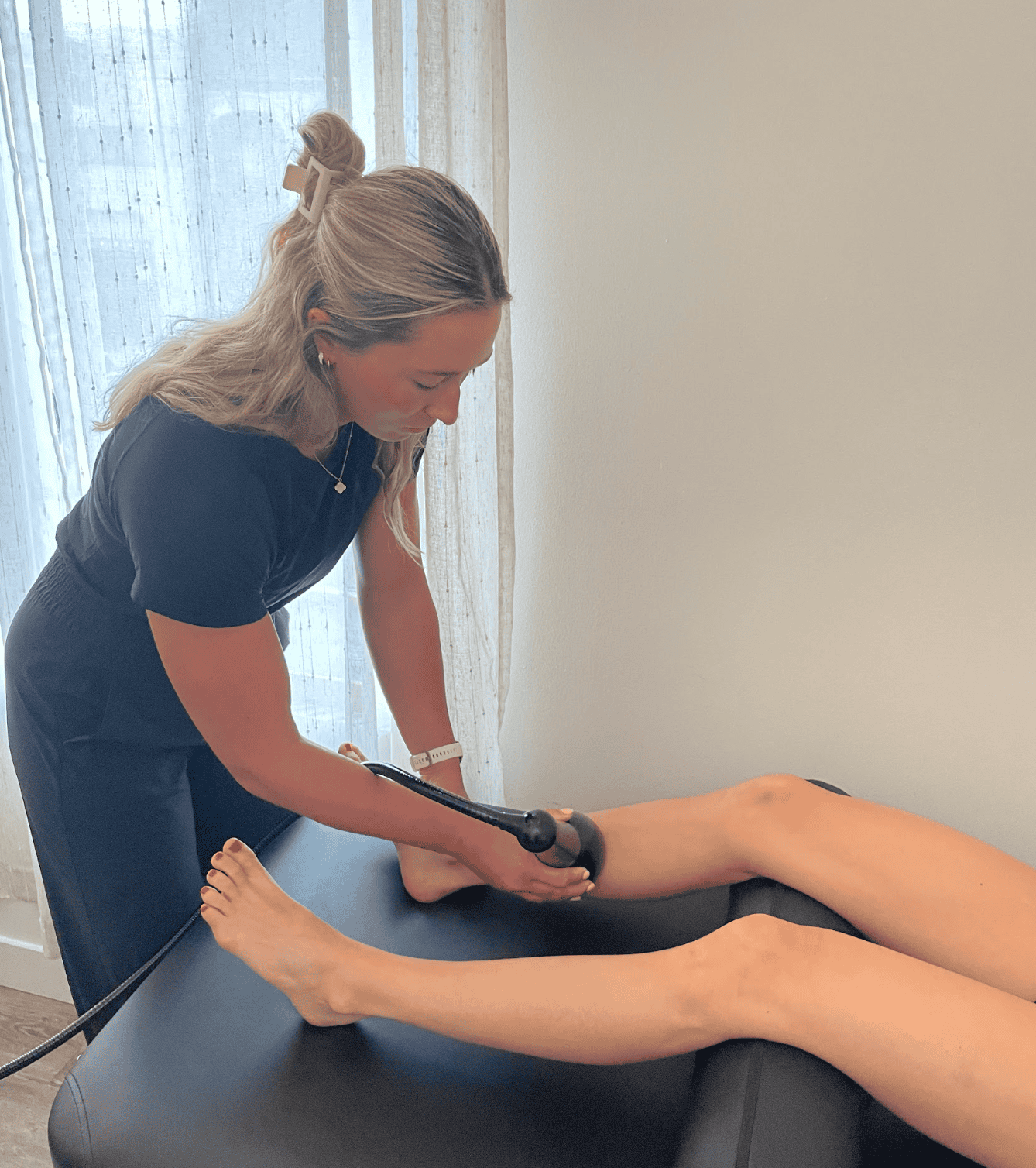
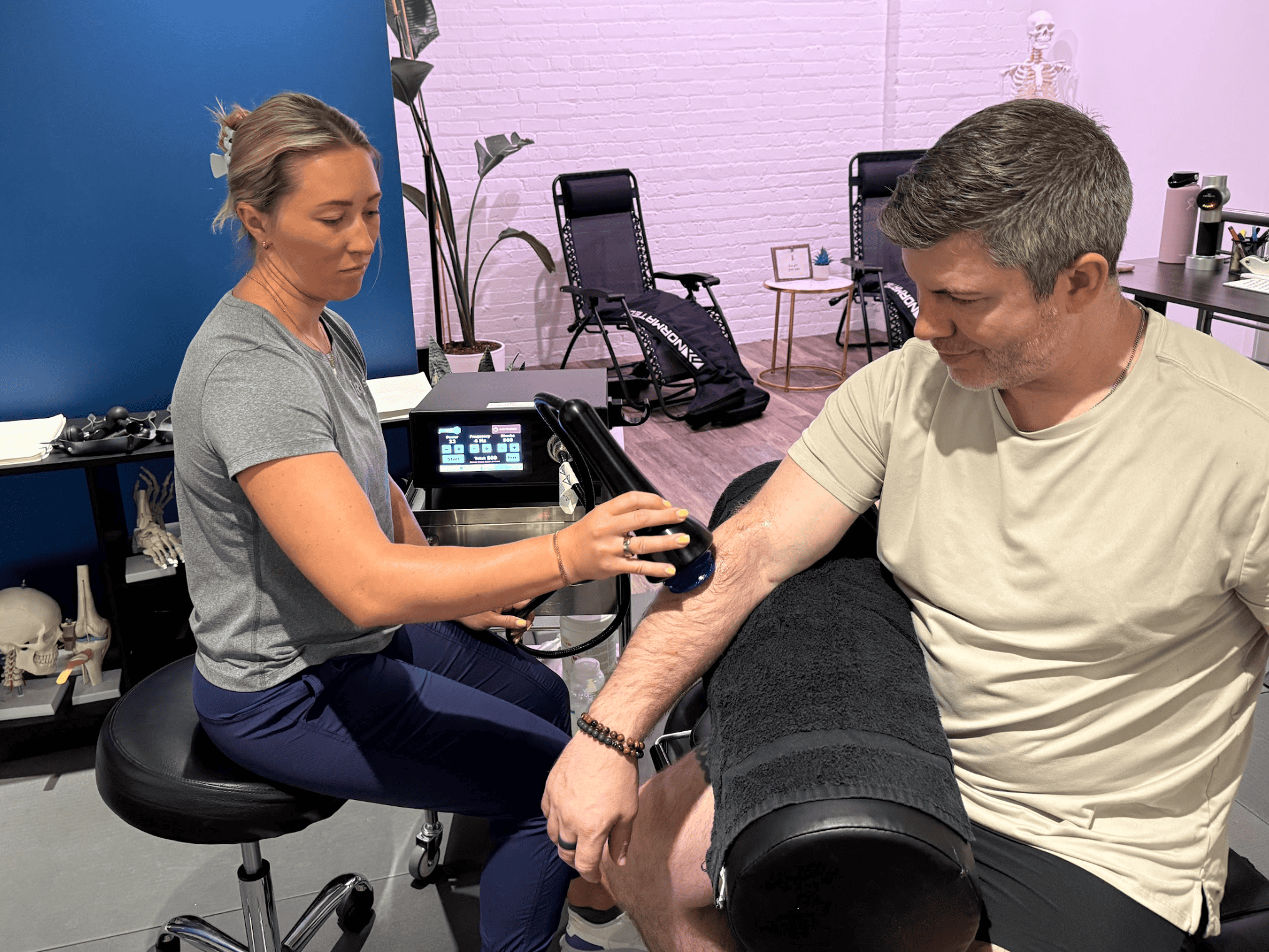
A therapist applies shockwave therapy directly over the affected tendon or tissue using a handheld device. Most patients describe the sensation as a firm, rhythmic pressure or mild discomfort. Sessions typically last 10–15 minutes.
3. Treatment Course
Most patients require 4 to 6 sessions, spaced about a week apart, regardless of the specific condition being treated. Because you’re likely starting from a more chronic baseline after failed PT, it’s especially important to complete the full recommended course — partial treatment is less likely to resolve tissue that has already had months to degenerate fully.
4. Continuing Physical Therapy Alongside Shockwave
This is a key point many patients don’t expect: shockwave therapy typically works best when paired with continued PT rather than treated as a standalone replacement. Once shockwave therapy has restarted the tissue’s healing response, the strengthening and mechanical corrections from physical therapy have a healthier tissue base to build on—which is often the missing piece in cases where PT alone plateaued.
5. Tracking Pain Over the Treatment Course
Because pain reduction with shockwave therapy tends to be progressive, we track your symptoms across the full course rather than expecting dramatic changes after a single session. Many patients notice initial improvement around the third or fourth session, with continued gains over the weeks following treatment completion as the tendon tissue remodels.
Is Shockwave Therapy Right for You After Failed PT?
Shockwave therapy tends to be a strong next step for patients who:
- Completed a full, consistent course of physical therapy (generally at least 6–12 weeks) without meaningful pain relief
- Have a chronic tendon-related diagnosis rather than an acute injury or structural tear.
- Want to avoid cortisone injections, which don’t address the underlying tissue and carry their own risks.
- Are trying to avoid or delay surgery for a condition like plantar fasciitis, tennis elbow, or rotator cuff tendinopathy
- Are willing to continue some level of PT or home exercise alongside shockwave treatment for the best combined outcome
If you’re not sure whether your specific case fits this profile, an evaluation is the most reliable way to find out. At RESPORT, we’ll review what you’ve already tried and give you an honest assessment of whether shockwave therapy is likely to help, rather than adding another treatment to your list without a clear rationale.
Frequently Asked Questions
Does shockwave therapy actually work if physical therapy didn't?
Yes, in many cases. Shockwave therapy works through a different biological mechanism than exercise-based rehab, directly stimulating blood flow and tissue remodeling in tendons that have stalled in a degenerated state. Research specifically on patients who had failed prior conservative treatment, including PT, shows meaningful pain reduction in a significant percentage of cases.
Do I need to stop physical therapy to start shockwave therapy?
No — shockwave therapy is typically most effective when combined with continued PT rather than used as a replacement. Shockwave helps restart the tissue's healing response, which gives ongoing strengthening and mechanical work a better foundation to build on.
How long after starting shockwave therapy will I notice pain relief?
Pain reduction is usually progressive rather than immediate. Many patients notice initial improvement by the third or fourth session, with continued gains over the weeks following the completed treatment course as the tissue remodels.
Is shockwave therapy a good alternative to cortisone injections after failed PT?
For many chronic tendon conditions, yes. Research suggests shockwave therapy produces more durable pain relief over 6- to 12-month follow-up compared to cortisone injections, which often provide faster short-term relief that can fade and, in some cases, may weaken tendon tissue over time.
How many shockwave sessions will I need if PT already didn't work?
Most patients require 4 to 6 sessions regardless of their treatment history, though completing the full course is especially important in more chronic cases where the tissue has had longer to degenerate.
Is shockwave therapy covered by insurance?
Shockwave therapy is typically offered as a per-session or package rate. Contact our team directly for current pricing — we are happy to walk you through the details.
Find Relief at RESPORT Chicago When Physical Therapy Isn't Enough
If you’ve done the work in physical therapy and you’re still in pain, that doesn’t mean you’re out of options — it likely means your tissue needs a different kind of stimulus to finish the job PT started. Shockwave therapy is specifically designed to address exactly this gap.
RESPORT Chicago’s Old Town clinic offers shockwave therapy alongside continued physical therapy and chiropractic care, giving North Side patients a complete, non-surgical way forward when conservative treatment alone hasn’t fully resolved their pain.
Ready to find out if shockwave therapy can help where PT left off? Book a consultation at RESPORT Chicago today.
Questions? Contact our team — we’re happy to help you determine whether ESWT is right for your condition.
This article was medically reviewed by the RESPORT Chicago clinical team.